Changes in your menstrual cycle, new pelvic pain, or unexplained infertility can all be unsettling, especially when the cause is unclear. For some, these symptoms may point to Asherman’s syndrome, a condition caused by scar tissue inside the uterus that can quietly interfere with normal cycles and fertility.
Asherman’s syndrome is uncommon, and it’s often overlooked or misdiagnosed. Because the symptoms can mimic other conditions, many patients are offered only hormonal treatments or are told that their light or absent periods are “normal.” Others discover the diagnosis after months—or even years—of trying to conceive without success.
Understanding when to see a specialist and what kind of care to seek is key to restoring uterine health and achieving lasting recovery.
Understanding Asherman’s Syndrome and Why Specialist Care Matters
Asherman’s syndrome (also called intrauterine adhesions) occurs when scar tissue forms inside the uterus, causing the walls to stick together. This can block menstrual flow, prevent embryo implantation, or make the uterine lining too thin to support a pregnancy.
Adhesions often develop after uterine procedures such as dilation and curettage (D&C), fibroid removal, cesarean delivery, or a uterine infection.
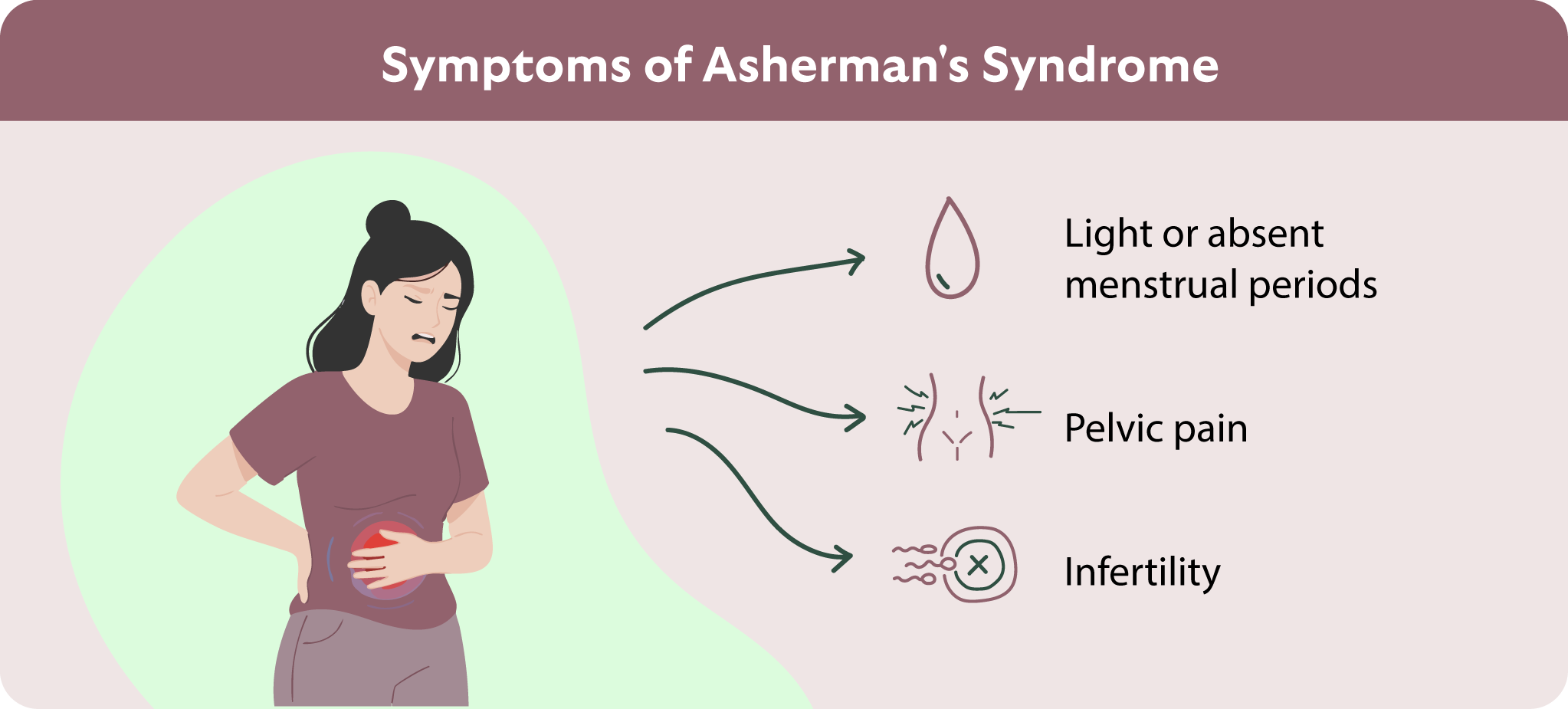
Common symptoms include:
- Very light or absent periods
- Cramping or pain during expected menstrual times
- Infertility or recurrent miscarriage
- Irregular spotting or bleeding
These symptoms are not normal—and they are reason enough to seek care. The earlier adhesions are diagnosed and treated, the sooner your body can be restored to normal functioning.
Who You Might See Before an Asherman’s Specialist

Primary Care Providers
Your primary doctor may be the first to hear about changes in your period or fertility. They can run initial bloodwork, check hormone levels, and order a pelvic ultrasound.
General OB/GYNs
A general OB/GYN can perform an exam and help eliminate potential causes of your symptoms. They may send you for hormone testing or imaging and refer you to a specialist when needed. While they can rule out other causes, most do not perform hysteroscopy—the gold-standard tool for diagnosing and treating Asherman’s.
Fertility Specialists
Reproductive endocrinologists and infertility specialists REIs) often identify Asherman’s syndrome during fertility evaluations, especially if a uterine cavity appears irregular or the lining appears thin on imaging. They may recommend surgical evaluation by an Asherman’s syndrome expert before embryo transfer or pregnancy attempts.
Minimally Invasive Gynecologic Surgeons
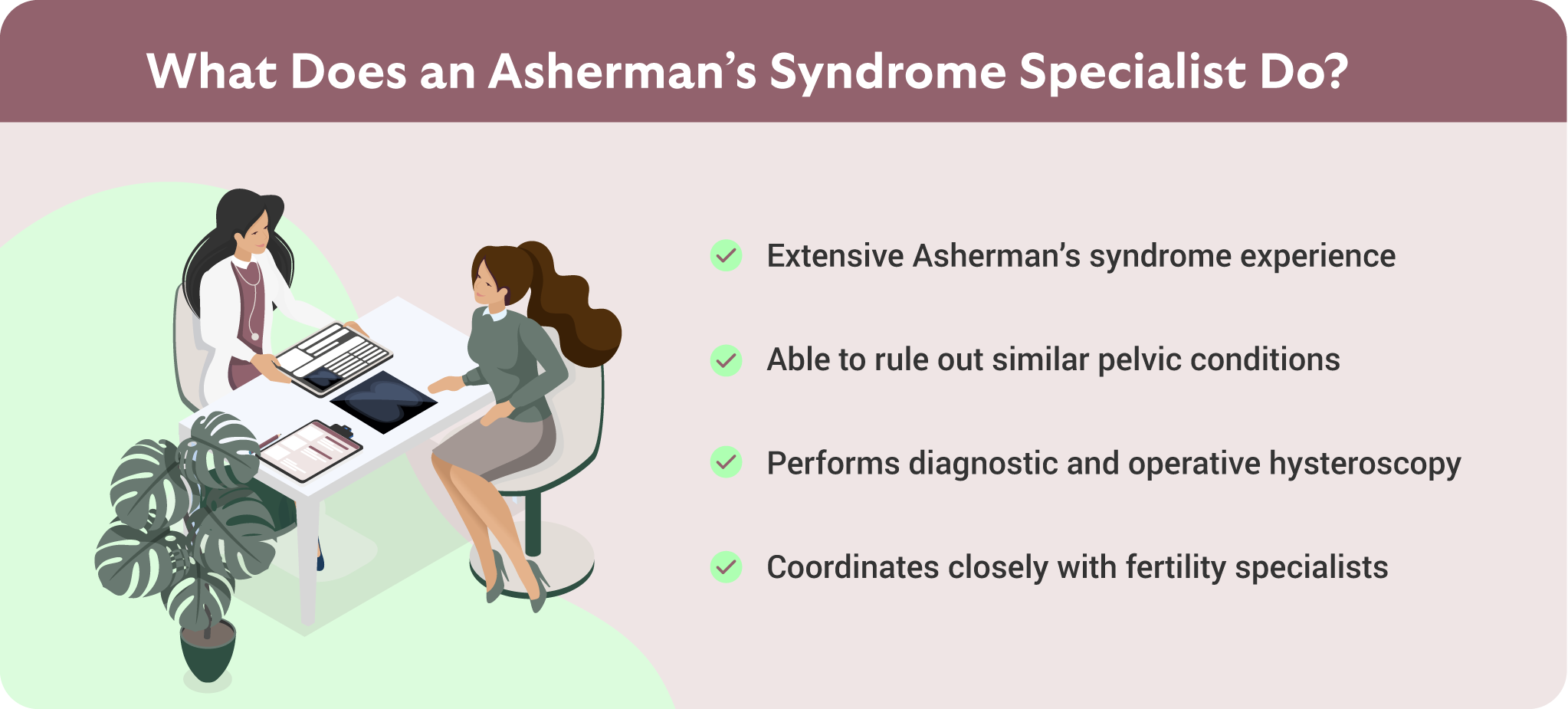
Specialists trained in advanced hysteroscopic surgery have the expertise to both diagnose and treat Asherman’s syndrome. Using a small camera and precision instruments, they can visualize and safely remove scar tissue while preserving the healthy uterine lining. With hysteroscopic adhesiolysis, up to 95% of patients experience a return to normal menstrual flow and a restored uterine cavity.
Seeing a surgeon experienced in uterine reconstruction and fertility preservation ensures you receive the most comprehensive treatment plan, which may include balloon placement, hormonal therapy, and follow-up imaging.
When You Should See an Asherman’s Syndrome Specialist
We recommend seeking a specialist if any of the following apply:
- You have had a D&C, cesarean delivery, or uterine surgery followed by lighter or absent periods.
- You experience pelvic pain or cramping around the time your period should occur, but little or no bleeding.
- You were told that your uterine lining is “thin” or that your uterus is “scarred.”
- You were offered only hormonal therapy or hysterectomy without a clear explanation of surgical alternatives.
Road to Diagnosis and Surgical Treatment for Asherman’s Syndrome
Your care journey may begin with a general provider, but an experienced hysteroscopic surgeon can confirm the diagnosis and provide specialized treatment. If you’re already working with a fertility specialist or OB/GYN, you can always request a referral or reach out to a specialist yourself.
| Step | What It Involves | Why It Matters |
|---|---|---|
| 1. Symptom Onset | Lighter or absent periods, pain, infertility, or miscarriage | First signs that may indicate uterine adhesions |
| 2. Initial Visit | Exam, history, pelvic or vaginal; basic labs and ultrasound | Rules out other causes |
| 3. Specialist Referral | Referral to a minimally invasive gynecologic surgeon with Asherman's Syndrome expertise | Provides expert diagnosis and surgical options |
| 4. Diagnostic Imaging | Saline sonogram (SIS), HSG, or MRI | Maps the uterine cavity and identifies adhesions |
| 5. Hysteroscopic Evaluation | Direct visualization with a small camera | Confirms diagnosis and allows for treatment during the same procedure |
| 6. Additional Surgical Treatment | Gentle removal of scar tissue (hysteroscopic adhesiolysis); multiple hysteroscopies may be necessary over time | Restores normal uterine shape and function |
| 7. Recovery & Prevention | Balloon placement, estrogen therapy, antibiotics | Promotes healing and prevents re-scarring |
| 8. Follow-Up & Fertility Planning | Repeat imaging or hysteroscopy; coordinated fertility care | Ensures long-term success and readiness for conception |
Treatment Options to Know About
At ESSE Care, treatment for Asherman’s syndrome is tailored to each patient’s needs, goals, and reproductive plans. Our care plan for Asherman’s patients often includes:
- Minimally invasive hysteroscopic adhesiolysis: Scar tissue is precisely removed using a small camera inserted through the cervix—no incisions required. This restores the uterine cavity while preserving healthy tissue.
- Intrauterine balloon therapy: After surgery, a small balloon may be placed temporarily inside the uterus to prevent the walls from adhering again while healing occurs.
- Hormonal therapy: Estrogen promotes regrowth of the endometrial lining, helping the uterus recover normal function.
- Antibiotic support and follow-up imaging: Antibiotics reduce infection risk, and a follow-up saline sonogram or hysteroscopy confirms that healing is complete.
Learn more about intrauterine balloon therapy and why it’s used.
How to Advocate for the Care You Deserve
When seeking treatment for Asherman’s syndrome, it’s important to ask clear questions and ensure your care aligns with your goals—especially if you hope to preserve fertility.
Key questions to ask your doctor:
- How extensive are my adhesions, and where are they located?
- What are my treatment options besides hormonal therapy or hysterectomy?
- Do you perform hysteroscopic adhesiolysis, and how often?
- Will I need preventive treatments after surgery, such as a balloon or estrogen therapy?
- How soon can I safely try to conceive after surgery?
If you feel your symptoms are being minimized or your options are limited, it’s appropriate—and often essential—to seek a second opinion from a minimally invasive gynecologic surgeon.
ESSE Care Is Here to Help
ESSE Care’s doctors have extensive experience diagnosing and treating Asherman’s syndrome, as well as a wide range of other gynecological conditions including endometriosis, adenomyosis, uterine fibroids, and more. Their deep knowledge allows them to distinguish between diseases with similar symptom profiles, helping patients get the right diagnosis and start on the path to healing.
Most importantly, our team believes you know your body best. We’ll listen to your concerns and let you take a leading role in your care decisions.
You don’t have to navigate this journey alone. Reach out to ESSE Care to schedule a consultation today.