Endometriosis is a health condition that touches the lives of roughly 190 million women (or other patients born with a uterus, ovaries, or Müllerian remnants) from their teenage years through and even beyond menopause. Do you think you could be one of them? Read on for a detailed overview of endometriosis, how to identify the symptoms, and what treatments are available.
What Is Endometriosis?
Endometriosis is characterized by the unusual growth of tissue outside the uterus where it doesn’t belong. This tissue is like cells naturally found in the endometrial cavity. It is not endometrial tissue but contains the same parts—endometrial glands or stromal cells like uterine endometrium cells—and looks the same under a microscope.
These cells can implant on the surface of various parts of the abdomen, bowels, bladder, pelvic side wall, diaphragm, and even more distant places in the body. They can also enter the ovaries and form endometriomas, sometimes called “chocolate cysts” due to how the blood within them darkens over time. Finally, surrounding organs and tissues may become irritated, leading to scar tissue (adhesions) that can attach abdominal or pelvic organs together.
Endometriosis was once believed to affect the abdomen, but we now understand it to be a whole-body disease. In advanced cases, it may be “extrapelvic,” meaning it moves beyond the ovaries, fallopian tubes, and uterus to more distant parts of the body. Specific subtypes include:
- Bowel endometriosis (also called intestinal endometriosis) often causes cyclic bowel issues that are misattributed to conditions like irritable bowel syndrome (IBS).
- Urinary tract endometriosis can affect the bladder, kidneys, or urethra. Many patients don’t have symptoms, but some experience painful urination, frequent UTIs, or other urinary issues.
- Vaginal endometriosis is rare and usually signals an advanced stage of the disease. Patients may suffer from chronic pelvic pain, painful intercourse, or irregular bleeding.
- Thoracic endometriosis affects your chest cavity, including the diaphragm and lungs. Patients may experience chest pain, shortness of breath or “crackling” before or during periods.
Stages of Endometriosis
The American Society for Reproductive Medicine (ASRM) classifies endometriosis into four stages based on the extent of the condition’s progression:
- Stage I (Minimal): Small patches of endometrial-like tissue (called lesions) are found outside the uterus, often on the ovaries or pelvic lining. These lesions may be in multiple locations, but are superficial in depth and usually not seen on MRI.
- Stage II (Mild): Lesions are distributed more widely and may be deeper in the tissue. There could also be small areas of scar tissue, but the spread is still relatively limited.
- Stage III (Moderate): Multiple deeper lesions and possibly endometriomas on one or both ovaries. Scar tissue or adhesions are present with inflammation around the lesions.
- Stage IV (Severe): Extensive lesions, large cysts, and significant scar tissue (adhesions) can cause organs to stick together. Infertility is likely at this stage.
It is important to note that symptoms do not always match up with the condition’s physical severity. Some people with mild endometriosis experience severe pain, while others with severe endometriosis may have few symptoms.
What Are the Symptoms of Endometriosis?
Endometriosis can cause a wide range of symptoms, and not everyone experiences them the same way. Symptoms often follow a pattern linked to hormonal changes over the menstrual cycle, but for some, they can be constant.
Common endometriosis symptoms include:
- Painful, heavy periods, ovulation pain
- Painful intercourse
- Pelvic pain, sometimes radiating to the back or thighs
- Pain with bowel movements, frequent bowel movements, trouble emptying, rectal pain, blood in stool
- Digestive issues (diarrhea, constipation, bloating, or nausea/vomiting)
- Infertility or IVF failure
- Fatigue
Left untreated, the primary complications of endometriosis are infertility and chronic pain. Up to 50% of unexplained infertility is caused by endometriosis.
What Causes Endometriosis?
Doctors and scientists aren’t sure why some women develop endometriosis. While the exact cause isn’t understood, researchers believe multiple factors play a role, including genetics, immune system dysfunction, and hormonal influences. We do know that endometriosis is fueled by estrogen and does not respond well to progesterone, which is why hormonal treatments are sometimes used to help manage symptoms.
Though many women understandably want to know how to prevent endometriosis, there are no known ways to avoid the condition.
Endometriosis Diagnosis and Treatments
Diagnosing endometriosis can be challenging because symptoms vary widely, and the condition doesn’t always appear clearly on imaging tests. However, the disease is treatable, and the symptoms can often be eliminated or significantly reduced.
How Is Endometriosis Diagnosed?
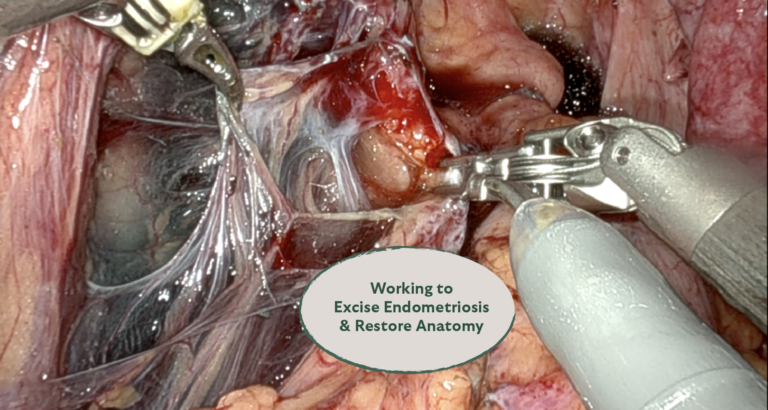
Although several tools can provide clues, minimally invasive laparoscopic or robotic surgery remains the gold standard for a definitive diagnosis. During this procedure, the surgeon carefully examines the abdomen up to the diaphragm and down to the pelvis for lesions, scar tissue, adhesions, or inflammation. If endometriosis is found, excision surgery can be performed at the same time to fully remove the affected tissue. The surgeon can also remove any additional inflamed or diseased tissue to optimize the patient’s anatomy.
Surgery is the only way to confirm endometriosis, but non-invasive tests can provide indications that guide treatment decisions:
- Ultrasound (transvaginal or abdominal): Can detect ovarian endometriomas (cysts associated with endometriosis) and may suggest deep infiltrating endometriosis, but it cannot rule out the disease.
- MRI: Can reveal deep infiltrating endometriosis, adhesions, and endometriomas in more advanced cases, but often MRI reports underread earlier stages of endometriosis.
- Blood tests (e.g., CA-125): Sometimes used, but not a reliable diagnostic tool on its own, as CA-125 levels can be elevated in other conditions.
- Endometrial biopsy: Occasionally performed to check for abnormalities, but it does not diagnose endometriosis outside the uterus.
Endometriosis Treatments
Endometriosis treatment depends on the severity of the disease, symptoms, and individual goals, such as pain relief or preserving fertility.
- Excision surgery is the most effective way to remove endometriosis. Ablation burns lesions, but leaves some diseased tissue behind. Excision surgery removes lesions to improve long-term outcomes. Surgery can also address scar tissue or adhesions, inflammation, restoring pelvic anatomy for pain relief and fertility improvement.
- Hormone therapy, including but not limited to birth control, may help reduce or control symptoms associated with the growth and inflammation of endometrial tissue outside the uterus.
- Supportive therapies and lifestyle changes can help improve quality of life and address chronic pain. These may include pelvic floor therapy, fertility consultations, dietary changes, and pain management through medication or acupuncture.
Note: An elective hysterectomy, or removal of the uterus, can relieve some endometriosis symptoms like heavy bleeding and pelvic pain, but it is not a cure for endometriosis because the condition can spread to other parts of the body beyond the uterus. Hysterectomy is the definitive cure for adenomyosis, the “sister disease” of endometriosis.
Can Endometriosis Be Cured Completely?
Endometriosis is a chronic condition, meaning it cannot be “cured.” However, the right physicians—like those at ESSE Care—will support you before, during, and after surgery, throughout your life. With the right care, you can live an improved, happy life.
A personalized approach to endometriosis
At ESSE Care, we believe in comprehensive, lifelong care tailored to each patient’s needs. Surgery combined with complementary care rooted in Eastern medicine provides the best long-term relief for many patients. The key is to find the right combination of treatments to improve quality of life and overall health.
If you suspect you have endometriosis and aren’t sure what to do next, ESSE Care is here to help. Book a case review today, and let us take the stress out of your endometriosis journey.