Maybe your pain interferes with intimacy, keeps you from work or school, or just makes you feel disconnected from your body. Maybe it intensifies around your period, or maybe it flares without warning. However it shows up for you, CPP is real, and it deserves serious attention.
Chronic pelvic pain is defined as pain in the pelvic region lasting six months or longer. For some, it’s constant; for others, it comes in cycles or flares. CPP itself is not a diagnosis—it’s a signal, a symptom that often points to something deeper, like endometriosis, adenomyosis, interstitial cystitis, pelvic floor dysfunction, or past trauma.
These conditions rarely exist in isolation. They overlap and interact in ways that can make pain more persistent and more complex than just “bad periods.”
What Does CPP Feel Like?
For many of our patients, the pain isn’t just physical—it’s also emotional, especially because it’s invisible to others.
Here are some common ways CPP may show up:
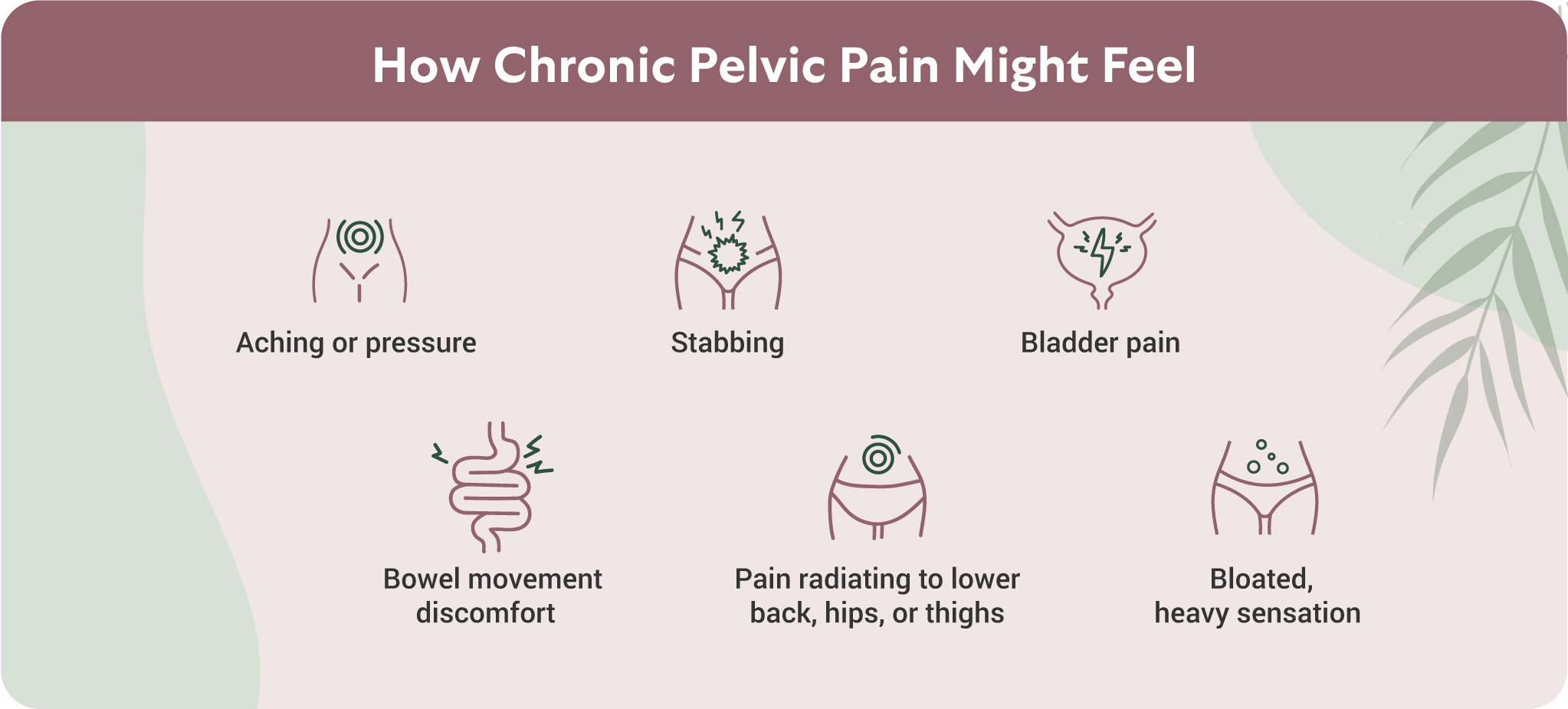
- A persistent ache or pressure deep in the pelvis
- Stabbing, intermittent pain that flares during activity or rest
- Pain with intercourse or deep penetration
- Discomfort or urgency with urination or bowel movements
- Lower back, hip, or thigh pain that seems to radiate from the pelvis
- A constant bloated, heavy sensation that makes you feel “off”
- Mood changes or fatigue linked to long-standing pain
If you’ve already been diagnosed with endometriosis or adenomyosis, it’s also common to experience secondary symptoms—like muscle tension, nerve sensitivity, or pelvic-floor spasm—caused by your body trying to protect itself from ongoing pain.
What Causes Pelvic Pain?
Pelvic pain is complicated, and for many people, it doesn’t come from just one source. At ESSE Care, we look beyond assumptions and basic imaging to understand what’s really driving your pain. We listen carefully, examine the full ecosystem of your body, and connect the dots.
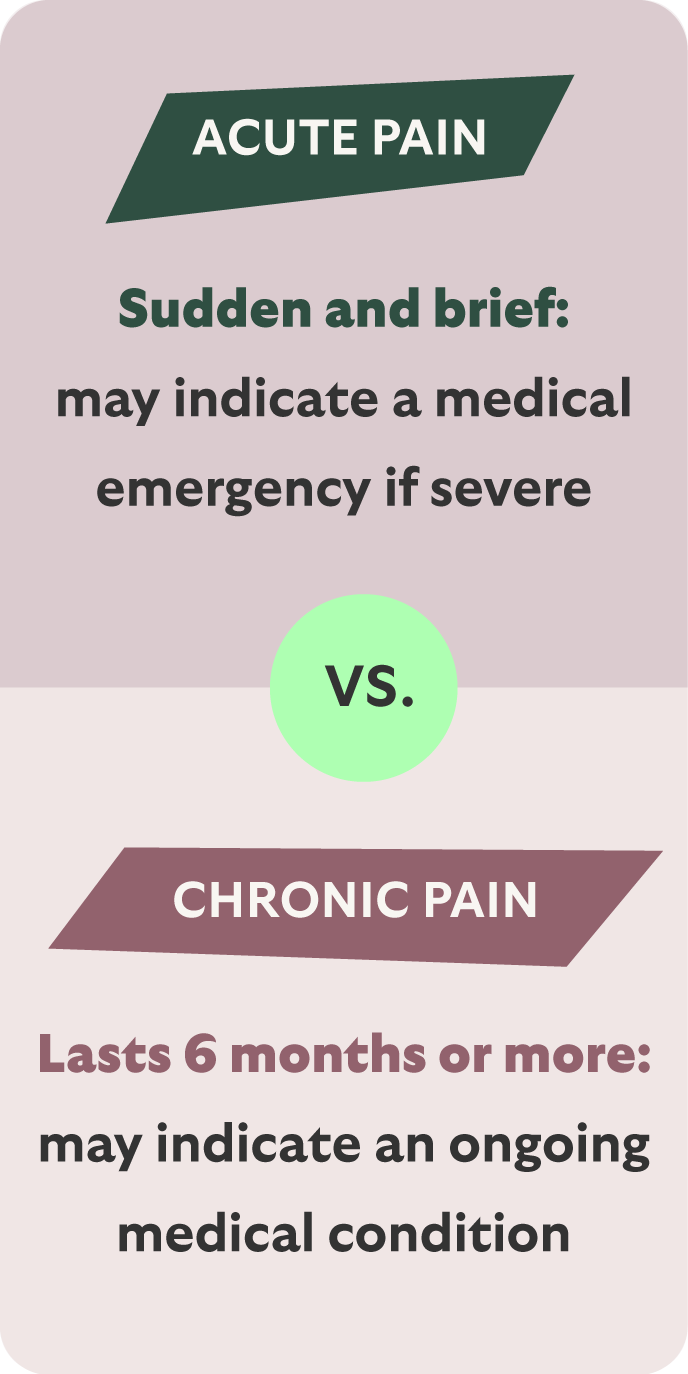
Here are some of the most common contributors to both acute and chronic pelvic pain:
Acute Pelvic Pain: When It Starts Suddenly
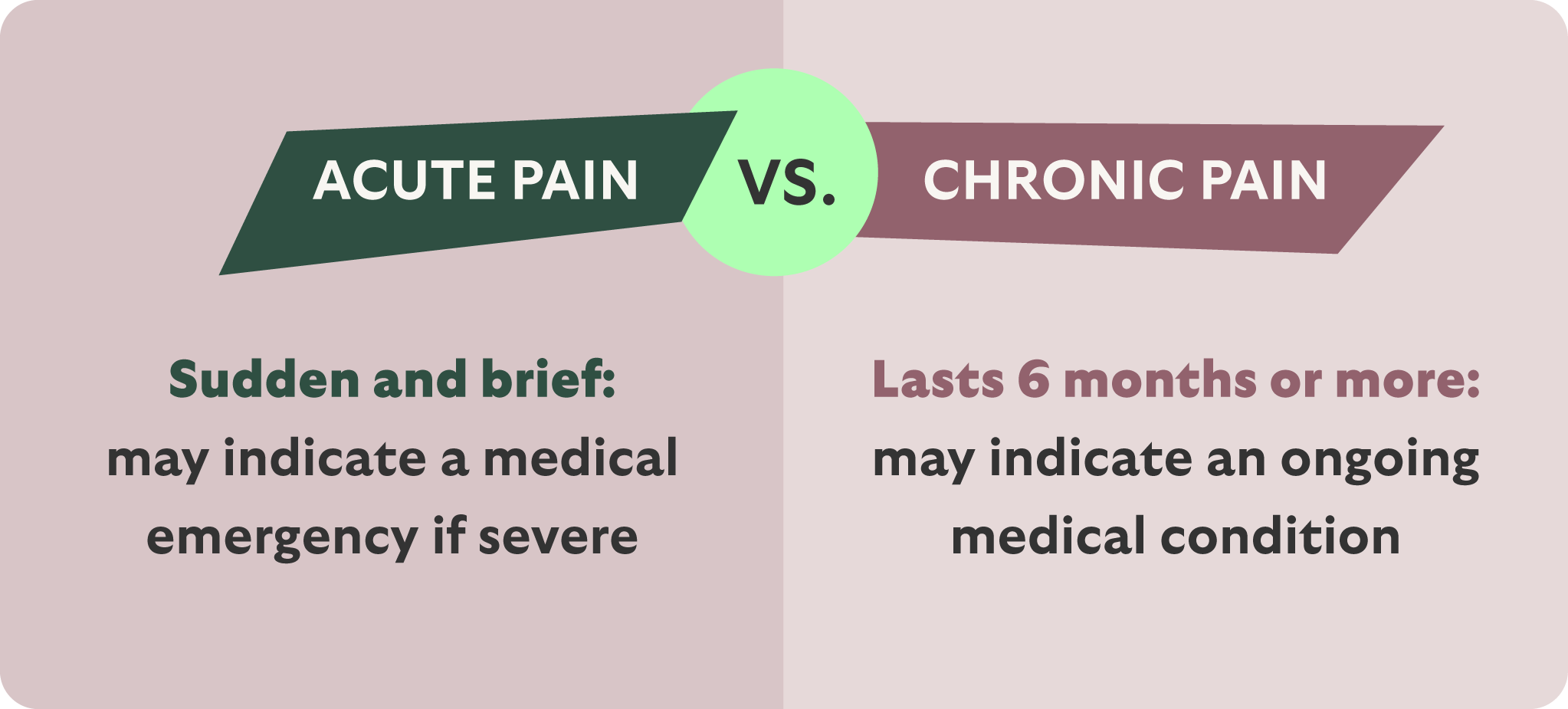
Sudden pelvic pain can be a sign of a medical emergency, particularly if it’s severe. Some common causes include:
- Ovulation Pain (Mittelschmerz) – Sharp, brief pain mid-cycle when an egg is released.
- Period Cramps (Dysmenorrhea) – Cramps severe enough to interfere with daily life are not normal.
- Pelvic Inflammatory Disease (PID) – An infection in the reproductive tract, often caused by STIs.
- Ovarian Cyst Rupture or Torsion – Sudden pain from a cyst bursting or twisting.
- Fibroid Degeneration – Pain that occurs when fibroids outgrow their blood supply.
- Appendicitis – Worsening lower abdominal pain with nausea or fever.
- UTIs (Cystitis) – Burning or urgency with urination.
- Strangulated Hernia – A rare, urgent condition where part of the intestine becomes trapped.
Chronic Pelvic Pain: When It Doesn’t Go Away
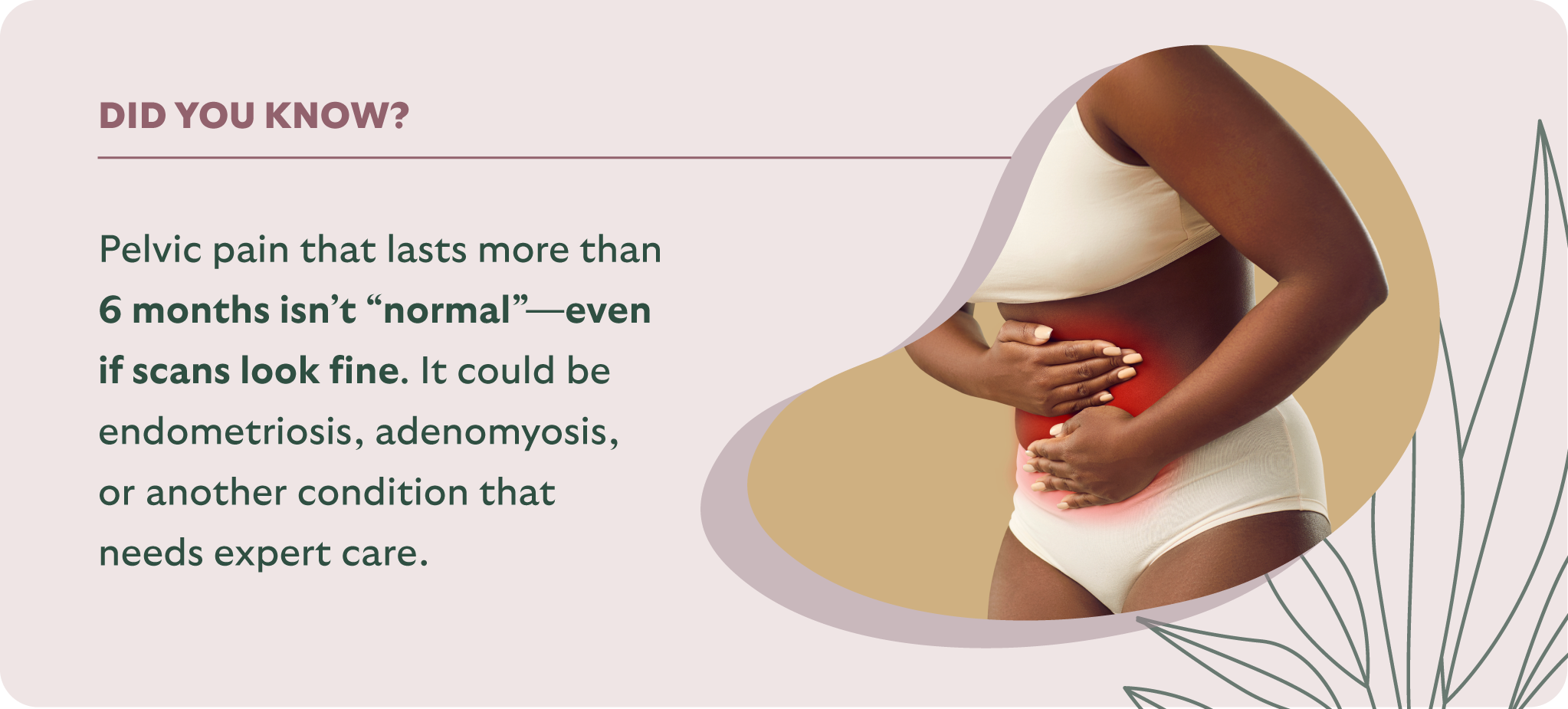
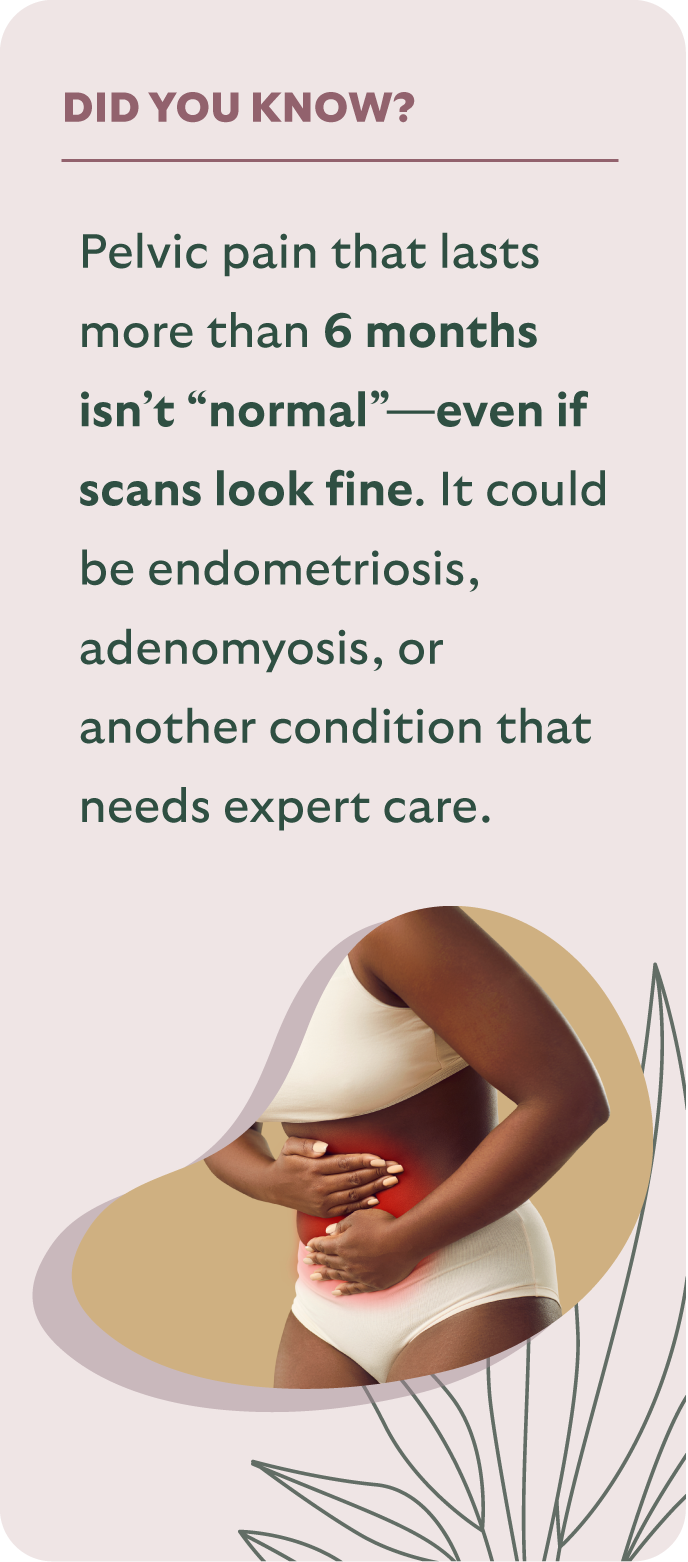
Pain that lasts more than 6 months is considered chronic—and often involves several overlapping conditions. You might hear it’s “just stress” or “normal,” but your body knows better. Some of the most common causes include:
- Endometriosis – Tissue similar to the uterine lining grows outside the uterus, creating inflammation, nerve irritation, and adhesions that bind organs together. It often doesn’t show up on imaging but can cause deep, life-altering pain.
- Adenomyosis – Endometrial glands or stromal cells grow into the muscles of the uterus, causing pressure, cramping, and heavy bleeding.
- Pelvic Floor Dysfunction – In response to pain and trauma, the pelvic floor muscles tighten and become uncoordinated, which can worsen or even generate pain.
- Adhesions – Scar tissue from previous surgeries or inflammation can restrict movement, causing pain with digestion, sex, or physical activity. (Note: Many adhesions don’t show up on imaging!)
- Central Sensitization – When pain goes untreated, your nervous system can become more reactive, making small triggers feel overwhelming.
- Bladder & Bowel Issues – Conditions like IBS, IBD, interstitial cystitis, or chronic UTIs often overlap with pelvic pain.
- Recurrent Cysts or Fibroids – Ongoing hormonal changes can drive persistent discomfort.
- Interstitial Cystitis – Chronic bladder pain without infection
- Structural Concerns – Uterine prolapse, hernias, or back/pelvic bone dysfunction can refer pain to the pelvis.
The Link Between Chronic Pelvic Pain and Endometriosis
There are many potential causes of CPP, but endometriosis should always be considered, especially if other diagnoses and treatments fail to improve your symptoms. 20% to 80% of patients with chronic pelvic pain who undergo elective surgery are found to have endometriosis. And for those already diagnosed with endo, 70% of individuals will develop chronic pelvic pain. The longer endometriosis goes untreated, the more challenging it is to treat chronic pelvic pain.
If endometriosis has been suggested—or suspected—but never fully investigated as a cause of your CPP, explore our resource on when and how to seek an endometriosis excision specialist.
When Should You See a Doctor for CPP?
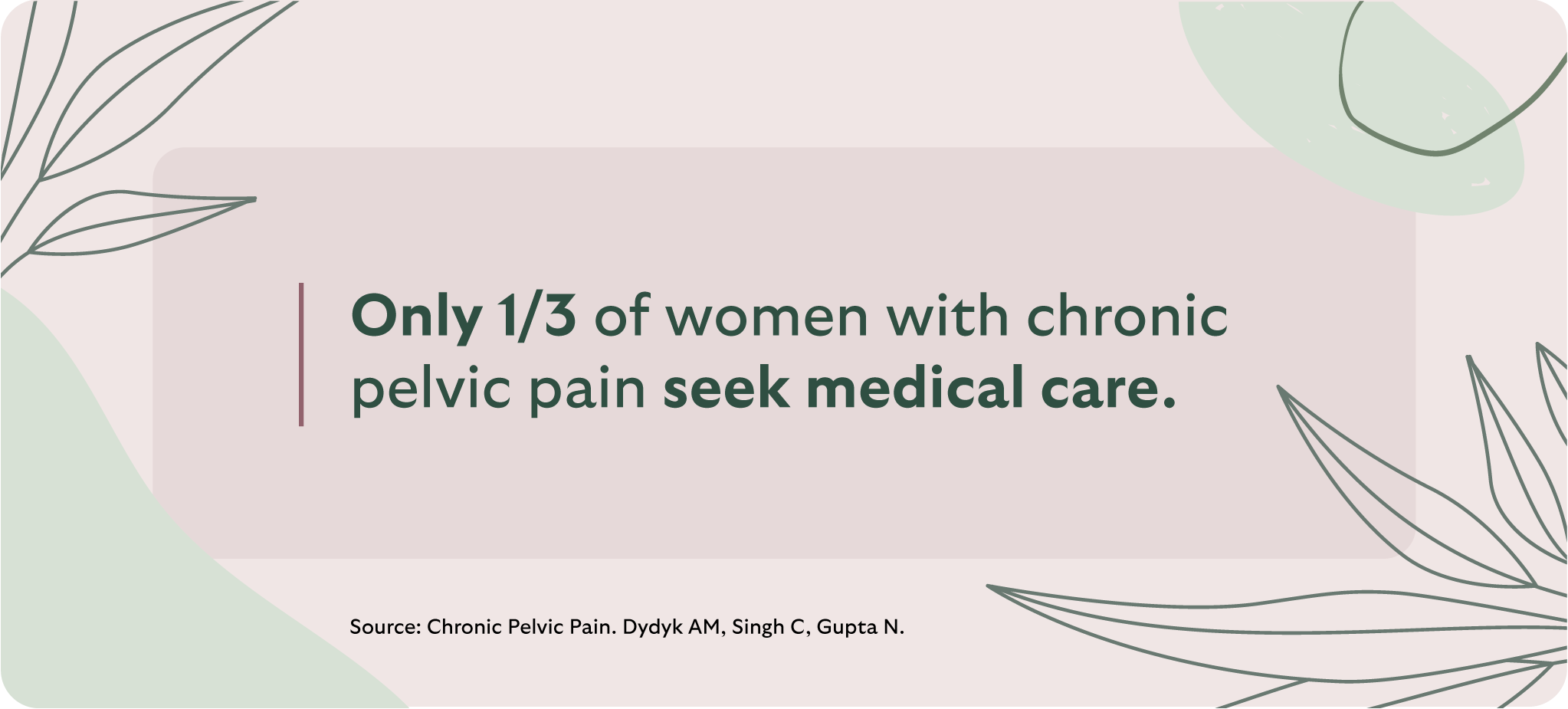
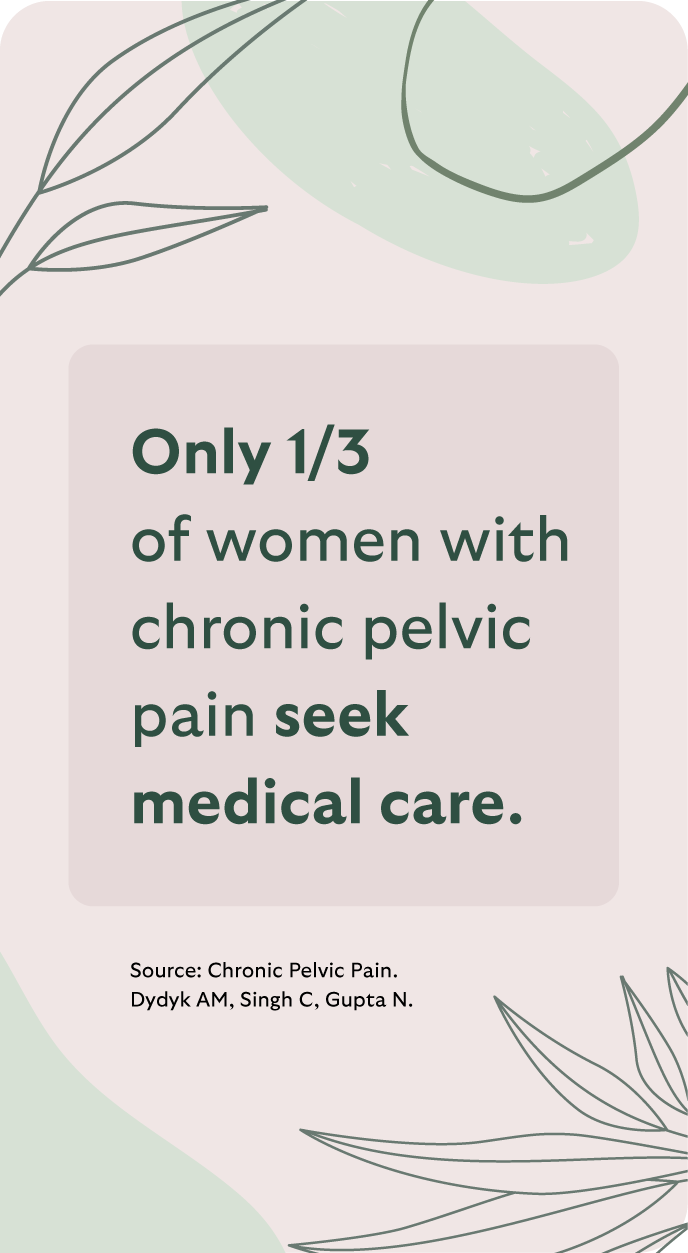
If you’ve been living with pelvic pain—whether it’s sudden or something that’s been building gradually—it’s time to listen to your body.
Pelvic pain is common, but it’s not normal if it disrupts your life. And while some causes are easily treated, others—like endometriosis, adenomyosis, or chronic bladder and bowel conditions—require expert evaluation to be properly identified and managed.
It may be time to seek care from an integrative gynecologic specialist if:
- Your pelvic pain has lasted six months or more, especially if it continues outside of your period.
- You’ve tried birth control, pain relievers, or hormone therapy, but your symptoms haven’t improved.
- You experience pain with sex, urination, or bowel movements.
- You’ve already had surgery, but the pain came back or never resolved.
- Imaging (like ultrasound or MRI) shows “nothing wrong,” yet you still feel far from well.
- You’ve been diagnosed with IBS, bladder issues, or anxiety, but no one’s looked deeper.
If this sounds like you, you’re not alone—and you’re not overreacting. Keeping a symptom journal can help clarify patterns and make your first office visit more productive. Track what makes your pain better or worse, how it relates to your cycle, and what treatments you’ve already tried.
How We Approach Chronic Pelvic Pain at ESSE Care
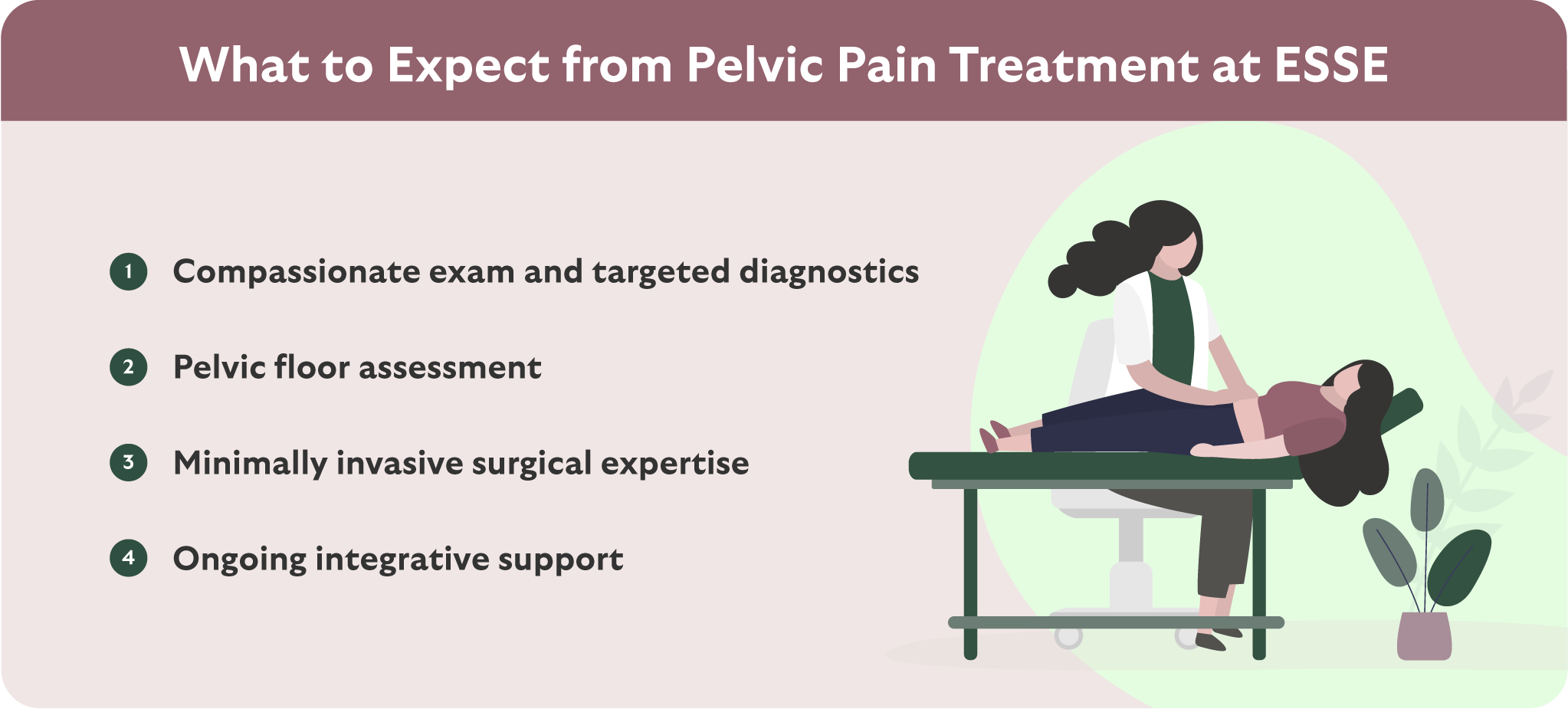
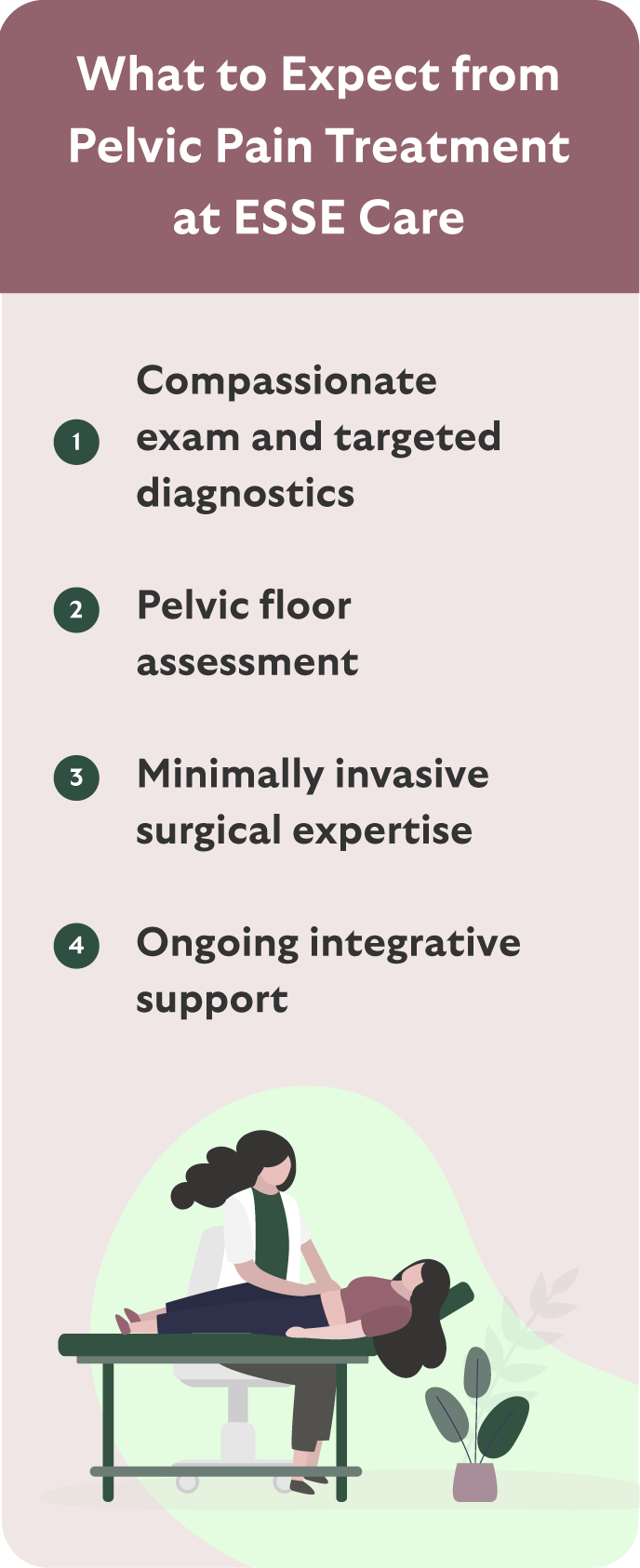
At ESSE Care, we approach chronic pelvic pain as a complex, whole-body experience. This kind of pain doesn’t just affect your pelvis—it also impacts your nervous system, digestion, hormones, relationships, and your sense of trust in your body. It often evolves over years and requires thoughtful care.
Our model combines expert minimally invasive surgical care with integrative, long-term support—because you deserve more than just symptom management for your pain.
What to Expect
Your Story Comes First
We begin by listening. From your earliest period to your latest flare-up, we explore the full timeline of your symptoms. This helps us identify patterns, uncover overlooked triggers, and understand the emotional and physical toll the pain has taken.
Targeted Pelvic Exam and Imaging
We perform a gentle, comprehensive pelvic exam and recommend imaging like ultrasound or MRI when appropriate. We’re not just looking for visible disease—we’re assessing your unique anatomy, how your organs relate to each other, and where your pain is coming from.
Pelvic Floor Assessment
Many patients with chronic pain also experience pelvic floor tension or dysfunction. Through our trusted partner network, we can refer you to experienced pelvic floor physical therapists who are trained in trauma-informed care and specialize in chronic pelvic pain.
Minimally Invasive Surgical Expertise
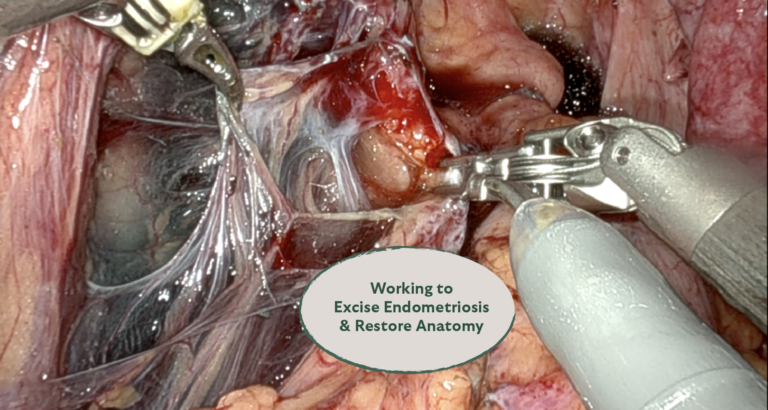
When surgery is appropriate, we offerlaparoscopic excision of endometriosis, treatment of adhesions, and other precision interventions. Our goal is to remove or correct the root causes of pain, not just what appears on the surface.
Ongoing Integrative Support
Pain recovery doesn’t end in the OR. Our care plans include nutrition strategies, mind-body support, hormonal insight, and referrals to complementary therapies through our extended partner network. This allows us to support healing in a way that’s sustainable and personalized.
What You Can Do Right Now
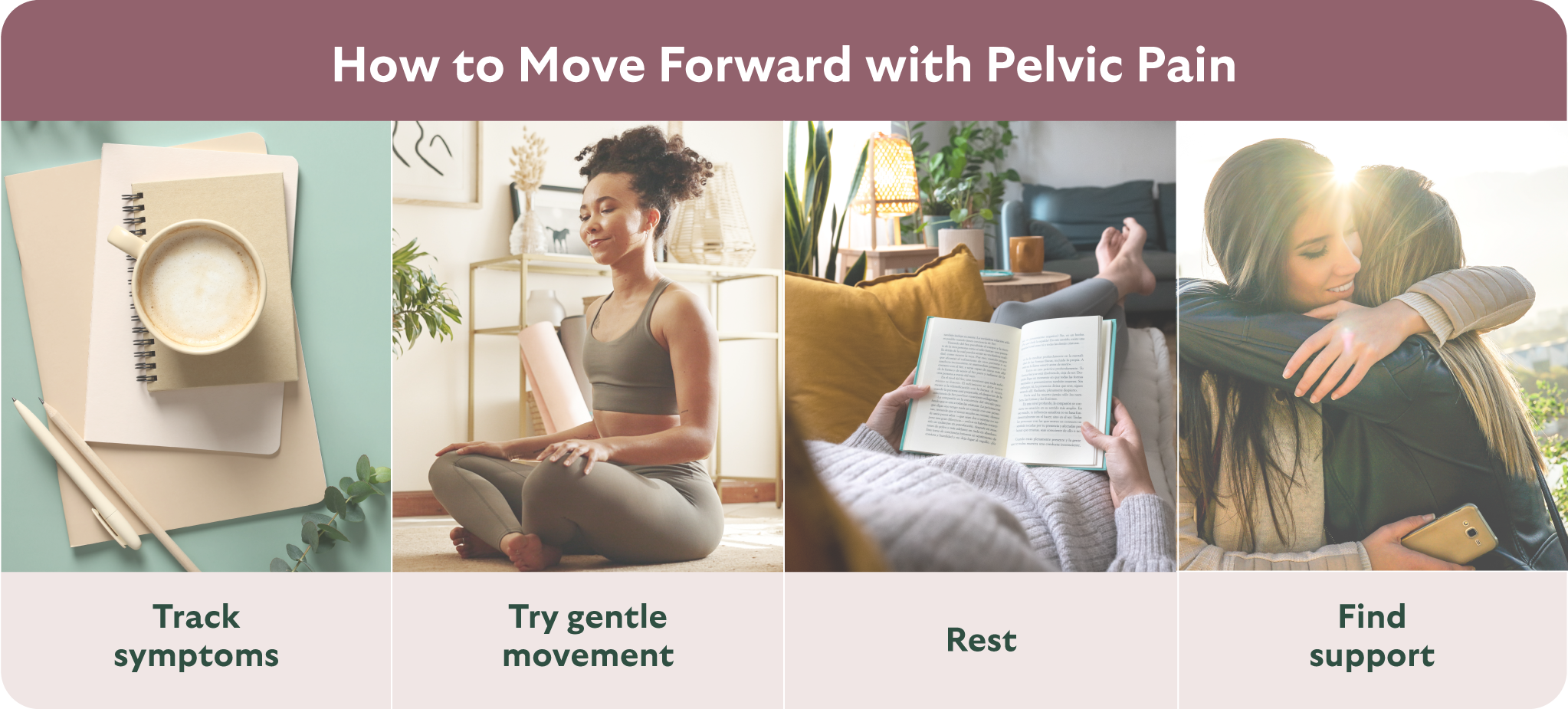
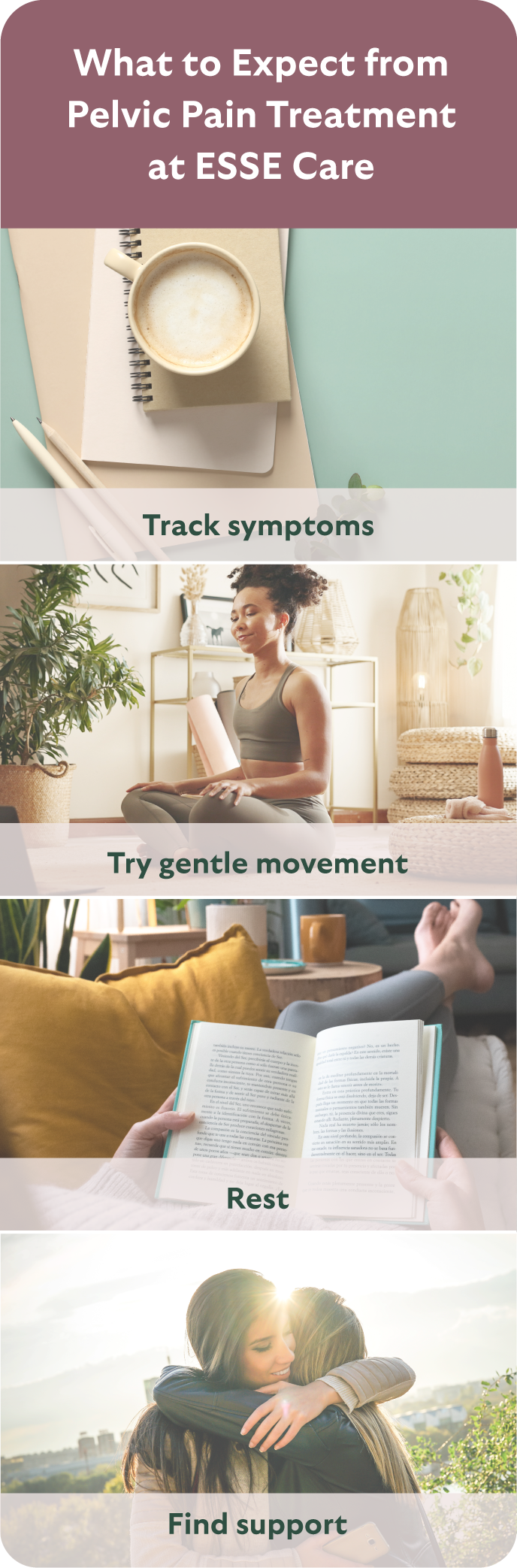
While you’re exploring your next steps, here are a few things you can do now to support your body:
- Track your symptoms. Use a journal to log pain, bowel or bladder changes, energy levels, and where you are in your cycle. This can help clarify patterns and guide care.
- Use gentle movement or breathwork. These tools can help regulate your nervous system and relax the pelvic floor.
- Identify what feels manageable and what doesn’t. These observations help us co-create a treatment plan that actually fits your needs.
Your Pelvic Pain Matters
Chronic pelvic pain can make everyday life feel uncertain. It’s often dismissed or misdiagnosed, leaving you to wonder if anyone will take it seriously.
At ESSE, we listen closely, think critically, and act with precision. We combine the best of minimally invasive surgery with holistic, integrative care—because that’s what true healing often requires.
You are not overreacting. You are not imagining it. And you are not alone. Schedule a consultation today to experience a more compassionate model of patient care.