Dr. Amanda Chu on Why Painful Periods Deserve a Closer Look
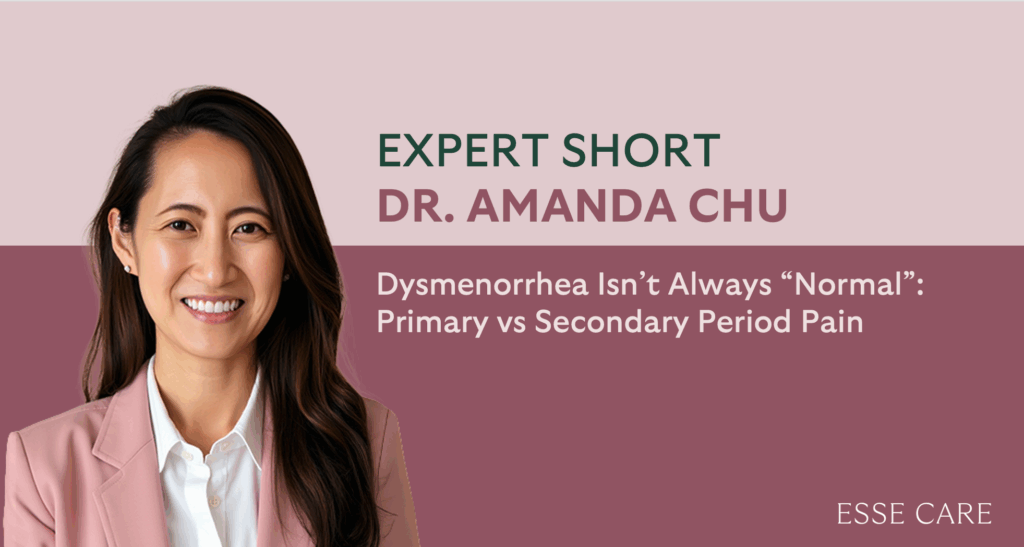
In this expert short, Dr. Amanda Chu, a minimally invasive gynecologic surgeon at ESSE Care, walks through the clinical definitions, patterns, and real-life impact of dysmenorrhea—painful periods that affect up to 90% of reproductive-age individuals. She explains how dysmenorrhea is categorized into primary, where pain occurs without an identifiable cause, and secondary, where pain is linked to conditions like endometriosis, adenomyosis, or fibroids.
Dr. Chu highlights how primary dysmenorrhea is often dismissed as a normal part of adolescence, even though many patients with severe period pain in their teen years are later diagnosed with serious gynecologic conditions. She challenges the idea that secondary dysmenorrhea is only a problem in adulthood, emphasizing instead that all painful periods should be considered secondary until proven otherwise.
She also describes the biological role of prostaglandins—hormone-like chemicals that drive uterine contractions and contribute to nausea, diarrhea, and cramping during menstruation. When pain begins to disrupt school, work, or social life, it’s a sign that evaluation is needed.
Dr. Chu encourages patients to seek care with a provider they trust. A thorough history, imaging, or lab work can help uncover the root cause, and treatment should always be tailored to the individual’s symptoms and long-term goals—not simply focused on suppression.
Pain is information, not a weakness.
At ESSE Care, we meet far too many patients who have lived with unrelenting period pain because they were told it was normal. We believe pain is a signal that deserves attention. Early evaluation and thoughtful diagnosis can prevent years of suffering and guide patients toward more effective, personalized care.
Whether you’re a teenager just starting to notice patterns or an adult who’s been told “it’s just your period” for years, our team is here to listen, look deeper, and support you with surgical precision and compassionate care.