• Let's Chat
  • Contact Form
× Send

Cyst Splatter and Adhesions: The Urgent Case for Early Endometrioma Surgery

When an endometrioma ruptures, its contents can “splatter,” spreading endometriosis and creating dense adhesions between organs. In this video, Dr. Karli Goldstein discusses a complex case that illustrates why timing and expert excision are critical.

Cyst Splatter and Adhesions: Why Timing is Everything

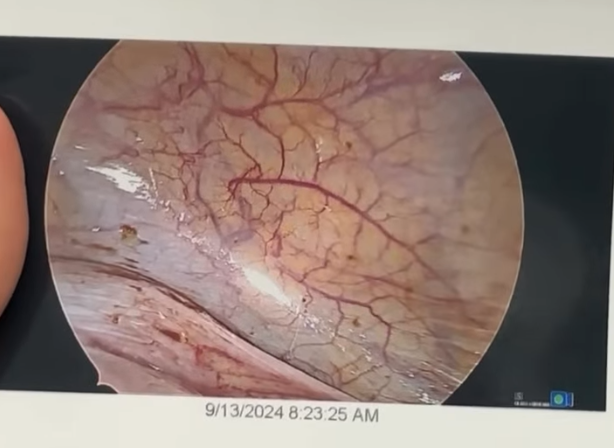
Another aspect of endometrioma surgery that patients often don’t realize is the risk of cyst splatter. When an endometrioma ruptures, the contents can “splatter” into surrounding areas, causing new endometriosis lesions to form. This was the case in another surgery Dr. Goldstein performed, where ruptured cyst material had led to widespread adhesions involving the bladder, bowel, uterus, and ovaries.

In this video, Dr. Goldstein discusses the adhesions and nodular lesions found during the surgery. These adhesions had created a complex web of tissue that locked the organs in place, contributing to the patient’s chronic pain and pelvic immobility. Early surgical intervention is vital in cases like these to prevent the worsening of adhesions and the spread of endometriosis.

Key Takeaway: Once an endometrioma ruptures, the contents can spread, forming new lesions and adhesions that make future surgeries more difficult. Early, expert surgery can prevent further damage and relieve symptoms.

Content Page Subscribe Widget
Share this post:

Explore more:

What Is a Salpingectomy and What Should You Know Before Having One
Dr. Leigh Rosen explains what a salpingectomy is, why it may be recommended, and why removing your fallopian tubes does not affect your hormones or put you into menopause.
Read More
What Is Chronic Pelvic Pain and Why Early Treatment Matters
Dr. Amanda Chu explains chronic pelvic pain, its most common causes including endometriosis, fibroids, and adenomyosis, and why early treatment is key to preventing lasting neurologic changes.
Read More
Retained Pregnancy Tissue Is More Common Than Many People Realize
How Does Hysteroscopy Help Treat Retained Pregnancy Tissue?
Retained pregnancy tissue is more common than many people realize. It happens when pregnancy tissue does not fully pass after a miscarriage, pregnancy loss, or delivery.
Read More
What Is a Salpingectomy and What Should You Know Before Having One
Dr. Leigh Rosen explains what a salpingectomy is, why it may be recommended, and why removing your fallopian tubes does not affect your hormones or put you into menopause.
Read More
What Is Chronic Pelvic Pain and Why Early Treatment Matters
Dr. Amanda Chu explains chronic pelvic pain, its most common causes including endometriosis, fibroids, and adenomyosis, and why early treatment is key to preventing lasting neurologic changes.
Read More
What Is a Salpingectomy and What Should You Know Before Having One
Dr. Leigh Rosen explains what a salpingectomy is, why it may be recommended, and why removing your fallopian tubes does not affect your hormones or put you into menopause.
Read More
What Is Chronic Pelvic Pain and Why Early Treatment Matters
Dr. Amanda Chu explains chronic pelvic pain, its most common causes including endometriosis, fibroids, and adenomyosis, and why early treatment is key to preventing lasting neurologic changes.
Read More
Retained Pregnancy Tissue Is More Common Than Many People Realize
How Does Hysteroscopy Help Treat Retained Pregnancy Tissue?
Retained pregnancy tissue is more common than many people realize. It happens when pregnancy tissue does not fully pass after a miscarriage, pregnancy loss, or delivery.
Read More