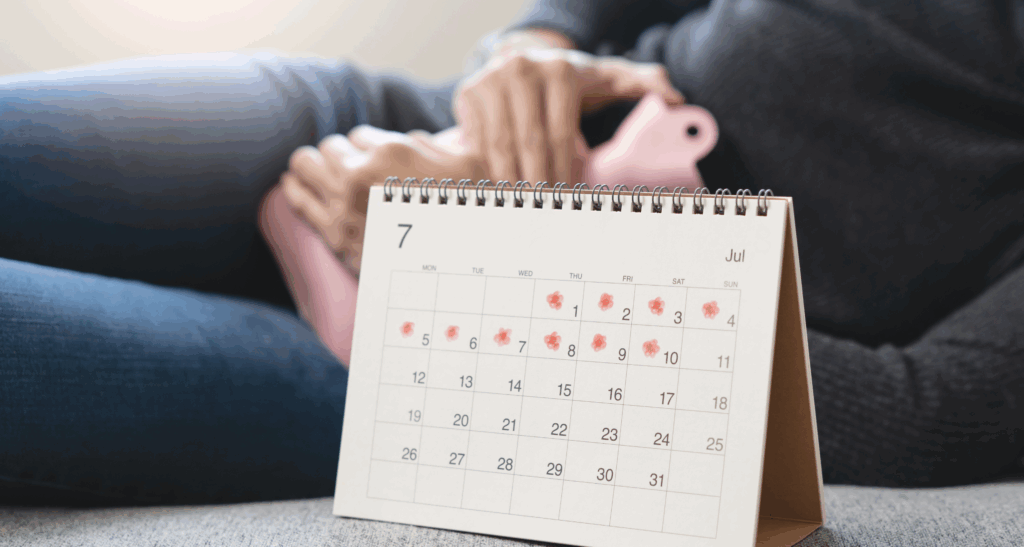
If your period leaves you exhausted, running to the bathroom constantly, missing work, canceling plans, or anxious about bleeding through your clothes, something significant may be happening in your body.
Too many people experiencing these symptoms are told that their bleeding is normal, that it’s simply part of having a period, or that time or childbirth will resolve it. Some are handed birth control without a clear explanation of why. Others are given iron supplements and sent away, even when their concerns persist. When lab results come back within standard ranges, the conversation often ends there, leaving real symptoms unaddressed and questions unanswered.
But heavy menstrual bleeding isn’t just an inconvenience to push through. It can be a sign of something deeper going on in your body. If you’ve felt dismissed, heard vague reassurances, or left appointments without real answers, you’re not overreacting. Your experience matters, and understanding what’s causing your symptoms is the first step toward finding relief.
What Counts as “Heavy”?
Let’s start with what’s considered normal:
- The average menstrual period lasts about 4 to 7 days.
- Blood loss averages around 30–40 milliliters (roughly 2–3 tablespoons).
- Typically, a person changes a pad or tampon every 4–6 hours, not every hour.
Heavy menstrual bleeding (HMB)—also called menorrhagia—is defined as:
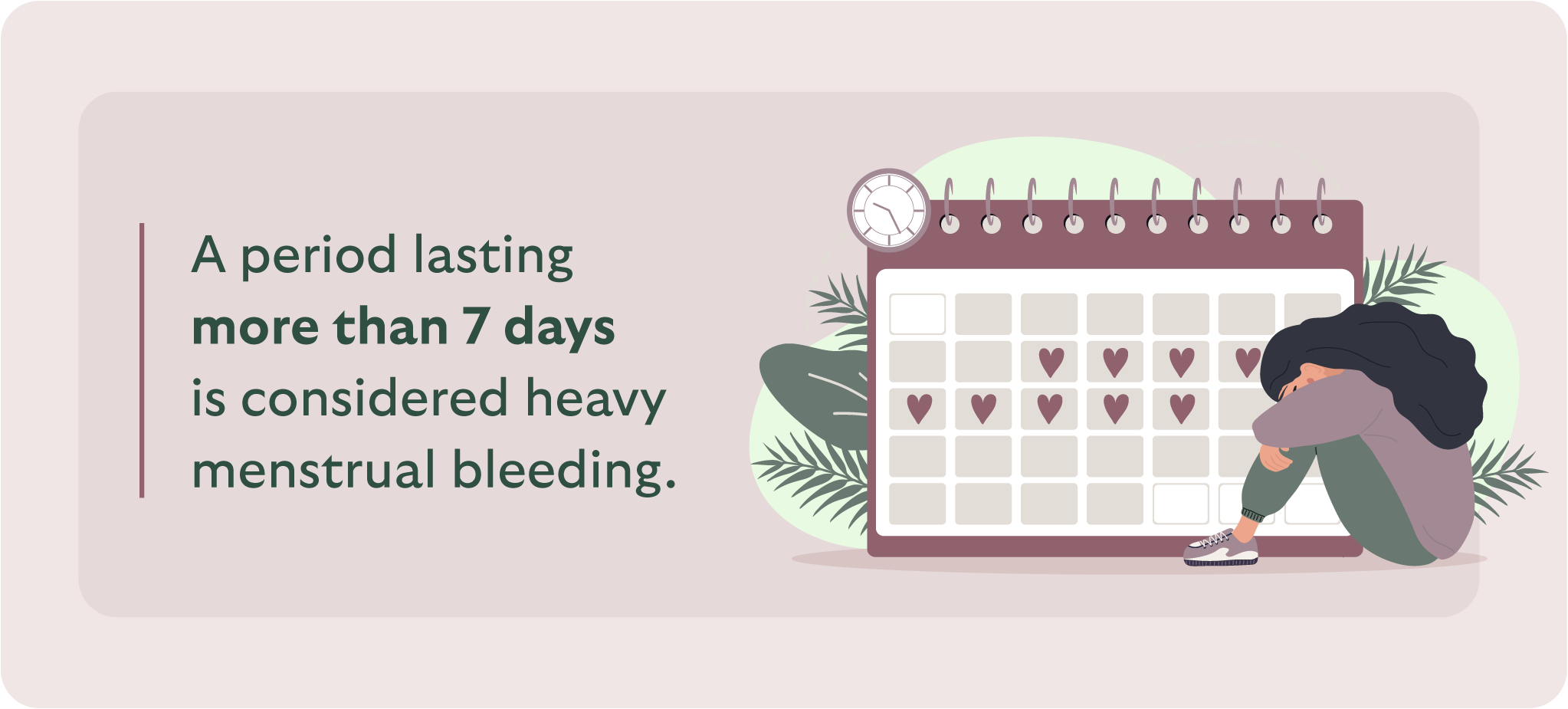
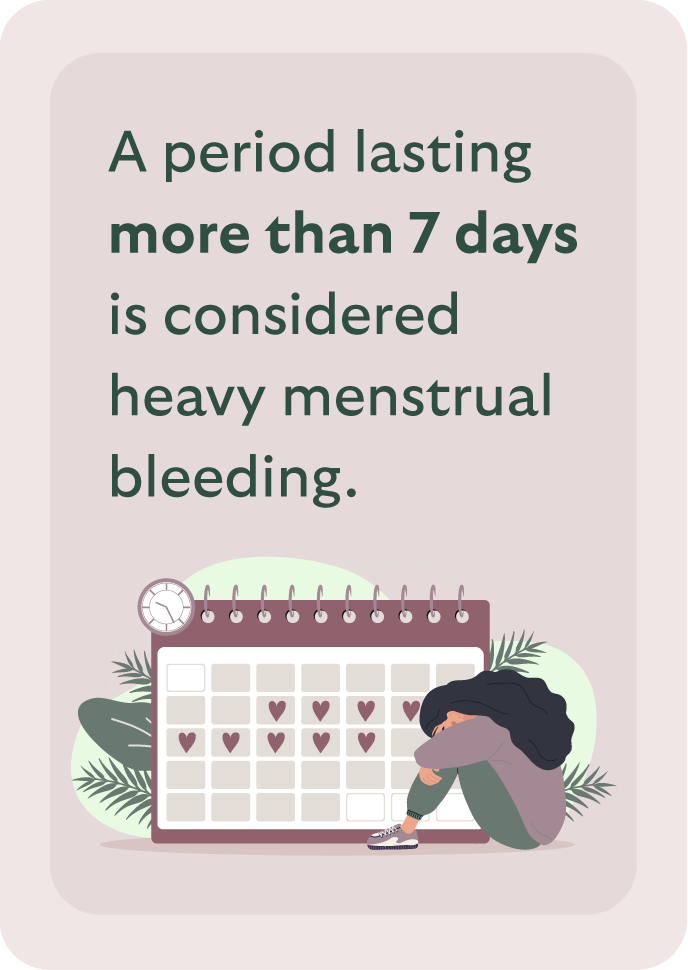
- Bleeding longer than 7 days.
- Losing more than 80 milliliters (about 5+ tablespoons) of menstrual fluid per cycle.
- Or soaking through one or more pads or tampons every hour for several hours in a row.
Helpful note: A super tampon holds about 10 mL of fluid.
Other signs of HMB include:
- Passing large blood clots (larger than a quarter).
- Needing to layer multiple products (like a tampon and a pad).
- Waking at night to change protection.
- Or avoiding work, school, travel, or social events due to fear of leaking.
If your period leaves you feeling dizzy or chronically exhausted—or if you’re rearranging your life around your cycle—it’s a strong signal that something more might be going on.
Many of our patients come to us after years of believing this was just “how their body works,” only to learn that conditions like adenomyosis, fibroids, polyps, or clotting disorders were behind their symptoms all along.
Causes of Heavy Menstrual Bleeding
Video: What Are Fibroids?
Two potential culprits of HMB are uterine fibroids, which occur in 70-80% of women, and adenomyosis, a condition where tissue similar to the uterine lining grows into the muscular wall of the uterus. This leads to inflammation, increased blood flow, and painful, unpredictable cycles.
But these are just two possibilities. Here’s a broader look:
| Potential Cause | How It Contributes to Heavy Bleeding |
|---|---|
| Adenomyosis | Endometrial-like tissue grows into the uterine muscle, causing inflammation, thickened walls, and heavier, painful periods. |
| Uterine Fibroids | Non-cancerous tumors that can distort the uterine cavity, increasing surface area for bleeding and causing pelvic pain or pressure. |
| Endometrial Polyps | Small growths in the uterine lining that can cause irregular or prolonged bleeding. |
| Endometriosis | While primarily outside the uterus, endometriosis can contribute to hormonal imbalances and heavy, painful periods. |
| Thyroid Disorders | Both hypo- and hyperthyroidism can disrupt hormonal regulation of the menstrual cycle. |
| Coagulation/Bleeding Disorders | Clotting issues like von Willebrand disease reduce the body's ability to stop menstrual bleeding effectively. |
| Polycystic Ovarian Syndrome (PCOS) | Irregular ovulation can lead to prolonged buildup of the uterine lining, resulting in heavy or prolonged bleeding when shedding occurs. |
| Menarche (First Period) | Hormonal fluctuations in the first few years of menstruation can lead to anovulatory cycles and heavy bleeding. |
| Perimenopause | Irregular ovulation and estrogen fluctuations can cause thickened endometrial lining and heavy, unpredictable bleeding. |
| Infections (e.g., Endometritis) | Inflammation of the uterine lining can disrupt normal bleeding patterns. |
| High Estrogen / Low Progesterone | This hormonal imbalance thickens the endometrial lining, leading to heavier shedding. |
| Vitamin D Deficiency | May contribute to hormonal imbalance and impaired immune response, potentially worsening conditions such as fibroids. |
| Obesity / High Body Fat | Fat cells produce estrogen, which can increase endometrial growth and bleeding. |
| Chronic Stress | Chronic stress can alter hormone levels (like cortisol and progesterone), impacting menstrual regularity and flow. |
Many of our patients come to us after years of believing this was just “how their body works,” only to learn that conditions like adenomyosis, fibroids, polyps, or clotting disorders were behind their symptoms all along.
How ESSE Care Approaches Heavy Menstrual Bleeding
At ESSE, we don’t rush to suppress your symptoms. We listen carefully, assess thoroughly, and tailor a plan based on your personal needs and goals.
Here’s how we typically approach heavy menstrual bleeding:
Listening to Your Story
We start with what’s often overlooked—how you feel, what your cycle has been like over time, what you’ve been told before, and how your bleeding affects your life physically, emotionally, and socially. This helps us understand not just the symptoms but the whole context of your experience.
Pelvic Exam and Advanced Imaging
If needed, we perform a comprehensive pelvic exam and may order targeted imaging like transvaginal ultrasound or pelvic MRI. These help us evaluate for conditions like fibroids, adenomyosis, endometriosis, or other uterine abnormalities that can cause heavy flow. Learn more about what your first office visit could look like.
Laboratory Evaluation
We may assess your iron levels, complete blood count, and thyroid or hormone panels. If your history or symptoms warrant it, we also consider screening for bleeding disorders—especially if you’ve been bleeding heavily since your teen years.
Minimally Invasive Surgical Options
When medical or integrative therapies aren’t enough, we offer precise, fertility-conscious surgical options, including:
- Hysteroscopic procedures to remove fibroids or polyps from inside the uterine cavity without incisions.
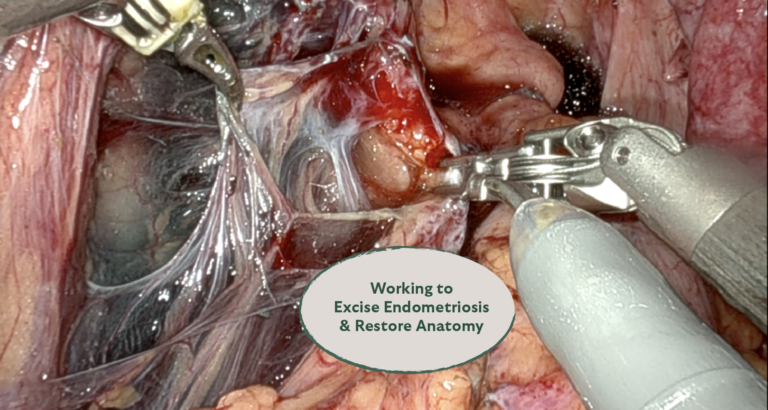
- Laparoscopic excision of endometriosis, or treatment of adenomyosis using uterine-preserving techniques.
- Myomectomy or other advanced procedures for fibroids, performed with a focus on minimizing trauma and optimizing recovery.
- Open abdominal surgery when minimally invasive options aren’t viable .
Integrated, Supportive Therapies
Because bleeding doesn’t happen in a vacuum, we often recommend additional support, such as:
- Pelvic floor physical therapy to reduce pressure, manage pain, and support pelvic circulation.
- Nutrition counseling to support hormonal balance, reduce inflammation, and replete iron stores.
- Mind-body approaches including breathwork, nervous system regulation, and trauma-informed care—especially for those who’ve felt dismissed in medical spaces before.
Fertility and Long-term Planning
If you’re planning to conceive now or in the future, we tailor your care plan accordingly, offering fertility-preserving treatment when appropriate. And if your family is complete and you’re seeking permanent relief, we also provide options like laparoscopic hysterectomy, discussed with full transparency.
What You Can Do Right Now to Address Heavy Menstrual Bleeding

You don’t have to wait for things to get worse before taking action. Here are a few simple, supportive steps to get started:
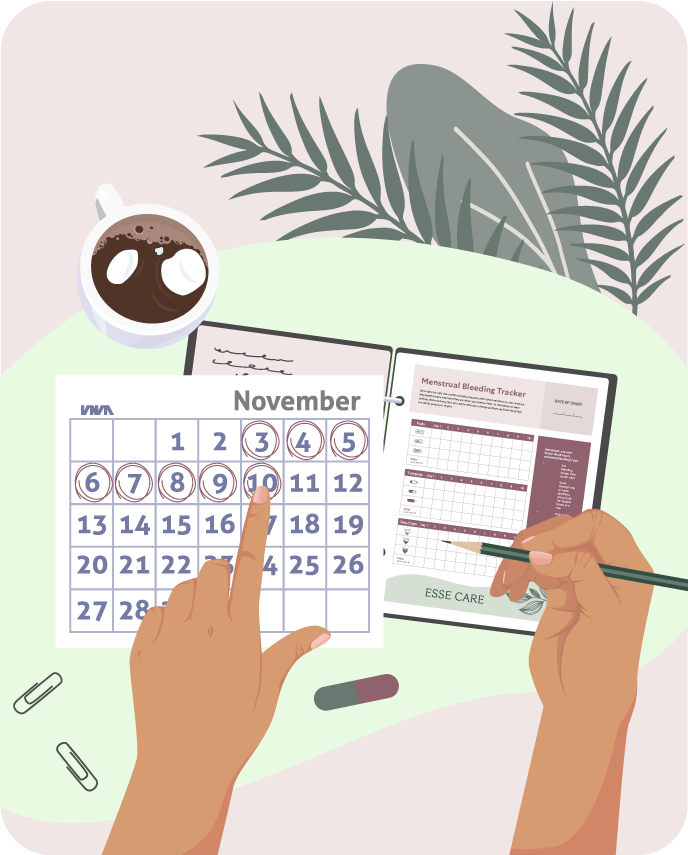
- Track your bleeding: Keep a log of how long your bleeding lasts, whether you pass clots, how often you change products, and how you feel during and after your period—physically, mentally, and emotionally. Use this log to get started.
- Ask for full iron studies: If you often feel tired, dizzy, or foggy, request more than a basic blood count. Full iron labs—like ferritin, serum iron, TIBC, and transferrin saturation—will provide a clearer picture.
- Support your body with gentle practices: Prioritize rest during your cycle. Include iron-rich foods in your meals (like spinach, lentils, or red meat), pair them with vitamin C, and stay hydrated.
- Explore more about what might be going on: Read our articles on uterine fibroids.
These steps won’t address the root cause, but they can help you feel more supported and prepared while you seek real answers.
You Deserve to Feel Better During Your Cycle
Your period should not steal your strength, your plans, or your peace of mind. At ESSE Care, we see patients every day who were told for years that their bleeding was just part of being a woman. It’s not. Your cycle is part of your biology, but it shouldn’t control your life.
If you’re ready for a provider who listens and a team that understands the full picture, we’re here to help you reclaim your rhythm and feel like yourself again. Schedule a consultation with one of our doctors today.