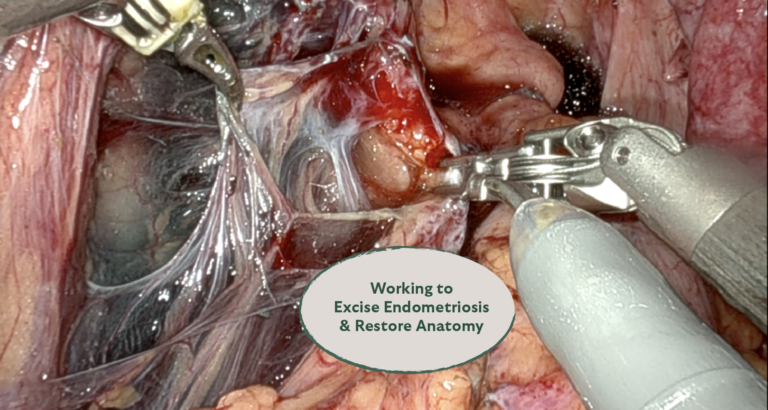
When chronic pelvic pain, painful periods, or infertility disrupt your life, endometriosis excision surgery may be your path forward. At ESSE Care, we specialize in true excision—removing endometriosis at its root rather than simply burning it away—using minimally invasive techniques designed to give you the best chance of long-term relief.
What Is Endometriosis Excision Surgery?
Endometriosis excision surgery is a minimally invasive procedure that removes endometriosis tissue completely from the body. This approach is performed through small abdominal incisions using either laparoscopic instruments or robotic-assisted technology. The goal is to relieve pain, restore normal pelvic anatomy, preserve fertility when desired, and minimize the risk of recurrence.
Why Excision Rather Than Ablation?


| AblationBurns the Surface | ExcisionRemoves Disease at the Root |
|---|---|
|
|
The difference between excision and ablation matters significantly for long-term outcomes. Ablation uses heat or thermal energy to burn the surface of endometriosis lesions. This approach may leave deeper disease behind, which can lead to symptom recurrence. Excision removes the entire lesion, including its base and roots, providing more complete treatment and better long-term relief.
Who Needs Endometriosis Excision Surgery?
This surgery may be right for you if you’re experiencing:
- Chronic pelvic pain unresponsive to medication or hormonal treatments
- Painful periods, painful intercourse, or pain with bowel movements or urination
- Infertility or repeated IVF failure
- Visible endometriomas (ovarian cysts) or deep infiltrating lesions on imaging
- Previously diagnosed endometriosis that wasn’t fully treated or has returned
- The need to optimize pelvic anatomy before attempting pregnancy


What Happens If Endometriosis Isn’t Treated?
The short answer is that endometriosis continues to grow and spread as long as it is left untreated. Hormonal treatments can ease symptoms, but the diseased tissue remains unless it is removed.
Some of the possible complications associated with worsening endo include:
- Organ damage: With rare cases of severe endometriosis, patients may experience bowel obstruction, kidney blockage, or organ dysfunction; the surgery to fix these issues becomes more invasive as the condition worsens.
- Cyst splatter: If a patient has a known endometrioma (chocolate cyst), waiting too long to remove it could cause it to rupture and splatter diseased tissue throughout the peritoneal cavity.
- Increased ovarian cancer risk: Studies show that women with severe subtypes of endometriosis, which can develop when the disease is left untreated over time, are up to 10 times more likely to be diagnosed with ovarian cancer. Luckily, surgical treatment of endo is associated with a lowered risk.
- Increased risk of infertility: More advanced stages of endometriosis (Stage 3 and Stage 4) are associated with higher risks of infertility compared to earlier stages.
What Conditions Does Excision Surgery Address?


Endometriosis can appear in various forms and locations throughout the pelvis and the rest of the body. Excision surgery can treat:
- Every stage of endo—Stage 1, Stage 2, Stage 3, and Stage 4
- Superficial peritoneal endometriosis
- Deep infiltrating endometriosis (DIE)
- Ovarian endometriomas (“chocolate cysts”)
- Bowel, bladder, or ureteral endometriosis
- Diaphragmatic or thoracic endometriosis
- Scar tissue and pelvic adhesions caused by endometriosis
How Endometriosis Excision Surgery Is Performed
At ESSE Care, we use minimally invasive techniques—either traditional laparoscopy or robotic-assisted laparoscopy—to perform endometriosis excision. Both approaches involve making several small incisions or ports (typically 4 , each about 5–8 mm) in the abdomen.
- Laparoscopic surgery uses a camera and specialized instruments inserted through these small ports. The surgeon operates while viewing a magnified image of the pelvic organs on a monitor.
- Robotic-assisted surgery uses the same small incisions but gives the surgeon enhanced 3D visualization, greater precision, and improved dexterity through robotic arms controlled from a console. This can be especially beneficial for complex cases involving deep disease or delicate structures.
Endometriosis Excision Surgery: Step by Step


During the surgery, your surgeon will:
- Insert a camera through a small incision near the navel to visualize the pelvic cavity.
- Make additional small incisions for surgical instruments.
- Systematically inspect all pelvic surfaces, organs, and structures for endometriosis.
- Carefully excise all visible endometriosis lesions, removing them completely at their base.
- Address any adhesions (scar tissue) that may be distorting anatomy.
- Remove endometriomas if present.
- Perform any additional necessary procedures to restore anatomy, optimize fertility, or achieve the patient’s goals for surgery.
- Ensure careful hemostasis (control of bleeding).
- Close the small incisions with absorbable sutures.
The surgery typically takes 2-5 hours depending on the extent and location of disease, but it can take longer in more complex cases.
Procedures Often Combined with Excision
Depending on your specific anatomy and goals, your surgeon may perform additional procedures during the same surgery, such as ovarian cystectomy, hernia or diastasis repair, or treatment of other gynecologic conditions. For complex cases involving the bowel, bladder, or diaphragm, we coordinate with specialists from colorectal surgery, urology, or thoracic surgery.
This integrative approach means you can address multiple issues in one surgery and one recovery period.
Preparing for Surgery
Before your surgery, you’ll undergo imaging studies (typically ultrasound and/or MRI) to map disease location, pre-operative lab work, and a review of your medications and supplements. You may need to stop certain medications that increase bleeding risk, begin iron supplementation if you’re anemic, and stop smoking to optimize healing.
Your care team will provide specific instructions about when to stop eating and drinking before surgery, whether bowel preparation is needed, and what to expect on the day of your procedure.
Recovery and Post-Surgery Support


Most patients go home the same day or stay one night in the hospital. Recovery is gradual, with most returning to desk work within 2-4 weeks and full activity by 6-8 weeks. Complete internal healing can take 3-6 months.
What to expect after surgery:
- Pain management: Prescription medications for the first week, then over-the-counter options. Heating pads and gentle movement help with discomfort.
- Activity restrictions: Avoid heavy lifting (over 10 pounds) and core-intensive exercise for 6 weeks. Depending on your surgery, pelvic rest for at least 2 weeks.
- Follow-up care: First visit at 1-2 weeks for wound check and pathology results, with ongoing monitoring for recurrence and symptom management.
- Additional support: Pelvic floor physical therapy often recommended at 6-8 weeks; nutritional, pain management, and mental health support available as needed.
Contact your care team immediately if you experience any of the following: fever over 101°F, severe or worsening pain, heavy bleeding, difficulty urinating or severe constipation, signs of incision infection (redness, warmth, drainage), or severe nausea/vomiting.
Risks and Possible Complications of Endometriosis Excision Surgery
Common experiences during recovery:
- Pain, bloating, and gas discomfort
- Fatigue and temporary bladder or bowel changes
Less common but serious risks:
- Bleeding, infection, or blood clots
- Injury to nearby organs (bladder, bowel, ureters, blood vessels)
- Adhesion formation (new scar tissue)
- Anesthesia complications
- Endometriosis recurrence
It’s important to weigh these risks against the risks of untreated endometriosis, which can include chronic pain, progressive organ damage, worsening quality of life, and fertility challenges.


Success Rates and Long-Term Outlook
Endometriosis excision surgery offers excellent outcomes for many endometriosis patients, many of whom have suffered for years:
- Pain relief: Studies show significant improvement in pelvic pain, painful periods, painful intercourse, and bladder/bowel pain following complete excision.
- Fertility improvement: For patients with infertility related to endometriosis, excision surgery can improve natural conception rates and IVF success.
- Quality of life: Patients consistently report improved daily functioning, emotional well-being, and body confidence following successful treatment.
Can Endometriosis Come Back?
Endometriosis can recur after surgery, though rates vary based on disease severity, completeness of excision, and whether hormonal suppression is used post-operatively. If symptoms return, options include repeat imaging, medication management, or revision surgery.
Complete excision by a skilled surgeon offers the best chance of long-term symptom control and minimizes the need for additional surgeries.
Your Surgical Journey at ESSE Care


At ESSE Care, we believe that expert surgical technique is only part of the equation. We prioritize:
- Comprehensive evaluation: Understanding your full medical history, symptoms, and goals
- Personalized surgical planning: Tailoring your surgery to address your specific anatomy and needs
- Collaborative care: Coordinating with specialists when needed to provide complete treatment
- Transparent communication: Ensuring you understand what to expect before, during, and after surgery
- Holistic support: Addressing not just the disease but also your overall well-being and recovery
If you’re living with endometriosis symptoms that are affecting your daily life, you don’t have to continue suffering. Expert surgical care can provide the relief you’ve been searching for.
Schedule a consultation with an ESSE Care specialist today to discuss whether endometriosis excision surgery is right for you.