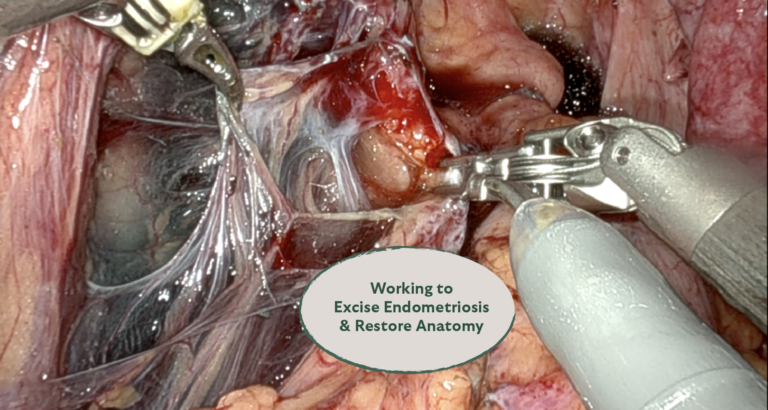
When endometriosis symptoms affect the bowel, appendix, or bladder, patients are often sent on a frustrating detour that involves gastroenterologists, ER visits, or dietary changes before endometriosis is ever considered. Dr. Daniel Marcus is helping to change that. His expertise in minimally invasive general surgery and his collaborative approach to complex excision cases make him a critical surgical partner for patients with multi-organ endometriosis.
In our recent Endo Exchange conversation, Dr. Marcus joined Dr. Karli Provost Goldstein and sisters Bailey and Devyn Steeves to explore how deeply endometriosis can reach and why surgery that includes the bowel, appendix, and surrounding organs can make all the difference.
This discussion didn’t just validate patient pain. It illuminated the power of team-based care and how a single surgery can change someone’s quality of life.
About Dr. Daniel Marcus
Dr. Daniel Marcus is a board-certified general surgeon and Chair of Robotic Surgery at Marina del Rey Cedars-Sinai. He has performed more than 2,500 robotic surgeries, with a particular focus on deep pelvic and abdominal disease including bowel and appendiceal endometriosis. He also serves as a faculty member for Cedars-Sinai’s General Surgery Residency Program, where he mentors the next generation of minimally invasive surgeons.
Known for his precision and compassion, Dr. Marcus is one of ESSE Care’s trusted surgical collaborators. His work bridges a crucial gap for patients whose endometriosis affects more than the uterus, delivering expert care for parts of the body that gynecologic surgeons alone cannot safely treat.
Top Questions from the Endo Exchange Conversation with Dr. Marcus
1. How common is bowel or appendix endometriosis?
Dr. Marcus: Bowel and appendix involvement is far more common than most people—and many providers—realize, particularly in patients with moderate to severe or longstanding endometriosis. In complex surgical cases, we find endometriosis on the appendix in up to 30% of patients. Bowel involvement, especially of the rectum or sigmoid colon, is frequently underdiagnosed.
The challenge is that these areas are often overlooked because the symptoms may seem unrelated to the reproductive system, and imaging rarely picks up the full extent of disease. That’s why a full-body assessment and surgical expertise across organ systems are critical.
2. What symptoms might suggest appendix or bowel involvement?


Dr. Marcus: If you’re experiencing any of these symptoms—particularly if they worsen around your period or don’t respond well to gastrointestinal treatment—it’s worth investigating further:
- Right-sided abdominal pain that cycles monthly
- Persistent or cyclical nausea, bloating, or digestive discomfort
- Sharp pain during bowel movements
- Constipation alternating with diarrhea
- Pain episodes that have been misdiagnosed as IBS, Crohn’s disease, or appendicitis
In many patients, these symptoms are subtle or inconsistent, which can make diagnosis difficult. But with the right surgical evaluation, we can identify and address these forms of endometriosis effectively.
3. Why does imaging often come back normal even when disease is present?
Dr. Marcus: Standard imaging like ultrasounds and CT scans can miss small or deeply infiltrative endometriosis lesions—especially on the bowel or appendix. Even MRI, which is more advanced, has limitations when it comes to subtle disease or scarring.
That’s why surgical visualization is so important. With robotic-assisted excision, we are able to see the entire abdominal and pelvic cavity in detail, identify abnormal tissue, and confirm the diagnosis with pathology. It’s one of the most reliable ways to fully understand the extent of disease.
4. What’s the benefit of having both a general surgeon and gynecologic surgeon operate together?
Dr. Marcus: When endometriosis involves multiple organs—like the rectum, appendix, or diaphragm—it takes a team approach. In our collaboration with Dr. Karli Provost Goldstein at ESSE Care, we’re able to:
- Complete the entire procedure in one surgery, with one recovery period
- Coordinate a surgical plan that treats all areas of disease, not just the reproductive organs
- Avoid delays or incomplete care due to lack of surgical access to non-gynecologic organs
- Ensure bowel or appendix resections (removal of tissue) are done with the highest standards of safety
This model allows us to deliver the best outcomes—especially for patients who have felt overlooked or whose symptoms span beyond the pelvic region.
5. What makes robotic surgery effective for treating bowel or appendix endometriosis?


Dr. Marcus: Robotic-assisted surgery offers a magnified, high-definition 3D view of the internal anatomy, which allows us to identify even small or hidden lesions. It also gives us the ability to perform delicate dissections and precise suturing with less trauma to surrounding tissue.
For patients with multi-organ involvement, robotic surgery often means smaller incisions, lower risk of complications, and a quicker recovery time. It’s especially helpful when operating on sensitive structures like the bowel, rectum, and appendix where precision matters most.
Why We Value This Partnership
Dr. Marcus brings what every complex endometriosis patient deserves: technical expertise, thoughtful listening, and seamless surgical collaboration. Whether he’s treating advanced bowel disease or removing an inflamed appendix missed on imaging, he approaches every case with care and clarity.
His work ensures patients with multi-organ disease don’t have to choose between incomplete surgery and fragmented care.
If you’re navigating GI symptoms, unexplained right-sided pain, or have been told your imaging is “normal” despite ongoing symptoms, Dr. Marcus’s partnership can provide the surgical insight—and answers—you’ve been waiting for.