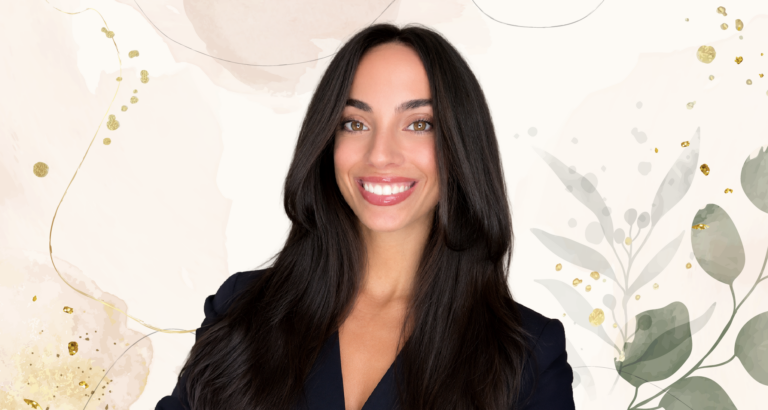
Bailey Steeves grew up with memories of her mother describing periods so painful she could hardly function. Her mother passed when Bailey was young, but those memories remained, quietly informing Bailey’s growing awareness of her own body.
As she moved through her teenage years into adulthood, Bailey experienced symptoms that seemed more than “just a bad period,” including vomiting during her cycle, persistent bloating, fatigue, and digestive upset. She was told these symptoms weren’t serious. But the memory of her mother’s pain stayed with her—and eventually became a clue.
After years of being ignored or misunderstood, Bailey began researching endometriosis and discovered its strong genetic ties. She recognized the pattern—not only in herself but in her sister, Devyn, too. With the guidance of Dr. Karli Provost Goldstein at ESSE Care, Bailey pursued a diagnosis and ultimately underwent excision surgery.
“I knew something wasn’t right. And I was done being told it was normal.”
Bailey Steeves
When Family History Becomes a Clue
The turning point came when Bailey started researching her symptoms and stumbled across information about endometriosis, a condition she had heard about in passing but never explored deeply. What stood out most was its family link.
Suddenly, everything began to connect: her mother’s pain, her own struggles, and the similarities she saw in her younger sister, Devyn. Bailey realized her symptoms weren’t isolated. And with that realization came a new purpose: to seek answers not only for herself but also for her family.
Her research led her to Dr. Karli Provost Goldstein at ESSE Care, a specialist in minimally invasive and multi-organ endometriosis surgery. It was the first time Bailey felt like her full story—her pain, her gut symptoms, her intuition, and her mother’s history—was heard.
Early Symptoms That Were Overlooked
Looking back, Bailey now sees how long she had been living with the signs of endometriosis:
- Severe menstrual cramps with nausea and vomiting, starting in her teens
- Daily bloating and digestive upset, even outside her menstrual cycle
- Fatigue, pelvic pressure, and nausea that disrupted her routine
- Dismissive responses from providers who said she was “just sensitive” or would outgrow it
- Hormonal suppression offered as a solution, but never an explanation
Determined to get real answers, Bailey began tracking her symptoms and comparing them to the stories she read and remembered—including her mother’s. She learned that endometriosis doesn’t just affect the uterus and ovaries, can also involve the bowel, bladder, appendix, diaphragm, and more. She needed someone who could look beyond the surface.
Surgical Evaluation: Finding What Imaging Missed


At ESSE Care, Bailey met with Dr. Goldstein and Dr. Daniel Marcus, who took her entire history seriously. They didn’t dismiss her digestive symptoms as unrelated or blame anxiety for her pain. They created a comprehensive surgical plan based on a full-body approach.
During surgery, the team found what imaging never could:
- Deep endometriotic implants on her ovaries and rectum
- Adhesions binding her reproductive organs to the bowel
- Appendiceal involvement, despite normal imaging results
- Widespread disease that explained the years of distress she had endured
Because the focus was on complete excision, not ablation, and the team addressed multi-organ involvement in one coordinated plan, Bailey’s surgery became a turning point. Her body’s internal reality finally matched the pain she’d long been told to ignore.
Why Bailey’s Story Matters
Bailey’s journey offers essential insights about endometriosis:
- Family history matters, even if prior generations were never formally diagnosed. ESSE Care frequently sees endometriosis present in families with similar pain patterns.
- Digestive symptoms may not be GI issues at all—they can be signs of bowel or appendix involvement in endometriosis.
- Imaging can miss disease. Endometriosis often requires direct surgical visualization for accurate diagnosis.
- Every case is different. Even siblings can present differently, making a “one-size-fits-all” approach ineffective.
- Multidisciplinary planning is key—especially when endometriosis extends beyond the pelvis.
A Sister’s Diagnosis, and a Shared Journey
As Bailey recovered, she reflected more on her sister Devyn, who had also been quietly suffering. Devyn’s symptoms didn’t mirror Bailey’s exactly—she didn’t have intense period cramps, but she struggled with digestive pain, bloating, flank discomfort, and nausea. Bailey urged her to get evaluated.
Soon, both sisters were scheduled for same-day excision surgery. Devyn’s case confirmed that while genetics play a role, endometriosis can look very different from one person to another.
“If I hadn’t gotten care, I don’t know when Devyn would’ve gotten hers. Our stories are different, but we both had endo.”
Bailey Steeves
Their shared journey reinforced the importance of looking at the whole person, not just their uterus or period symptoms.
Life After Surgery: What Healing Looks Like Now
Today, Bailey is experiencing a version of life she had almost forgotten was possible:
- Significant relief from bloating, GI symptoms, and pelvic pressure
- More energy, and fewer “mystery flare-ups”
- Emotional healing from having her pain validated and treated
- A renewed sense of purpose in helping others recognize and speak up about their symptoms
Bailey’s Advice for Others Still Searching for Answers
Bailey now shares her story to empower others. Her advice?
- Trust your body. If something feels off, don’t ignore it
- Keep a detailed symptom log. Patterns often hold the key
- Don’t accept “normal” imaging as a final answer—deep disease is often missed
- Explore your family history, even if it’s vague or undocumented
- Seek providers who listen, understand, and look at your whole system, not just your reproductive organs
You Don’t Have to Wait for Answers
Bailey’s journey proves that the symptoms of endometriosis are real, serious, and treatable.
At ESSE Care, we believe in whole-body, multidisciplinary, compassionate care. Whether your disease affects the pelvis, bowel, appendix, or beyond, you deserve clarity, validation, and a plan for real healing.
Your voice matters. Your symptoms matter. Your story deserves to be heard.