Patients and doctors alike talk a lot about the different stages of endometriosis, but understanding what each stage means for you can be challenging. If you or your doctor thinks you have Stage 3 endometriosis, you’re probably wondering what it means to your life. What are your treatment options? And can you get pregnant with Stage 3 endometriosis?
Your concerns are valid. Here’s what you need to know.
What Are the Four Stages of Endometriosis?


The widely referenced endometriosis staging system was developed by the American Society for Reproductive Medicine (ASRM). The stages correspond to the severity and extent of endometriosis lesions, scarring, and inflammation that doctors observe during surgery. Importantly, the stages do not indicate the severity of your symptoms.
In simple terms, the ASRM stages are:
- Stage 1 (“minimal”): Shallow, superficial lesions with minimal or no scarring (known as adhesions)
- Stage 2 (“mild”): Some deeper lesions, minor adhesions that are thin and filmy
- Stage 3 (“moderate”): Many deep lesions, dense adhesions, and possible ovarian cysts (known as endometriomas or “chocolate cysts”)
- Stage 4 (“severe”): Many deep lesions, significant adhesions, and large endometriomas. “Frozen pelvis” (where organs become stuck together due to adhesions) is also a possibility.
What Is the Difference Between Stage 3 and Stage 4 Endometriosis?
Both Stage 3 and Stage 4 endometriosis can involve deep lesions and dense adhesions throughout the pelvis, but these are generally less severe and widespread in Stage 3. While patients in either stage could have endometriomas on one or both ovaries, they are typically larger in Stage 4.
That said, it can be difficult for doctors to accurately determine the size of endometriomas without surgery. Patients may be told for years that their cysts are small and harmless, only to discover later that the cyst is much larger than initially thought. As cysts grow, they become more likely to rupture, splattering pelvic structures with fluid that hardens and causes pain and inflammation.
How Serious Is Stage 3 Endometriosis?
Stage 3 endometriosis can seriously affect your quality of life due to its symptoms and complications, but it is not life-threatening. The life expectancy of someone with Stage 3 endometriosis is the same as that of anyone else.
Symptoms of Stage 3 Endometriosis


It’s impossible to know which stage of endometriosis you have based on symptoms alone. The number and severity of your symptoms do not correlate with any particular stage. You may have debilitating symptoms with mild endo or no symptoms at all with severe, extensive disease.
With that in mind, the symptoms of Stage 3 endometriosis are largely the same as other stages. These include:
- Painful, heavy periods
- Painful intercourse
- Pelvic pain, sometimes radiating to the back or thighs
- Pain or pressure with bowel movements or urination
- Digestive issues (diarrhea, constipation, bloating, or nausea)
- Pulling sensations
- Fatigue
- Difficulty getting pregnant—infertility is more likely compared to Stages 1 and 2
It’s worth noting that Stages 3 and 4 correlate with a higher prevalence of “extrapelvic” endometriosis, meaning that the lesions have spread beyond the pelvic organs. Extrapelvic endometriosis is most likely to affect the gastrointestinal tract and urinary tract, but it can also (rarely) spread to the abdominal wall, diaphragm, lungs, vagina, vulva, umbilical cord, or liver. As a result, women with extrapelvic endometriosis may have pain and other symptoms related to these areas if lesions are present there.
Can You Get Pregnant with Stage 3 Endometriosis?
Women can absolutely get pregnant with Stage 3 endo, but it may be more difficult than it would be at an earlier stage of the disease, and complications are more likely. One reason for this is that Stage 3 endo is more likely to involve endometriomas, or “chocolate cysts,” which can block the fallopian tubes or make it harder for the ovaries to release eggs. Additionally, dense scar tissue can distort the uterus and cause inflammation that interferes with sperm transport or implantation.
Possible endo-related pregnancy complications include:
- Abnormal placentation
- Gestational diabetes
- Bleeding
- High blood pressure
- Other placental abnormalities
When dealing with recurrent miscarriages, women are often tested for a laundry list of autoimmune diseases, all of which are rarely the cause. Endometriosis is far more likely to be at the root of infertility or recurrent miscarriage, but it’s often overlooked.
It’s hard to pin down exactly why fertility doctors hesitate to refer patients to endometriosis specialists, but misconceptions about cost and invasiveness could contribute. What you need to know: In many cases, endometriosis excision surgery leads to better fertility and pregnancy outcomes for patients with the disease.
If you or your doctor suspect you have Stage 3 endometriosis, it’s important to consult with an endometriosis excision specialist who can partner with fertility doctors and other experts to come up with the right fertility plan for you.
How Is Stage 3 Endometriosis Diagnosed?
There are three main tools that doctors use to diagnose endometriosis, including Stage 3:
- A detailed symptom history: If you think you have endometriosis, it’s important to document your symptoms. Track where in the body your symptoms occur, when they happen in relation to your menstrual cycle, and how severe they feel. Providing this data to your doctor provides a better map of potential disease than any scan and can help them determine the best course of action.
- Imaging, such as ultrasound or MRI: Many endometriosis lesions and even thin adhesions may not be visible on imaging, but endometriosis specialists can usually detect endometriomas in addition to more subtle signs of endo, like pockets of fluid or distorted organs. Note: ERs rarely perform pelvic MRIs on patients with non-life-threatening symptoms. Even if you do get an MRI in the ER, a general radiologist is unlikely to detect signs of endo. It’s best to schedule an MRI in an outpatient setting with an endo-informed provider.
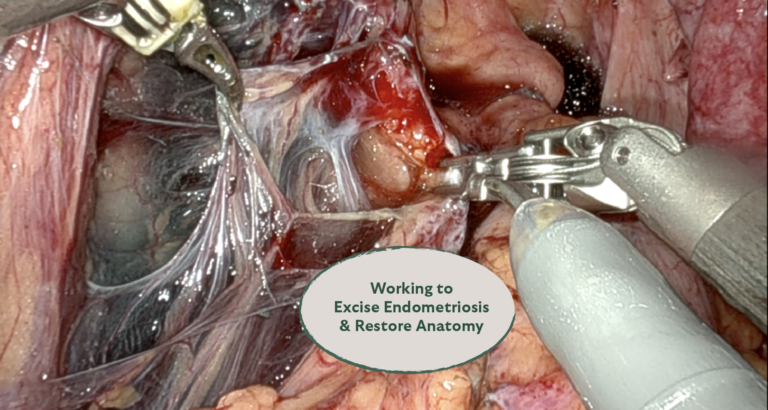
- Minimally invasive laparoscopic surgery: Laparoscopy is the gold standard for both diagnosing and treating endometriosis at any stage. The surgeon makes a small incision and uses a thin camera to thoroughly examine your pelvic cavity and discover any signs of endometriosis. The beauty of laparoscopy is that endometriosis lesions can be diagnosed and removed simultaneously, provided the procedure is performed by an endometriosis excision specialist.
Stage 3 Endometriosis Treatment
Your treatment plan depends not just on the stage of endometriosis you have but also on your symptoms (and how they affect your day-to-day life) and your fertility goals. It’s essential to work with a care team that listens to you, prioritizes your needs, and recognizes that endometriosis is a multifaceted disease affecting the entire body.
A multi-disciplinary care team might recommend:
- Hormone therapy (including birth control and other supplements): Hormone therapy can help suppress your period, which is often the time in your cycle when the worst symptoms appear. However, it’s important to understand that no medication can treat or cure endometriosis. Additionally, not all patients respond well to hormone therapy. But for those that do, it can be a welcome reprieve from painful symptoms.
- Excision surgery: Minimally invasive excision surgery is the best long-term treatment option for endometriosis. Compared to other methods like ablation (burning of lesions), excision is a more effective and comprehensive treatment, often drastically reducing or even eliminating symptoms when performed by a trained specialist.
- Supportive therapies: A low inflammatory lifestyle that includes acupuncture, pelvic floor therapy, and nutrition planning can help relieve pain and improve your quality of life if you have endometriosis. At ESSE Care, we believe in blending Western medicine with Eastern techniques for a comprehensive approach.
Unfortunately, many doctors won’t bring up endometriosis, even when you have all the signs. If you’re not satisfied with the diagnosis or treatment options you’ve been given, remember to advocate for yourself. While it can be hard to find the courage to question your doctors, it’s worth it to get the care you deserve.
Stage 3 Endometriosis Isn’t a Life Sentence
If you’ve been diagnosed with Stage 3 endometriosis and you’re worried it means you’ll never feel better, we’re here to give you hope. With the right treatment, your quality of life can dramatically improve.
For personalized, compassionate care from endometriosis experts, schedule a consultation with ESSE Care today.