Understanding endometriosis requires looking beyond the uterus. It’s a disease that affects more than reproductive organs, can mimic digestive disorders, and often runs in families without being recognized. This patient-centered conversation highlights the genetics of endometriosis, the value of symptom mapping, and why multidisciplinary surgical care is critical when organs like the appendix or bowel are involved.
This webinar, hosted by Dr. Karli Provost Goldstein of ESSE Care, surgeon Dr. Dan Marcus, and patient advocates (and sisters) Bailey and Devyn Steeves, aimed to highlight how endometriosis can affect multiple members of the same family with very different symptoms.
Here are five key insights we hope will support every patient navigating endometriosis—especially those wondering if they might have it, even if their symptoms differ from a family member’s experience.
1. Endometriosis runs in families, but it can affect each person differently.
Bailey and Devyn Steeves are sisters who both have endometriosis, yet their symptoms and disease presentation were drastically different. Bailey had classic signs, including painful periods, vomiting, and nausea. By contrast, Devyn primarily experienced digestive issues, bloating, and pressure, but little menstrual pain. Despite that, Devyn’s disease was more advanced than her sister’s.
What their story reveals:
- A family history of painful periods or unexplained symptoms (even without a formal diagnosis) should raise suspicion.
- Endometriosis does not behave predictably. Even among siblings, it can appear in different locations, cause different symptoms, and progress at different rates.
Family history matters, but so does listening to your individual body. Genetics might raise your risk, but symptoms are still your most powerful map.
2 . Digestive symptoms may be endometriosis, not “just IBS.”


For years, Devyn was told her bloating, nausea, and food-triggered pain were related to anxiety or gut health. It wasn’t until she came off birth control and the pain intensified that a deeper investigation began. During surgery, Dr. Goldstein found endometriosis not only in Devyn’s pelvis but also on her appendix and near the diaphragm.
Key clues that GI symptoms may be tied to endo:
- Right-sided pain, especially near the hip or flank
- Daily bloating or nausea that worsens during your period
- Symptoms that mimic IBS but don’t respond to GI treatments
When symptoms don’t align with imaging—or don’t respond to standard GI treatments—it’s time to consider extra-pelvic endometriosis.
3. Imaging may miss it. Excision surgery won’t.
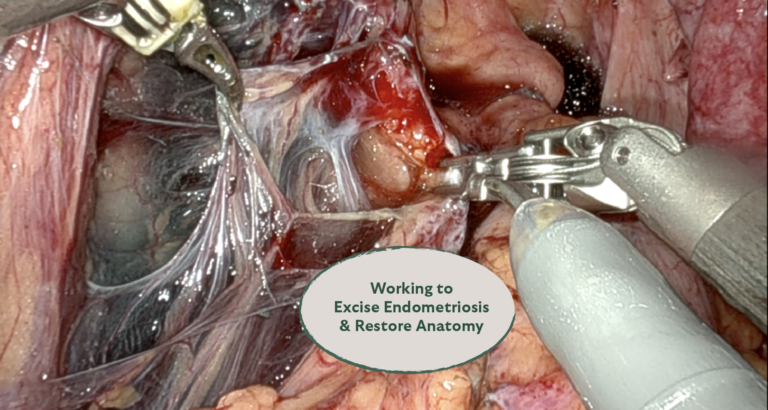
Both sisters had normal ultrasounds before surgery. But robotic-assisted excision revealed stage 3 and stage 4 endometriosis, involving deep pelvic disease, large ovarian cysts, and appendix infiltration.
Unlike ablation, which burns lesions at the surface and leaves no pathology behind, excision involves:
- Removing disease at its root
- Sending tissue to pathology to confirm diagnosis
- Allowing surgeons to assess severity and spread
When multiple organs are involved—like the bowel, appendix, or diaphragm—having a gynecologic surgeon partner with a general or colorectal surgeon in the OR makes all the difference.
Excision provides clarity. Multidisciplinary planning ensures nothing is missed.
4. The appendix plays a bigger role than most think.


Despite clear imaging, both sisters had disease involving the appendix—one with visible endometriosis, the other with a cystic growth. Their cases reflect a larger pattern we often see at ESSE Care: In roughly 30% of advanced cases, endometriosis is found on or around the appendix.
This matters because:
- Appendiceal endometriosis is rarely detected on imaging.
- It often contributes to chronic nausea, right-sided pain, or pelvic inflammation.
- Symptoms may mimic acute appendicitis, but they resurface with each menstrual cycle.
- If not addressed during surgery, symptoms may persist.
The lesson: Even a “normal-looking” appendix can harbor disease, and it should always be evaluated during excision surgery.
5. Listening, collaboration, and full-body care make all the difference.
Bailey and Devyn were both told by previous providers that their symptoms were “normal” and offered birth control as a first-line fix. It wasn’t until they began comparing their experiences—and advocating for themselves—that they found a team who took their full story seriously.
Their joint surgery, performed by Dr. Goldstein and Dr. Marcus, wasn’t just technically complex—it was emotionally meaningful. It allowed each of them to be seen as a whole person whose day-to-day experiences mattered.
What made the difference?
- Doctors who listen without assumptions
- Surgery planned with multiple specialists in the room
- A philosophy that the whole body, not just reproductive organs, deserves care
Real healing starts when patients are heard and supported—before, during, and after surgery.
If you’re wondering whether your symptoms could be connected…
- You don’t have to have “classic” endometriosis pain for it to be real.
- Symptoms that affect digestion, the right side of your body, or your breathing may be connected.
- If you have a family history of painful periods, unexplained GI issues, or infertility, it’s worth a closer look.
- Birth control might lessen symptoms, but it doesn’t treat the disease.
ESSE Care specializes in full-body, expert-led endometriosis care. From advanced excision surgery to integrative support, we help patients get real answers and lasting relief.
If you’re ready to get to the root cause of your symptoms, schedule a consultation today.