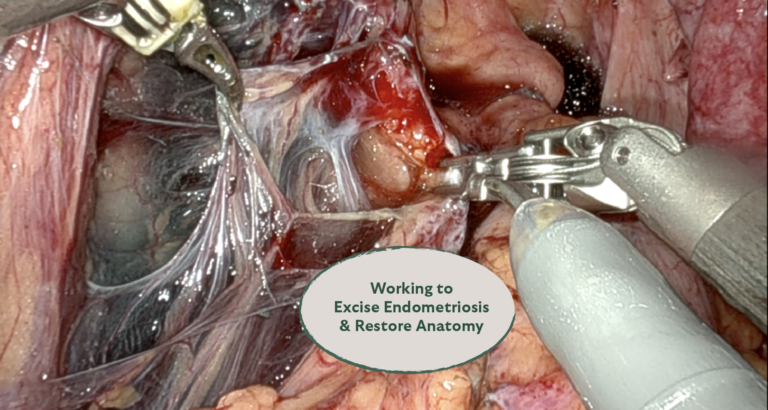
Trying to find the cause of infertility can feel like looking for a needle in a haystack—you know the answer exists but finding it may be impossible. If you’ve had trouble getting or staying pregnant, there’s an important stat you should know: Up to 50% of unexplained infertility is caused by endometriosis.
Unfortunately, the concerns of many patients later diagnosed with endometriosis are often dismissed or attributed to other diseases without clear evidence. It often takes up to a decade for patients to be properly diagnosed with endometriosis.
All of this raises an important question: Why is endometriosis so often overlooked as a cause of infertility?
How Does Endometriosis Cause Infertility?
30% to 50% of women with endometriosis may have trouble getting pregnant. Why? Experts still aren’t certain what causes endometriosis-related infertility, but there are strong theories about what factors may contribute to infertility in different stages:
- Early endo: In Stage 1 and Stage 2 of endometriosis, the body’s inflammatory response ramps up. Cells and messengers (like prostaglandins, cytokines, macrophages, and natural killer cells) flood the ovaries and fallopian tubes. Inflammation can interfere with the development of eggs, the meeting of sperm and eggs, and the implantation of a fertilized egg in the uterus.
- Advanced endo: When endometriosis becomes more severe, adhesions (scar tissue) and cysts called endometriomas can form “sticky” areas or masses inside the pelvis. These growths can alter the normal shape and movement of the fallopian tubes, making it more difficult for an egg to be released and potentially slowing sperm movement. There’s also evidence that the process of egg maturation itself is less effective, which lowers the chance of fertilization.1
If learning this makes you feel hopeless, remember that many women with endometriosis go on to have successful pregnancies. The key is getting the right diagnosis and treatment.
Why Is Endometriosis the “Missed Disease”?


Researchers have called endo the “missed disease” because of how often it is overlooked by health professionals, policymakers, and researchers.2 The sad truth is that the story of endometriosis follows a similar trajectory as other issues that affect those assigned female at birth.
Gender Bias and Discrimination
The foundation of modern medicine is based on male anatomy and physiology, with female-specific issues and experiences often ignored. Historically, female infertility was even seen as a failure on the woman’s part, with painful symptoms attributed to prejudiced diagnoses such as “hysteria.”3 While many of us would like to think our society has evolved beyond such archaic-sounding ideas, some of the patients we talk to at ESSE Care tell us that they have been diagnosed with mental health issues like anxiety when they brought up endometriosis symptoms to their doctor. Sound familiar?
Lack of Investment
Perhaps due to gender bias, there is a significant lack of investment in research and public health policy related to endometriosis. As a result, there is no universal consensus on diagnostic criteria or treatment methods, which reinforces some healthcare practitioners’ tendency to overlook the issue. Additionally, because so little research has been done, the only definitive way doctors have to confirm an endo diagnosis is through surgery. Although considered minimally invasive and proven incredibly effective, many patients and their doctors shy away from laparoscopy in favor of less disruptive treatments that—if endo is the root cause—address only the symptoms, while endo continues to get worse behind the scenes.
Lack of Training and Expertise
Many women exploring the causes of infertility, or who already suspect endometriosis, assume that their OB/GYN or fertility doctor will be knowledgeable in all the potential reasons for infertility. The reality is that, of the 75% of patients who are misdiagnosed with another ailment when endometriosis was the issue, 53% were misdiagnosed by their gynecologist.4 Traditional medical schools do not provide doctors—even gynecologists—with expertise in endometriosis. That’s why seeking the opinion of a trained endometriosis specialist is so important.
Seeing a Fertility Specialist Often Isn’t Enough
Video: Can Laparoscopy Before Egg Retrieval Improve Egg Quality?
While fertility specialists are invaluable partners on your journey to parenthood, they may not always have the full picture when it comes to endometriosis. Because endo can affect the body in complex and sometimes hidden ways—through scarring, inflammation, and cysts—its impact on fertility isn’t always obvious in standard fertility workups.
Additionally, some uninformed doctors perpetuate untrue misconceptions about endometriosis and fertility treatment, including:
- IVF as the fastest path to pregnancy: Even if endometriosis is suspected, many fertility specialists recommend moving straight to assisted reproductive technologies (ART) like intrauterine insemination (IUI) and in vitro fertilization (IVF), despite the fact that these processes are often more successful after endometriosis excision surgery.
- Surgery is more expensive than IVF: Ultimately, the cost of both IVF and excision surgery depend on your insurance policy and where you get the procedure. But IVF may not be covered by your plan, and multiple failed IVF cycles can quickly add up to far more than a single surgical procedure. At ESSE Care, many women have come to us after several unsuccessful rounds of IVF, undergone endometriosis excision, and then gone on to carry a healthy pregnancy to term.
This isn’t to say you have to jump into surgery right away—every treatment path is personal. But it’s crucial to include a specialist who truly understands—and treats—endometriosis in your fertility conversations.
Treatment Gaps: Western Medicine Isn’t Everything
Unfortunately for many patients, the average Western doctor is more likely to spend 15 minutes with you and write a prescription (which may or may not be effective) rather than spend time investigating the root cause of your symptoms or creating a comprehensive treatment plan.
At ESSE Care, our doctors firmly believe in diagnosing and treating endometriosis as a whole-body disease. Not only do we seek to address the physical disease fully through proven long-term treatments such as excision surgery, but we also recommend holistic therapies that can benefit patients both physically and mentally.
Treatments like acupuncture and hypnotherapy can help reduce the stress that comes with fertility treatments and endometriosis, potentially leading to better outcomes. ESSE Care’s founder, Dr. Karli Provost Goldstein, found acupuncture particularly helpful as she navigated 15+ rounds of IVF on her own fertility journey.
Getting the Right Care Shouldn’t Be Hard
Navigating infertility is one of the most difficult challenges a woman can face. The stress and uncertainty can take a toll over time. The team at ESSE Care understands what you’re going through and respects your unique experience. Our doctors take the time to understand your history and goals so you can make a plan together that addresses your symptoms, minimizes complications, and retains or restores your fertility.
Schedule a consultation with ESSE Care today and see what it’s like to receive compassionate, expert endometriosis care.