
When facing infertility, many patients are presented with a single path: in vitro fertilization (IVF). But not everyone wants, needs, or qualifies for IVF—and not every cause of infertility can be addressed with it.
For patients seeking to understand and restore their natural fertility without relying on egg retrieval, embryo creation, or hormonal suppression, NaPro surgery offers a different approach.
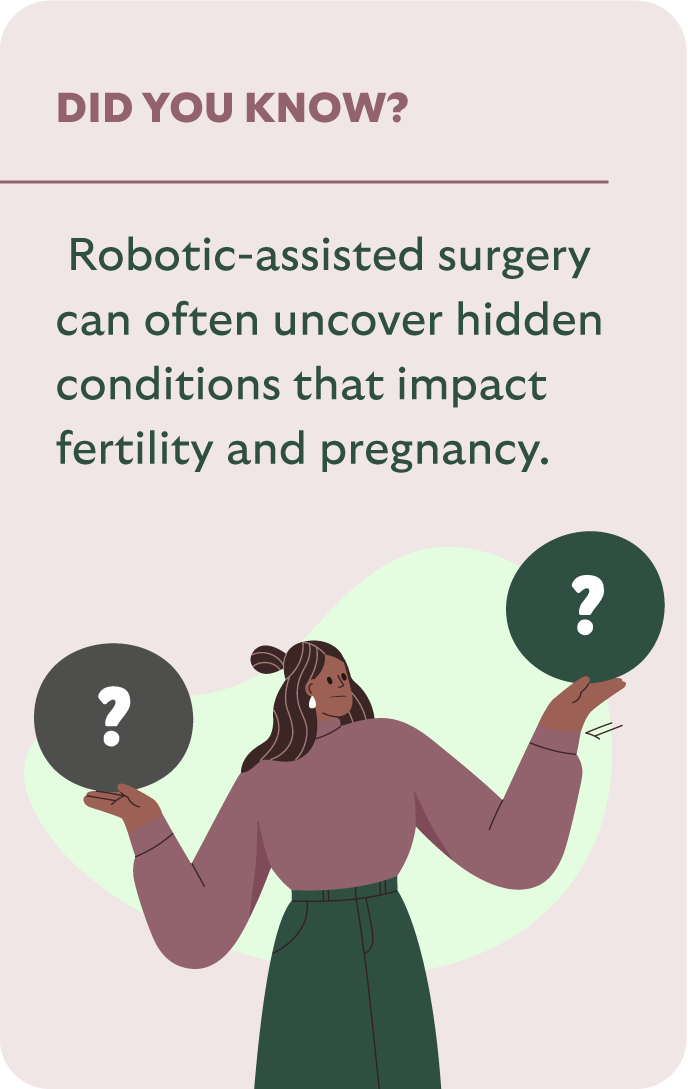
Short for Natural Procreative Technology, NaPro surgery is a restorative, minimally invasive technique that uses laparoscopic and hysteroscopic methods to diagnose and treat the root causes of infertility. At ESSE Care, we perform this procedure with robotic-assisted precision, guided by a commitment to fertility preservation and reproductive integrity.
What Is NaPro Surgery?
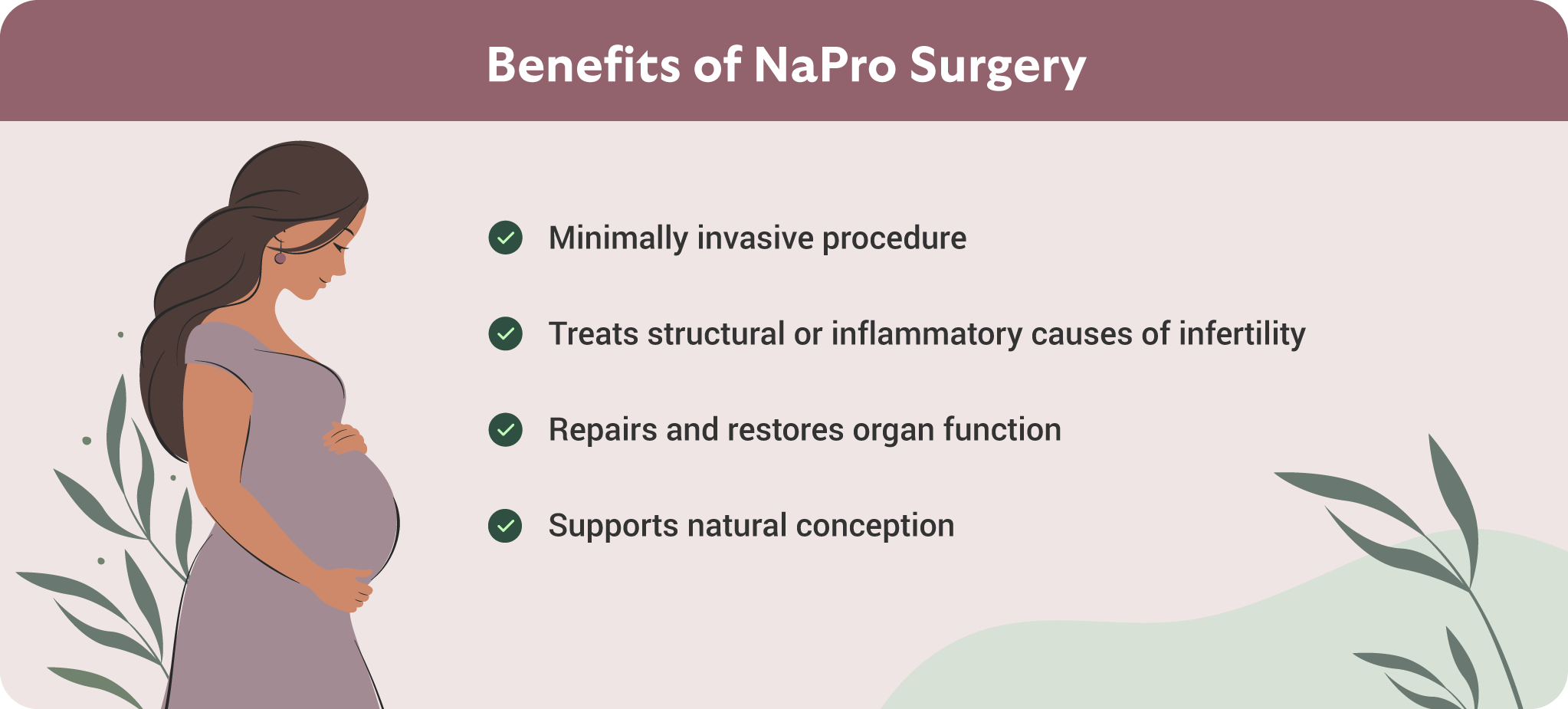
NaPro surgery is a type of fertility-preserving, minimally invasive procedure that combines laparoscopy and hysteroscopy to treat structural or inflammatory causes of infertility. It is often selected by patients seeking alternatives to IVF—due to personal, religious, ethical, or medical reasons—or by those who have failed IVF and want to explore additional options.
Rather than bypassing reproductive barriers with assisted technology, NaPro aims to repair and restore the function of the fallopian tubes, uterus, ovaries, and surrounding structures to support natural conception.
Who Might Consider NaPro Surgery?
You may benefit from NaPro surgery if you:
- Have unexplained infertility
- Have failed IVF or do not wish to pursue it
- Have blocked fallopian tubes or tubal damage
- Experience chronic pelvic pain, irregular cycles, or symptoms of endometriosis
- Have religious, ethical, or personal reasons for avoiding IVF or embryo manipulation
- Are seeking restoration of natural cycles or cycle tracking-based conception
What NaPro Surgery Can Address

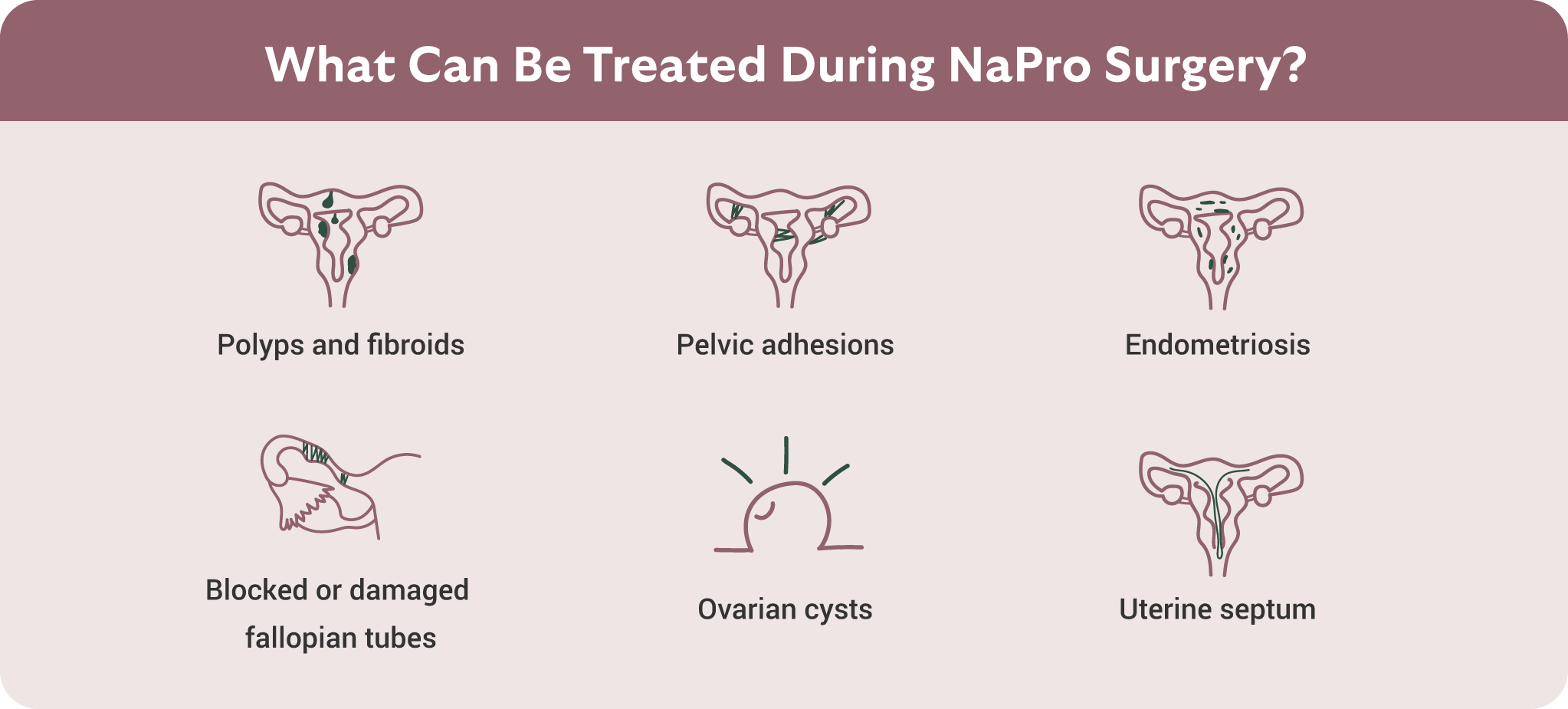
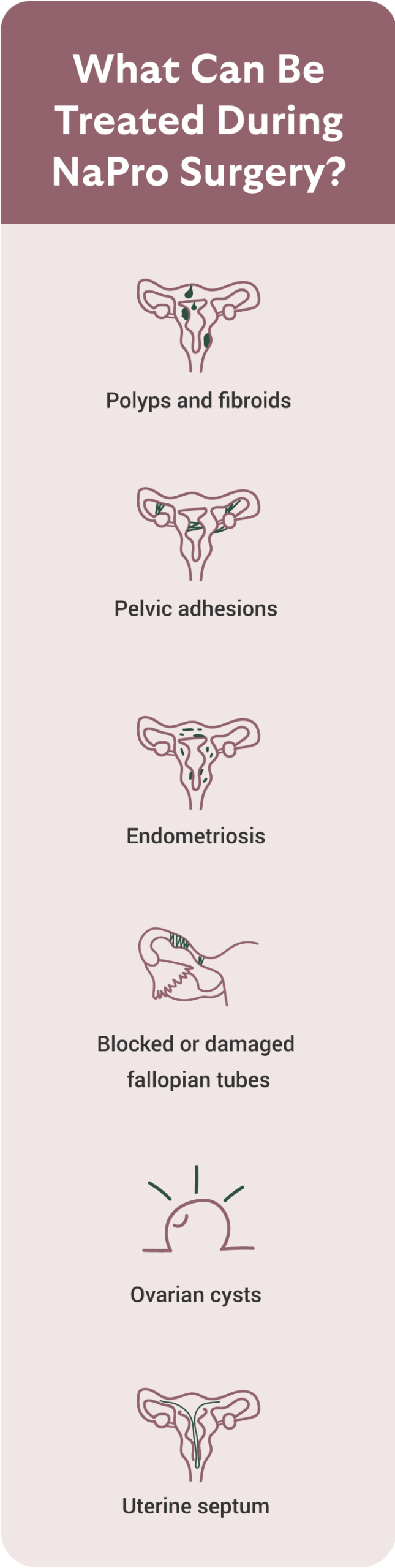
NaPro surgery is designed to correct physical or inflammatory barriers to fertility. Conditions treated may include:
- Blocked or damaged fallopian tubes
- Pelvic adhesions (scar tissue affecting ovum pickup or tubal function)
- Endometriosis, including deep or subtle lesions
- Ovarian cysts, including endometriomas or dermoid cysts
- Fibroids or polyps affecting the uterine cavity
- Uterine abnormalities, such as a septum or scarring
- Menstrual irregularities or hormonal disruption linked to inflammation or obstruction
By treating these root causes, NaPro surgery can improve natural conception potential, restore regular cycles, and reduce reliance on medication-based cycle regulation.
What Happens During the Procedure
NaPro surgery is performed under general anesthesia and typically lasts around two hours, though the total time varies depending on what specific techniques are needed. Most patients return home the same day.
The hysteroscopic portion may include:
- Evaluation of the uterine cavity
- Removal of polyps, fibroids, or adhesions
- Correction of anatomical barriers
- Treatment of menstrual dysfunction
The laparoscopic portion (robot-assisted at ESSE) may include:
- Excision of endometriosis using nerve-sparing, fertility-focused techniques
- Fallopian tube repair, including precise stitching with extremely thin thread to promote healing and long-term function
- Tubal flushing (chromopertubation) to test and clear blockages
- Adhesiolysis to restore mobility and ovum pickup
- Ovarian cystectomy, always followed by meticulous closure to prevent adhesions
- Correction of anatomical misalignment affecting ovulation or tubal function
The surgery is performed using three to four laparoscopic ports, each about 8 mm in size. Robotic assistance allows for precision in small spaces, ideal for fine reproductive structures like the tubes and ovaries.
How NaPro Surgery Differs from Other Fertility Procedures
NaPro surgery is unique in its philosophy and goals. While IVF focuses on creating embryos outside the body, NaPro prioritizes restoring the body’s natural fertility through anatomical and functional repair.
| Compared on | NaPro Surgery | IVF |
|---|---|---|
| Primary Goal | Restore natural fertility | Create and transfer embryos |
| Fallopian Tube Repair | Yes | Not applicable |
| Embryo Involvement | None | Required |
| Endometriosis Treatment | Yes, with excision | Not treated |
If you’ve been told that your tubes “can’t be fixed,” or that IVF is your only option, it may be worth seeking a second opinion from a fertility-preserving surgeon experienced in microsurgical tubal work.
NaPro Surgery Recovery and Healing
While minimally invasive, NaPro Surgery still requires a recovery period:
- 1–2 weeks to return to light activity or desk work
- 2 weeks of pelvic rest (no intercourse or strenuous exercise)
- 4–6 weeks for full internal healing
Most patients experience mild pain or fatigue, especially from the gas used during laparoscopy. Long-acting numbing agents and gentle surgical techniques reduce discomfort. Shoulder pain from residual gas is common but temporary.
Aftercare and Support
If your NaPro surgery is performed by an ESSE Care surgeon, recovery includes structured follow-up and integrative care:
- Surgical follow-ups at 1–2 weeks and 6 weeks
- Imaging or HSG to confirm tubal healing (if needed)
- Fertility coaching or NaPro-informed care coordination
- Cycle monitoring and ovulation tracking support
- Referral to pelvic floor PT, nutrition, or other holistic services, if appropriate
Cycle support can often begin within the first post-op cycle if approved by your surgeon, tailored to your healing and hormonal response.
Risks and Safety Considerations
As with any surgery, NaPro carries some risks:
- Bleeding or infection
- Injury to adjacent organs (rare)
- Adhesion formation (minimized by microsurgical methods)
- Reaction to anesthesia
At ESSE Care, every procedure is performed with fertility preservation in mind. This means no cautery on the ovaries, fine suturing techniques, and meticulous handling to reduce inflammation and support future reproductive health.
How Effective Is NaPro Surgery?
Outcomes depend on age, the severity of disease, and partner fertility—but many patients report:
- Restored tubal patency
- Improved hormonal function and menstrual patterns
- Natural conception within 3–6 months
- Decreased pain and inflammation after excision of endometriosis
- Improved cycle tracking and ovulation predictability
While it cannot guarantee pregnancy, NaPro surgery often restores hope—and reproductive potential—especially for those who’ve been told they have “no options” beyond IVF.
A Restorative Option for Those Seeking a Different Path
NaPro surgery is a philosophy of care centered on healing the root cause of reproductive dysfunction. It respects the integrity of the body, the goals of natural conception, and the values of the patient.
At ESSE Care, we are proud to offer fertility-preserving surgery that aligns with your personal goals, values, and physiology. If you’ve been told there’s no alternative, NaPro surgery may offer a new way forward.
Schedule a consultation today to find out if you’re a candidate.