
Mast cell activation syndrome (MCAS) is a condition in which the body’s mast cells, a type of immune cell, release inflammatory chemicals excessively and in response to things that are not genuine threats. The result is a pattern of symptoms that appears across many body systems at once, often without an identifiable allergen behind it.
MCAS is increasingly recognized in patients with endometriosis and other complex chronic illnesses. Because its symptoms span so many specialties, it is frequently missed, and patients often collect a series of partial diagnoses before anyone considers the whole picture.
While ESSE Care doesn’t diagnose or treat MCAS, our doctors partner with providers who understand this complex condition so that we can plan surgeries and treatments appropriately for patients suffering from multiple diagnoses.
What Mast Cells Do
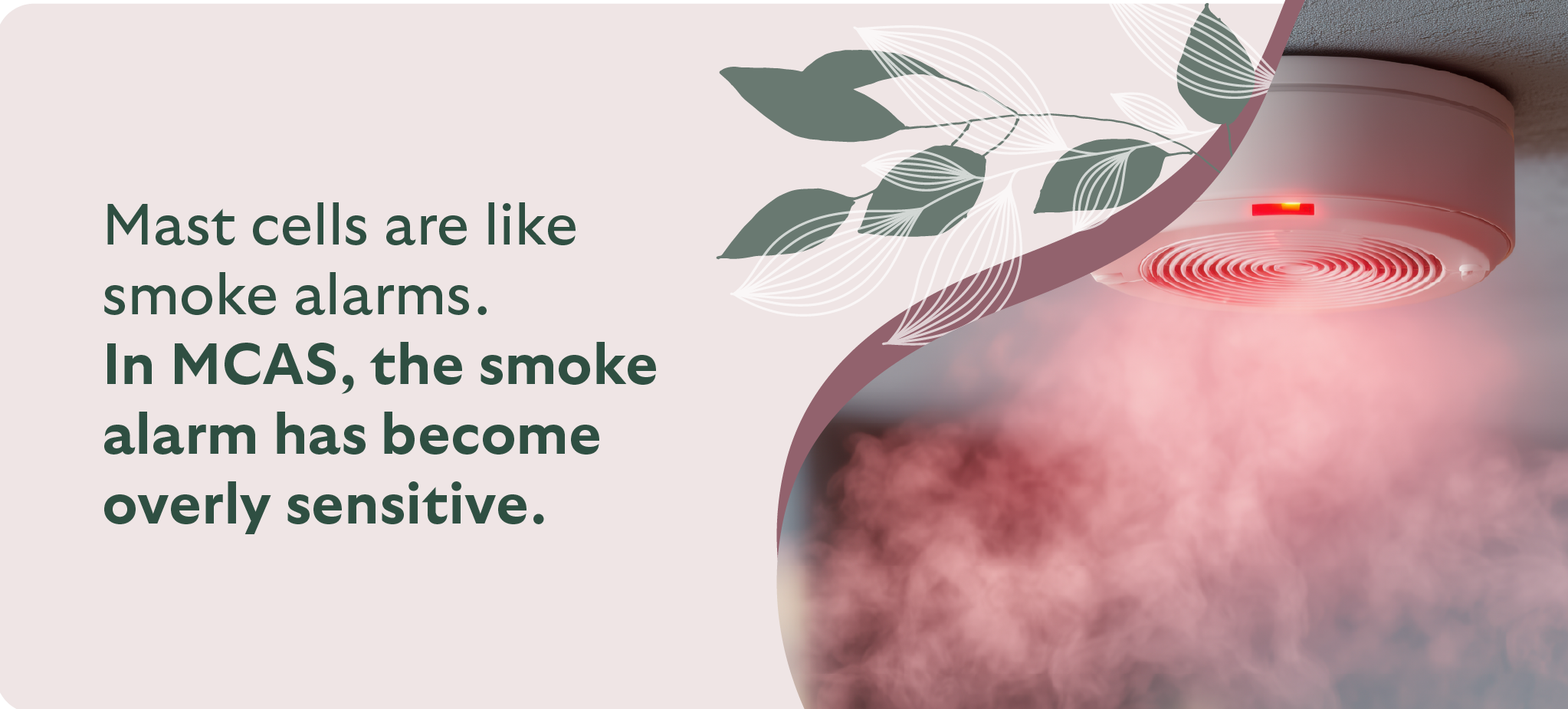
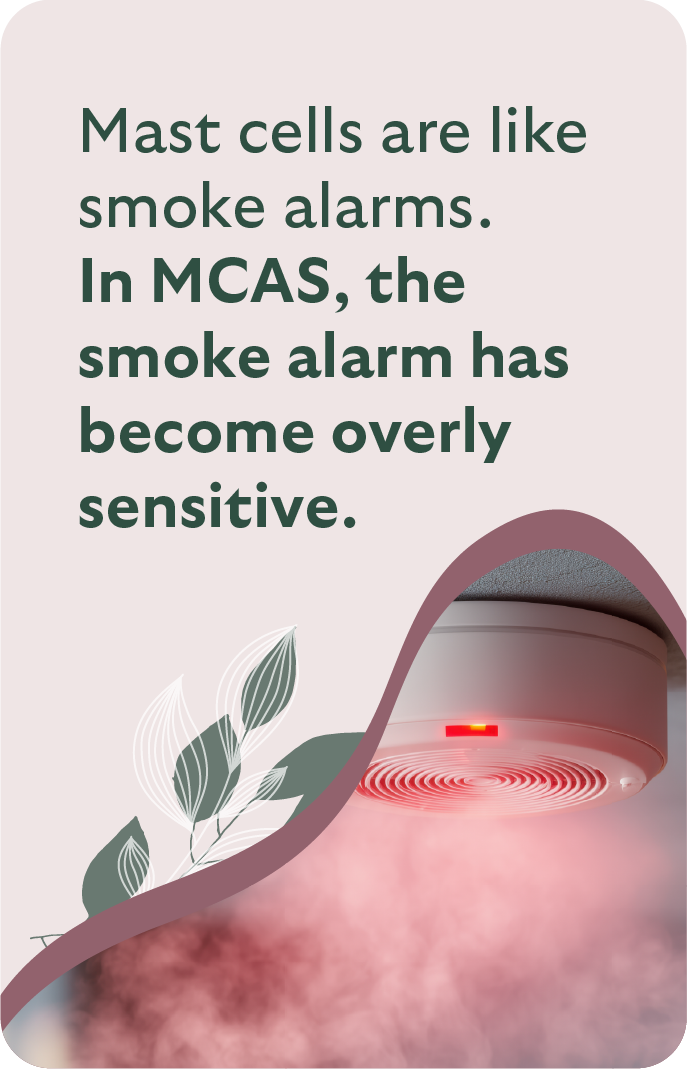
Mast cells live wherever the body meets the outside world: the skin, gut, airway, sinuses, bladder, and pelvis. They are often described as the body’s smoke detectors, constantly scanning for threats.
When a mast cell is triggered, it degranulates, releasing a large cascade of chemical mediators. Experts estimate that mast cells can release more than 1,200 different substances, including histamine, prostaglandins, leukotrienes, cytokines, tryptase, and growth factors that drive inflammation, blood vessel formation, and nerve sensitization.
When mast cells behave normally, they are useful. They help the body respond to infection and injury and produce a classic allergic reaction.
In MCAS, the number of mast cells is normal, but their threshold is not. They fire too much and in response to things that pose no real danger.
Common MCAS Triggers
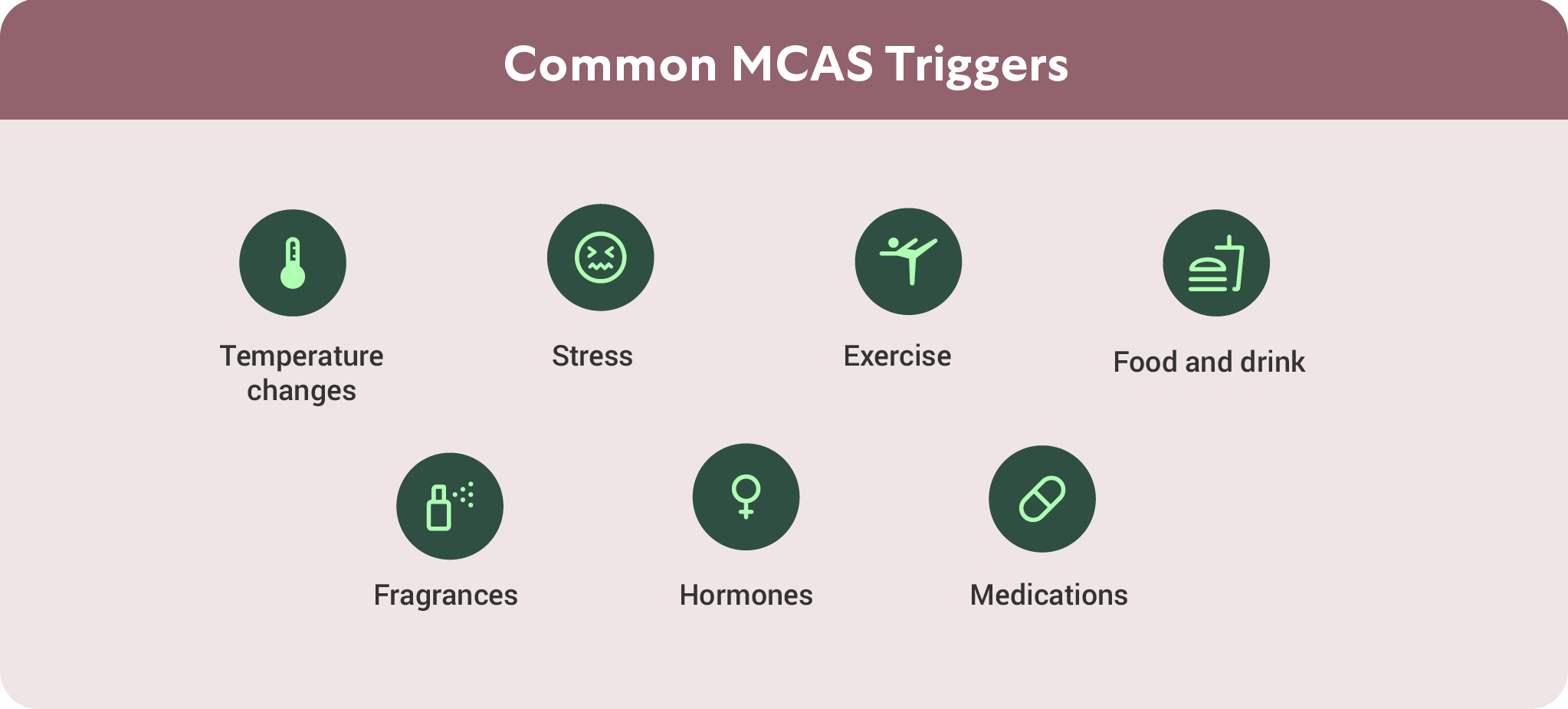
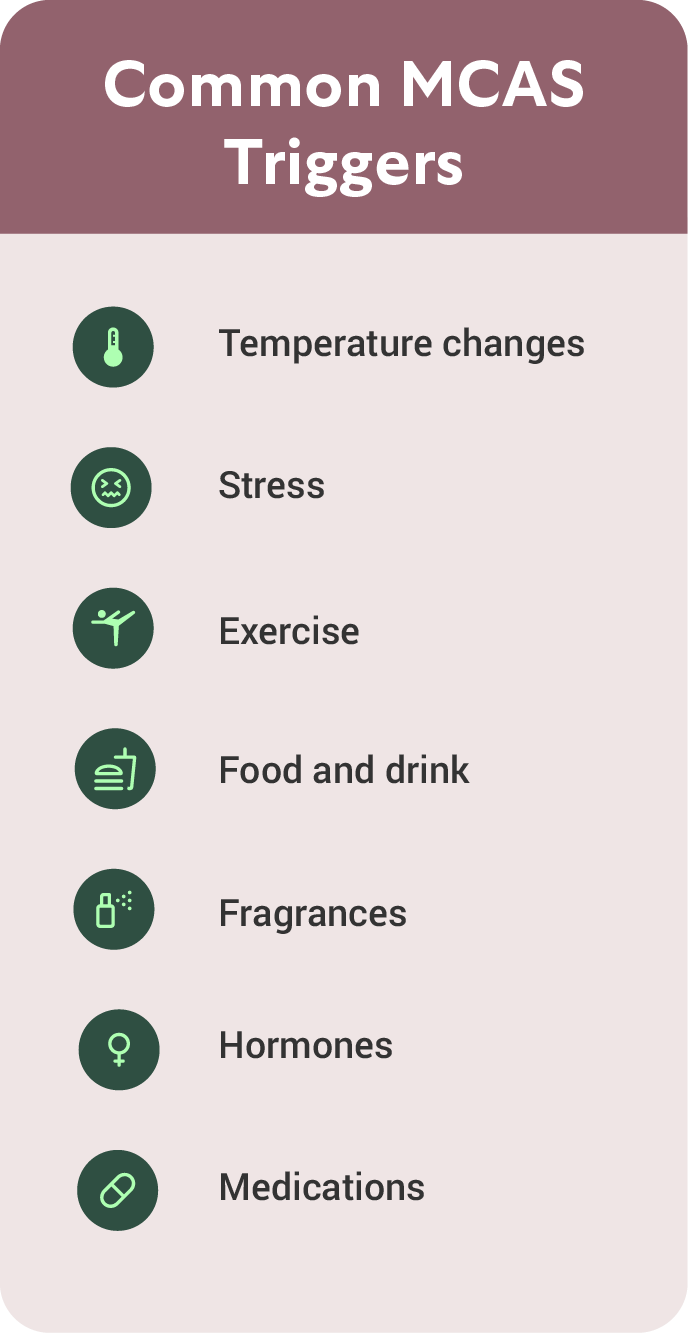
- Heat, hot showers, temperature changes, and exercise
- Alcohol, and foods a person is not allergic to
- Stress and emotional load
- Infections, including viral reactivation
- Pressure or friction on the skin
- Fragrances, chemicals, and environmental exposures
- Medications, and often the fillers in them rather than the active ingredient
- The natural fluctuation of a person’s own hormones
Symptoms of MCAS
The defining feature of MCAS is that symptoms appear in multiple, seemingly unrelated systems. That breadth is precisely what makes it difficult to diagnose, because each symptom often gets a patient referred to a different specialist.
| Body System | Common Symptoms |
|---|---|
| Neurological | Migraines, vertigo, brain fog, headaches, anxiety, insomnia |
| Respiratory and allergic | Hay fever, sinus congestion, sneezing, asthma, throat tightness |
| Skin | Eczema, hives, flushing, itching |
| Gastrointestinal | Abdominal pain, bloating, diarrhea, constipation, nausea, symptoms resembling IBS |
| Cardiovascular | Rapid heart rate, lightheadedness, blood pressure changes, fainting |
| Musculoskeletal | Body pain, joint pain, nerve pain |
| Hormonal and gynecologic | Symptom flares during ovulation or the days before a period, worsening period pain |
| Systemic | Fatigue, temperature dysregulation, anaphylaxis |
Symptom severity ranges widely. Some patients have manageable symptoms. Others experience daily anaphylaxis, lose the ability to tolerate most foods, and cannot shower, exercise, or be in the heat.
How MCAS Is Diagnosed
There is no single agreed-upon set of diagnostic criteria for MCAS, which is part of why the condition remains contested. Different research groups have proposed different frameworks. Many clinicians work from criteria developed by Dr. Lawrence Afrin, who coined the term “mast cell activation syndrome.”
Dr. Afrin’s Criteria
- Symptoms: History of patient experiences that suggests mast cell activity affecting multiple organ systems at the same time.
- Laboratory markers: Measurable evidence of mast cell activity, such as elevated histamine, prostaglandins, or tryptase in blood or urine.
- Response to treatment: Significant improvement when antihistamines, mast cell stabilizers, or related treatments are introduced.
Generally, a patient fulfilling at least two of the three criteria points toward MCAS. Laboratory testing is notoriously difficult, since mediators are unstable and levels vary depending on whether a sample is drawn during a flare.
Ruling Out Other Causes
Autoimmune conditions, mastocytosis, and other serious diagnoses need to be excluded first. A long symptom list found online is not a diagnosis, and self-diagnosing from such a list is specifically discouraged by the clinicians who treat MCAS.
Allergy Testing: A Common Misconception
You may have heard that if allergy testing is normal, it cannot be MCAS. In fact, the opposite is often true. A patient having anaphylactic-spectrum reactions whose allergy workup is entirely clean is precisely the patient who warrants a mast cell evaluation. People with MCAS can also have conventional allergies. The two are not mutually exclusive.
MCAS vs. Histamine Intolerance: What’s the Difference?
These two terms are frequently used interchangeably, even by some clinicians, but they describe different problems. Because histamine is only one of the many mediators mast cells release, histamine intolerance can be thought of as a narrower problem sitting inside a broader one.
The practical distinction matters, because it changes what gets evaluated and what is tried first.
| Compared on | MCAS | Histamine Intolerance |
|---|---|---|
| What it is | Mast cells across the body are hyperreactive and release excessive mediators in response to non-threatening triggers. | The body cannot break down histamine fast enough, so histamine accumulates beyond what it can clear. |
| Where it is | In the immune cells themselves, which fire too readily. | In histamine clearance, most often attributed to reduced activity of the enzyme diamine oxidase (DAO) in the gut. |
| Mediators involved | Histamine plus more than a thousand others, including prostaglandins, leukotrienes, cytokines, and tryptase. | Histamine primarily. |
| Typical triggers | Heat, exercise, stress, infection, fragrance, pressure, medications, hormones, and foods. | Histamine-rich or histamine-releasing foods, alcohol, and medications that block DAO. |
| Symptom pattern | Multi-system, often unpredictable, can escalate to anaphylaxis. | Usually dose-related and tied to intake, more often headaches, flushing, hives, congestion, and digestive symptoms. |
| Anaphylaxis risk? | Yes, and it can be severe and recurrent. | Not characteristic. |
| How it is evaluated | Multi-system symptoms, mediator testing, response to treatment, and exclusion of other causes. | No validated diagnostic test. Usually a supervised low-histamine trial and reintroduction, after ruling out allergies. |
| First-line management | Trigger identification, antihistamines, mast cell stabilizers, and treatment of underlying drivers. | A time-limited low-histamine diet, addressing gut health, and reviewing DAO-inhibiting medications. |
| Relationship to the other | Can produce histamine excess as one part of a much broader picture. | May occur on its own, or may be an early or partial presentation of mast cell dysfunction. |
A useful way to think about the difference: Histamine intolerance is a problem of clearance, while MCAS is a problem of release. Someone can have one, the other, or both.
How MCAS Relates to Other Conditions
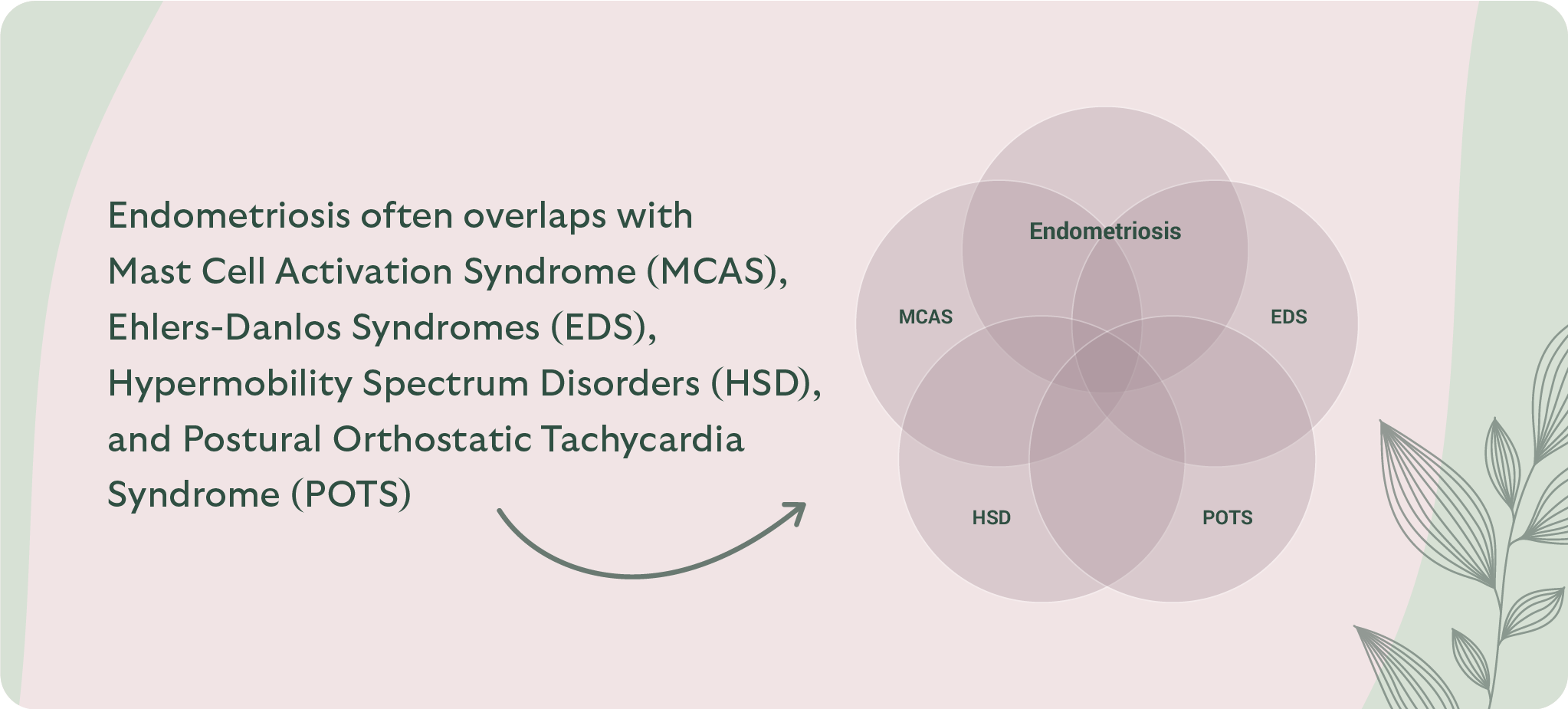
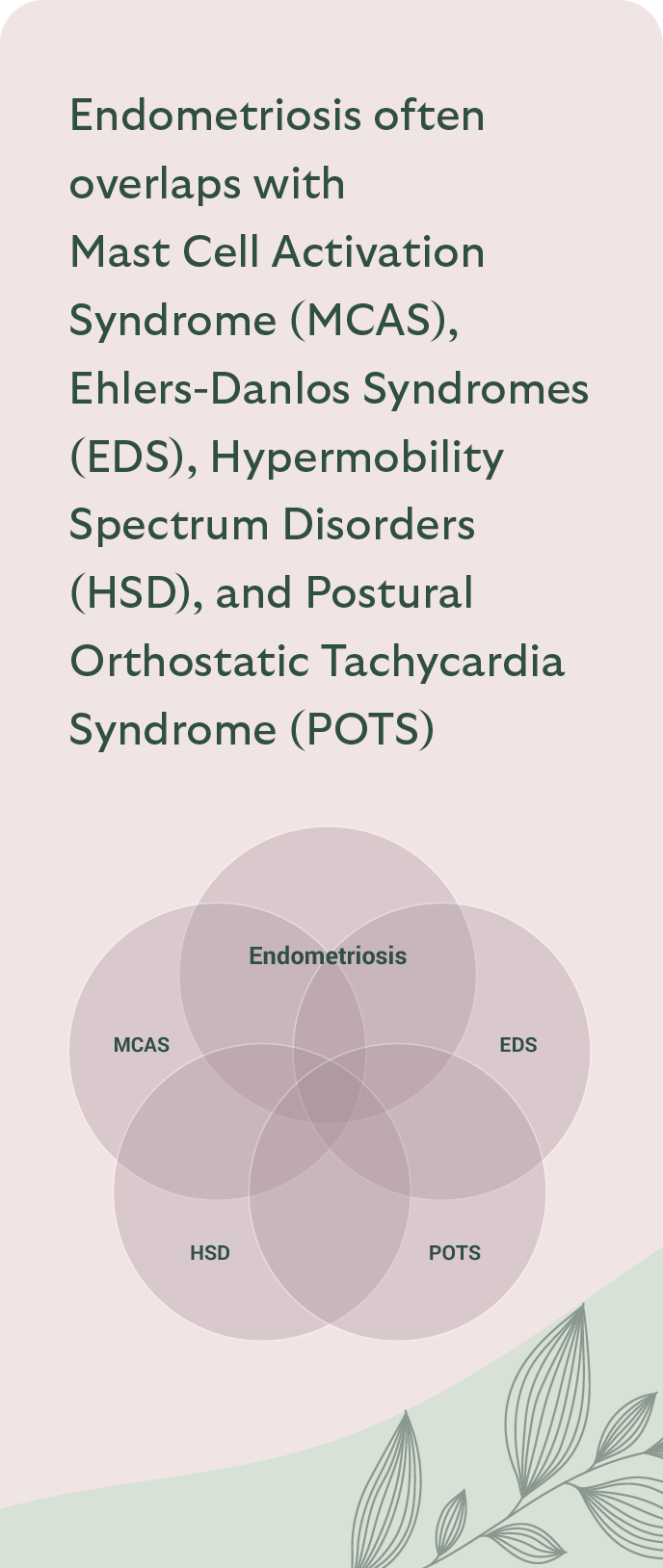
MCAS rarely appears alone, and it overlaps symptomatically with several conditions that are far more commonly diagnosed. Understanding where they differ helps explain why so many patients accumulate diagnoses without ever getting a coherent explanation.
| Body System | Common Symptoms |
|---|---|
| Neurological | Migraines, vertigo, brain fog, headaches, anxiety, insomnia |
| Respiratory and allergic | Hay fever, sinus congestion, sneezing, asthma, throat tightness |
| Skin | Eczema, hives, flushing, itching |
| Gastrointestinal | Abdominal pain, bloating, diarrhea, constipation, nausea, symptoms resembling IBS |
| Cardiovascular | Rapid heart rate, lightheadedness, blood pressure changes, fainting |
| Musculoskeletal | Body pain, joint pain, nerve pain |
| Hormonal and gynecologic | Symptom flares during ovulation or the days before a period, worsening period pain |
| Systemic | Fatigue, temperature dysregulation, anaphylaxis |
MCAS and Endometriosis: What the Research Suggests
Research on the relationship between MCAS and endometriosis is in the early stages. Early evidence suggests there is a connection, though the exact nature of it is not yet confirmed.
What we know
- Endometriosis lesions contain a significantly higher density of mast cells than healthy tissue in the same patient, sustained in part by stem cell factor in the lesion microenvironment (Anaf et al., 2006).
- Estrogen recruits and activates mast cells, and mast cells in turn support estrogen signaling, creating a bidirectional loop (McCallion et al., 2022).
- Activated mast cells release mediators that sensitize nerve fibers, contributing to endometriosis pain (Wang et al., 2025).
- Mast cells appear to promote angiogenesis, the growth of an accessory blood supply, and fibrosis, both of which help lesions establish and persist.
- Several studies suggest a higher prevalence of histamine-related conditions in endometriosis patients, ranging from mild allergy, asthma, or eczema through to significant mast cell activation (Matalliotakis et al., 2012, Zelovich et al., 2025, Petraglia et al., 2026).
What we don’t know
- Whether mast cells drive endometriosis lesions or respond to inflammation already present.
- Whether treating mast cells reduces endometriosis or improves outcomes.
- How many patients with endometriosis have clinically significant MCAS.
Emerging therapeutic directions, including mast cell stabilizers, JAK inhibitors, and progestin-based approaches, are at an early stage. We share this openly because patients deserve to know where the evidence is solid and where it is not.
Treatment and Living With MCAS
Management is individualized, and there is no standard protocol, especially when a patient is dealing with multiple comorbidities. Below are some approaches your care team may take to improve your day-to-day life.
Reducing the Load
- Identifying and reducing personal triggers rather than following a generic avoidance list.
- Sleep, hydration, and a whole-food diet tailored to individual tolerance rather than broad restriction.
- Nervous system regulation and stress reduction.
Medication Approaches
- Antihistamines targeting different receptor types, sometimes compounded to remove reactive fillers.
- Mast cell stabilizers, often started at very small doses and titrated slowly.
- Hormonal approaches, chosen individually, since some patients react more to their own fluctuations than to steady levels.
Whole-Body Health
- Addressing gut dysbiosis, hormone imbalance, or chronic infection.
- Including co-occurring conditions, including endometriosis, in the overall treatment plan rather than addressing them in isolation.
Overly restrictive diets are rarely sustainable, and protocols circulating on social media can cause harm when applied without an individual assessment. We recommend working with your care team to come up with a plan that works for you.
Preparing for Surgery With MCAS
Patients with MCAS who need excision surgery face real planning challenges, since drapes, skin preparation agents, suture dyes, anesthesia agents, and standard post-operative medications can all act as triggers. Here’s how your surgeon might adapt the standard protocol:
- Introduce mast cell stabilizers and antihistamines beforehand where tolerated, using compounded formulations if fillers are the problem.
- Agree on an anesthesia protocol in advance, since some agents are more likely to trigger mast cells than others.
- Plan alternatives for pain and nausea before the day of surgery.
- Discuss whether standard bowel preparation is appropriate, and what the alternative is.
- Prepare tolerated foods so they are available during recovery.
- Read more about surgical planning and post-operative care at ESSE Care.
MCAS Frequently Asked Questions
Can MCAS be cured?
There is no cure for MCAS at present. Most patients manage it as a chronic condition, and many achieve substantial improvement by identifying triggers, stabilizing mast cells, and treating underlying drivers. Improvement is often gradual rather than sudden.
Does everyone with endometriosis have MCAS?
No. Most people with endometriosis do not have MCAS. The overlap is meaningful enough to warrant evaluation in patients with systemic symptoms, but it should not be assumed.
Will excision surgery improve my MCAS?
We can’t promise that. For one patient in our recent webinar, removing stage 4 disease coincided with significant improvement in immune stability within three months. That is a single case, not evidence of a general outcome. What excision surgery can reliably do is remove one substantial source of inflammation.
Should I ask for an allergist or an immunologist?
Either may be appropriate, though not all allergists and immunologists evaluate for MCAS. Some patients are managed by a naturopathic or functional medicine provider with specific mast cell experience. What matters most is finding someone who will assess across systems rather than within one.
Can I just try antihistamines and see if they help?
Response to treatment is one of the diagnostic criteria, so this is not an unreasonable question. It is still worth doing under clinical supervision, because other serious conditions need to be excluded, and because dosing and receptor targeting matter.
Is a low-histamine diet the answer?
Not usually on its own, and not indefinitely. Histamine is one of many mediators involved in MCAS. Prolonged restriction carries nutritional and psychological risks without addressing the underlying reactivity.
When to Seek Evaluation for MCAS
- Reactions across multiple body systems without an identified allergen.
- Anaphylactic-spectrum episodes with a normal allergy workup.
- Symptoms that flare predictably around ovulation or menstruation
- Food intolerances that keep expanding.
- A collection of diagnoses across several specialties that no one has considered together.
- Endometriosis symptoms alongside systemic inflammation, brain fog, tachycardia, or GI dysfunction.
Why ESSE Care Takes This Seriously
Endometriosis has never been only a pelvic condition. When patients describe reactions, fatigue, and inflammation that no single specialty will own, that pattern deserves investigation rather than dismissal.
Our approach pairs expert excision surgery with a collaborative network of naturopathic, nutritional, pelvic floor, and mental health providers, because complex conditions rarely respond to a single intervention. Our surgeons plan around the patient in front of them, even when that means rebuilding a standard protocol from scratch.
If your symptoms have never fit into one specialty, schedule a consultation with a team that will look at the whole system.