
Diagnosing infertility is rarely as simple as ordering a blood test or a scan. Many patients go through multiple rounds of testing only to be told “everything looks fine”—normal hormone levels, reassuring ultrasounds, even IVF cycles—despite not getting pregnant or staying pregnant. When this happens, it’s easy o feel like you’ve run out of options.
But just because basic testing hasn’t revealed a cause doesn’t mean there isn’t one. Many underlying issues that affect fertility—especially conditions like endometriosis, adhesions, or chronic inflammation—can’t be seen on imaging or detected through bloodwork. These conditions require surgical visualization to be diagnosed, and in most cases, they can be treated during the same procedure.
Infertility exploratory surgery is a minimally invasive, same-day procedure that goes beyond observation. It’s both diagnostic and therapeutic, designed to uncover hidden barriers to conception and improve your chances of getting pregnant, naturally or with assisted reproductive technology.
What Is Infertility Exploratory Surgery?
Infertility exploratory surgery involves two key procedures performed together:
- Robotic-assisted laparoscopy, using small incisions, a camera, and a robotic platform to examine and treat the reproductive organs within the abdomen and pelvis.
- Hysteroscopy, using a thin camera inserted through the cervix to evaluate and treat the inside of the uterus.
This combined approach allows your surgeon to assess the full reproductive system in one session—and, more importantly, to treat what they find. Treatments may include excising endometriosis (with ovarian repair as needed via fine suturing), flushing or clearing fallopian tubes, removing scar tissue, and addressing uterine abnormalities.
What the Surgery Can Reveal and Treat
The goal of this surgery is not just to look—it’s to act. Conditions commonly found and/or treated during infertility exploratory surgery include:
- Endometriosis (including deep or superficial early stage lesions not seen on imaging)
- Pelvic adhesions (scar tissue from past infections, inflammation, or surgery)
- Blocked or partially blocked fallopian tubes
- Chronic endometritis (silent inflammation of the uterine lining)
- Ovarian cysts
- Signs of premature ovarian aging
These conditions can silently disrupt ovulation, fertilization, implantation, or early embryo development—even when labs and imaging suggest “normal” results. In particular, IVF success rates are lower in patients with untreated endometriosis, so finding and treating this complex disease is often vital to reproductive success.
Note: Some conditions, such as uterine fibroids, septums, scarring, or ovarian cysts may be discovered on imaging prior to surgery. During surgery, we can treat these issues and look for any others that may be causing discomfort or fertility problems. The goal is to limit multiple surgeries and treat what we can at once.
How Endometriosis Affects Fertility Outcomes
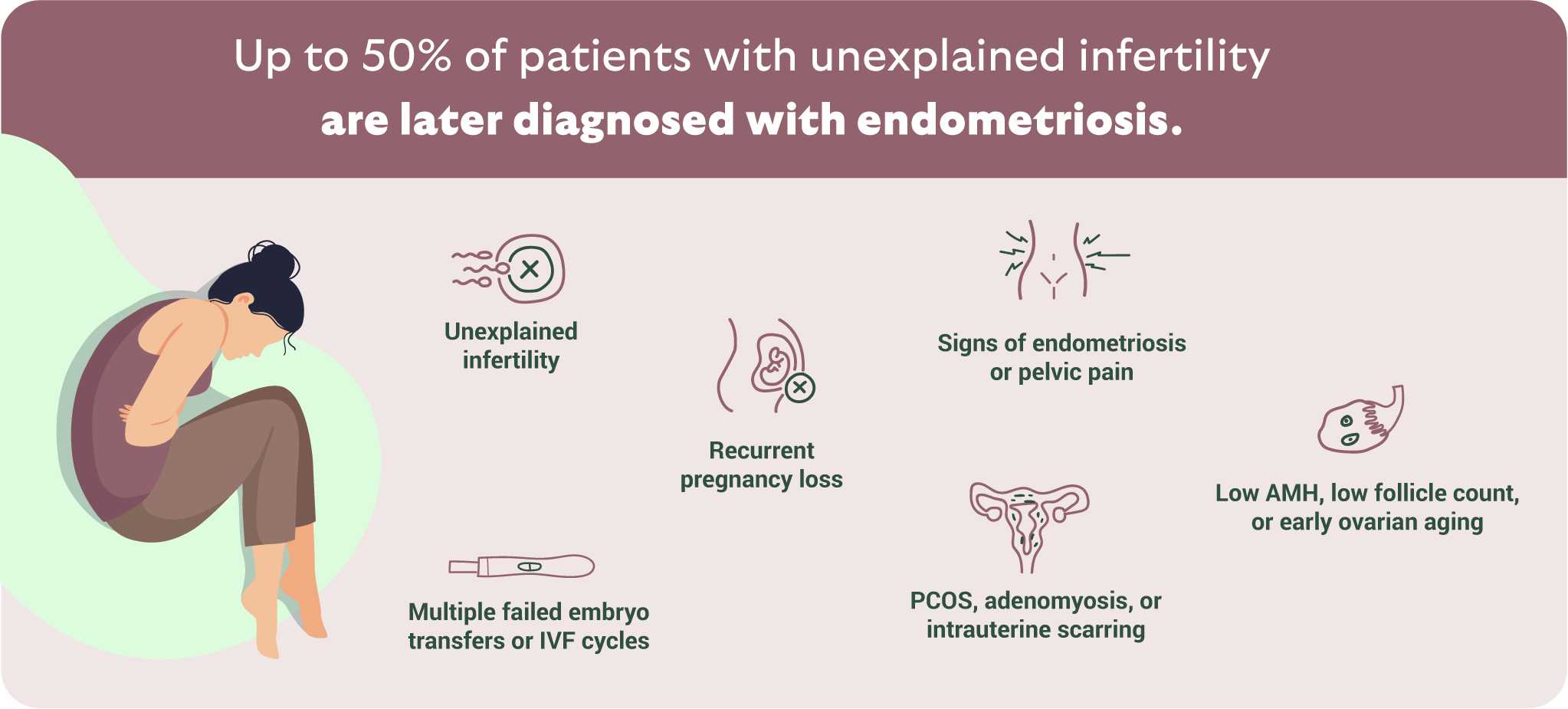
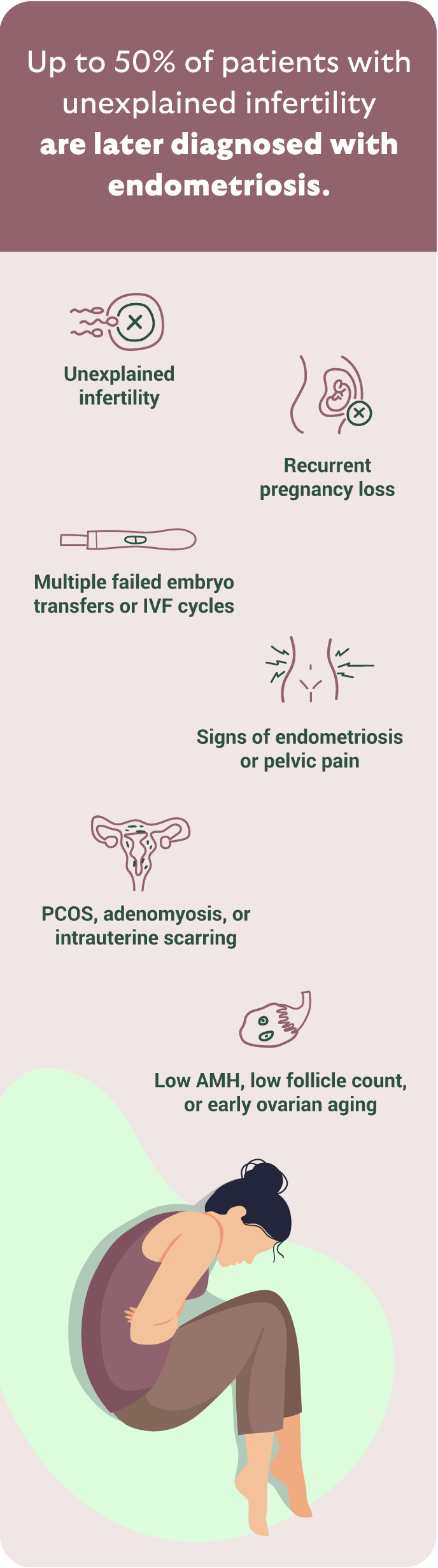
With up to 50% of unexplained infertility caused by endometriosis, it’s important to understand how this condition impacts fertility.
- It alters the pelvic environment. Inflammation and adhesions (scar tissue) impair tubal function, egg quality, and implantation success.
- It reduces pregnancy rates. Data from the American Society for Reproductive Medicine shows that women with early-stage endo have only a 4.5% chance of conceiving each month, and those with advanced stages of endo have a less than 2% chance, compared to the average of 15%-20%.
- IVF may fail without diagnosis. Estrogen-driven treatment protocols may worsen symptoms in patients with undiagnosed endo.
When to Consider Infertility Exploratory Surgery
It’s a common misconception that surgery should be considered a last resort for infertility. Undergoing exploratory surgery early in your fertility journey can help doctors understand and treat the root cause of your struggles.
This procedure may be appropriate if you have:
- Unexplained infertility
- Multiple failed embryo transfers or IVF cycles
- Recurrent pregnancy loss/miscarriage
- Signs of endometriosis or pelvic pain
- Low AMH, low follicle count, or early ovarian aging/premature ovarian insufficiency
- Diagnoses such as PCOS, adenomyosis, or intrauterine scarring
- A prior laparoscopy or hysteroscopy that found “nothing wrong,” but symptoms persist
- Ectopic pregnancies
If your fertility journey feels stalled and the usual workup has yielded few answers, this may be the step that finally brings the clarity you deserve.
ESSE Care Note: Even if previous fertility testing or laparoscopies found “nothing wrong,” robotic-assisted exploratory surgery performed by an expert can often uncover subtle or hidden conditions that impact conception or embryo implantation.
What Happens During the Procedure?
Infertility exploratory surgery is performed under general anesthesia and typically takes a few hours. Most patients return home the same day.
The laparoscopic portion includes:
- Small abdominal incisions (typically 5–8 mm each)
- Inspection of the uterus, ovaries, fallopian tubes, bladder, bowel, and appendix
- Excision of endometriosis, if present (always removed, never burned)
- Chromopertubation: dye flushed through fallopian tubes to assess and restore patency (i.e., to ensure the fallopian tubes are not blocked)
- Adhesiolysis: careful removal of scar tissue
- Ovarian cystectomy (cyst removal), followed by suture-based repair to preserve tissue and function
- Gentle uterine repositioning to a more favorable position for IVF access
The hysteroscopic portion includes:
- Entry through the cervix—no abdominal incisions required
- Evaluation and treatment of the uterine cavity
- Removal of polyps, fibroids, septum, or adhesions
- CD138 biopsy to detect chronic endometritis
- Cervical dilation if needed to support embryo transfer in the future
Organ preservation, repair, and restoration are the standards at ESSE Care. Our surgeons have the advanced training necessary to minimize unnecessary risks. For example, after ovarian cystectomy, the ovaries are repaired with fine sutures—not cautery (heat)—for optimal tissue preservation.
Tailoring the Surgery to Your Needs
Infertility exploratory surgery is highly individualized. Some patients may require only diagnostic evaluation and minor treatment, while others may need a more complex, multidisciplinary approach involving other specialists (such as colorectal or urologic surgeons) if deep disease or broader pelvic involvement is found.
No matter the complexity, our approach remains fertility-focused and tissue-preserving. This is why choosing a specialized endometriosis surgeon is so important. Doctors with specialized training in fertility-focused surgery understand how important the details are.
At ESSE Care, we operate under these guideline when approaching infertility exploratory surgery:
- True restoration of pelvic anatomy can take hours, but it’s worth it.
- Ovarian surgical technique is crucial. We suture rather than using heat or thermal energy to repair and preserve the ovaries. (Suture dissolves within 6 –10 wks)
- Hydrodissection (with water or saline solution) of tissues helps minimize trauma to follicles and the risk of adhesive disease compared to using surgical instruments to cut or tear.
- Fertility-focused surgery is multi-disciplinary, and we involve other specialized surgeons whenever needed to get the best results for the patient.
- Surgeons, fertility teams, and obstetricians should all work together to coordinate patient care before, during, and after treatment.
- Your goals are taken into mind with every case. If rectal pain is not your primary concern- aggressive excision of endometriosis or bowel resection maybe deferred. Your wishes and plans are always made with the team.
What to Expect at Each Stage
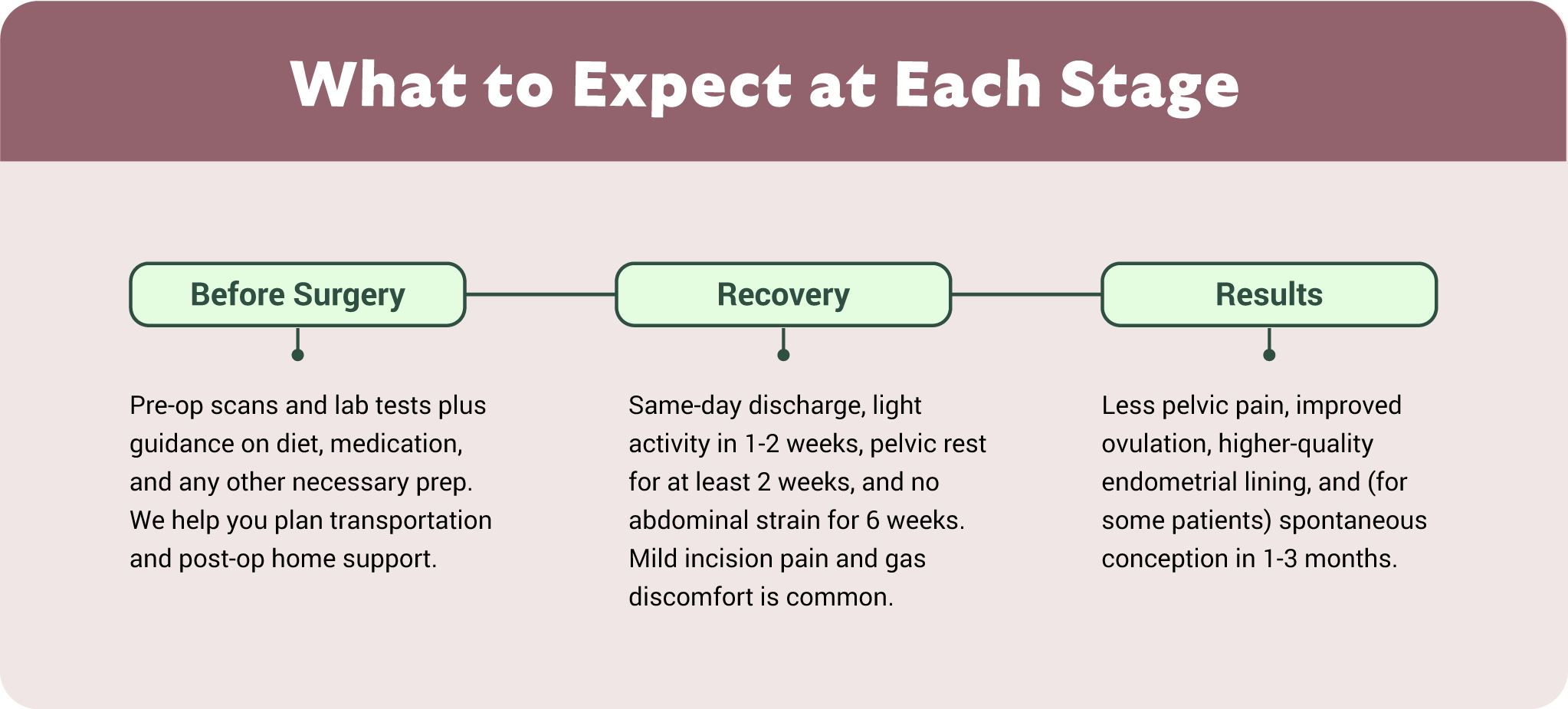
Before Surgery
You’ll meet with your surgeon for:
- Imaging review and fertility workup
- Instructions for pre-op fasting, medications, bowel prep (if needed)
- Education around each part of the procedure
- Planning for transportation and home support after discharge
Recovery
Recovery guidelines may differ depending on the complexity of your surgery, but generally you will:
- Go home the same day
- Return to light activity or desk work in 1-2 weeks
- Refrain from intercourse or pelvic exams for at least 2 weeks
- Avoid heavy lifting, exercise, or abdominal strain for 6 weeks (applies to laparoscopic surgery only; hysteroscopic patients can lift/exercise as usual)
- Experience mild incision pain easily managed with medication
Most patients report gas pain, bloating, and fatigue for a few days. Long-acting numbing medication is used during surgery to reduce discomfort.
Results
At ESSE Care, patients typically experience:
- Improved relief from pelvic pain or bloating
- Improved ovulation and follicle development
- Higher-quality endometrial lining
- Spontaneous conception within 1–3 months for some
- Better outcomes with IVF if pursued after surgery
- Possible decreased risk in pregnancy with removal of deep endometriosis.
Follow-Up Care and Support
Not every surgeon provides extensive post-operative care, but our practice believes in supporting our patients throughout their lives. Whether infertility exploratory surgery is the first step in your journey or the last, we’re here to help with:
- Postoperative appointment at 1-2 weeks
- Hormone testing and inflammatory ovarian markers (AMH, FSH, estradiol, CA125) after 3 months, depending on surgical procedure
- Ovarian ultrasound monitoring if needed
- Coordination of fertility treatment (with your reproductive endocrinologist or other fertility specialist) if pursuing IVF or embryo transfer
- Referral to integrative therapies (nutrition, acupuncture, PT) as appropriate
ESSE Care supports your healing and success beyond surgery, with a care team that understands your full fertility journey.
Understanding the Risks of Infertility Exploratory Surgery
As with any surgery, there are risks. These may include:
- Bleeding or infection
- Injury to nearby organs (rare)
- The need for a larger incision or blood transfusion
- Scar tissue formation (minimized with robotic and microsurgical techniques)
- Temporary drop in AMH after cyst removal (often returns to baseline)
- Delayed healing if post-op guidelines are not followed
Your care team will review your risk profile, monitor recovery, and provide a safety plan that reflects your personal health history and fertility goals.
Moving Forward
Infertility exploratory surgery is not a last resort—it’s a path forward. This restorative procedure can support your body’s ability to conceive, whether naturally or with assistance.
At ESSE Care, we believe in looking deeper, treating precisely, and caring for the whole person. If you’ve been told “everything looks fine,” but your experience tells a different story, we’re here to help uncover what’s been missed, and walk with you toward what’s possible.