Understanding Primary Dysmenorrhea: When Period Pain Deserves Attention
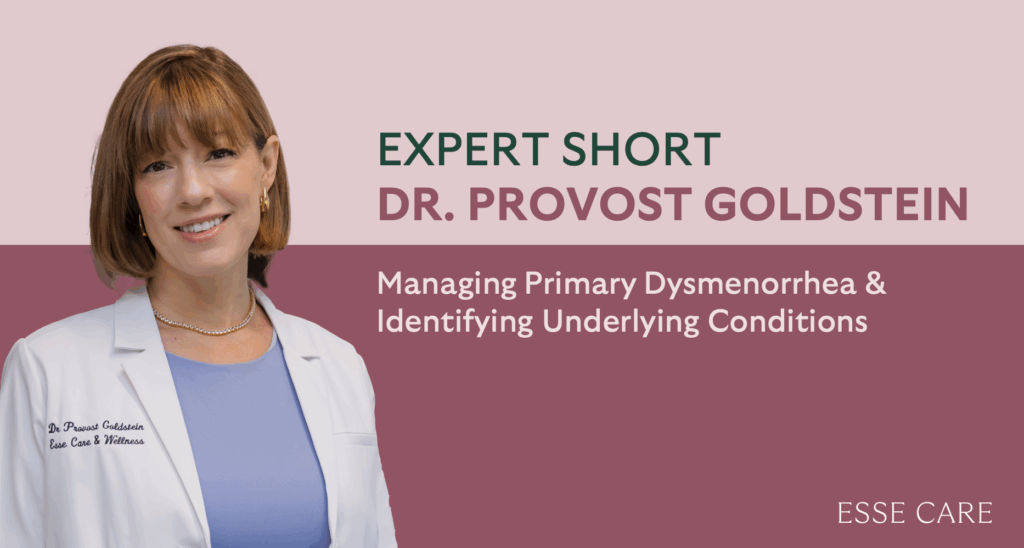
Dr. Karli Provost Goldstein, DO, FACOG explains how she evaluates menstrual pain that looks like typical cramps, what’s normal for teens, and when persistent pain means it’s time to look deeper.
Primary dysmenorrhea — the medical term for painful periods without an underlying condition — is extremely common. Dr. Goldstein notes it’s one of the leading causes of school or work absences in teens and young adults, with prevalence rates reaching as high as 90%. But just because it’s common doesn’t mean it’s something to ignore.
Cramps that keep you home from school or activities, or pain that doesn’t respond to rest, heat, or over-the-counter medication, should be evaluated by a clinician. Sometimes, ongoing pain can signal other conditions like endometriosis or adenomyosis.
Supportive care — including anti-inflammatory medication, adequate hydration, rest, gentle movement, and low-inflammatory nutrition — may help manage discomfort. Still, Dr. Goldstein emphasizes that anyone whose pain interferes with daily life deserves a full evaluation to rule out other causes.
Schedule Your Consultation
If period pain limits your routine or affects your teen’s life, connect with Dr. Goldstein and the ESSE Care team to explore next steps.
Get in Touch