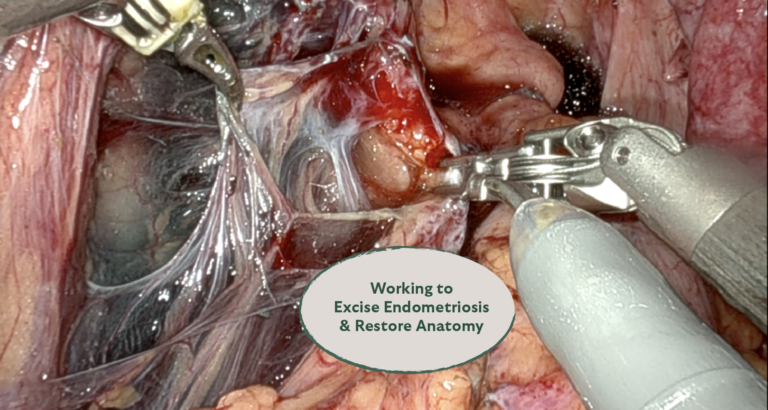
Patients with complex, multisystem conditions often spend years searching for answers. They may see a cardiologist for postural orthostatic tachycardia syndrome (POTS), a gastroenterologist for digestive symptoms, an immunologist for mast cell disorders, and a gynecologist for pelvic pain—yet no one is looking at how these conditions interact. Too often, the bigger picture is missed.
Dr. Laura Gouge, a naturopathic doctor and Certified Nutrition Specialist, specializes in caring for patients with mast cell activation syndrome (MCAS), histamine intolerance, POTS, and other inflammatory conditions. Her approach focuses on reducing the body’s inflammatory burden, stabilizing mast cells, and helping patients better tolerate medical and surgical treatment.
In our recent Endo Exchange conversation, Dr. Gouge joined Dr. Karli Provost Goldstein and patient advocate Haley Argiento to discuss the connection between endometriosis, immune dysregulation, and systemic inflammation—and how collaborative, root-cause care can improve outcomes.
About Dr. Laura Gouge
Dr. Laura Gouge is a naturopathic doctor and certified nutrition specialist currently licensed in Vermont, Washington, California, and Oregon. She has more than 10 years of clinical experience treating complex, multi-system chronic illness. Her practice centers on patients with mast cell activation syndrome, endometriosis, dysautonomia, and the overlapping conditions that so often accompany them. She sees patients virtually, offering one-on-one health coaching for those residing outside of the states she’s licensed in.
Her Own Experience with Endometriosis
Dr. Gouge had endometriosis symptoms from the age of eight and spent years being told her mid-cycle flu-like episodes were normal or were probably IBS. An early ablation procedure left her worse rather than better, taking her from moderate cyclical pain to excruciating daily pain for a year. A subsequent excision surgery found Stage 3 endometriosis that had been missed entirely.
She speaks openly about her condition, because patients rarely hear a clinician describe the same journey they are living through. A year after excision surgery, Dr. Gouge has since achieved pain-free cycles by more aggressively targeting her own inflammation. She does not believe that would have happened without the surgery first.
Her Treatment Approach
- Uses compounding pharmacies to remove reactive fillers and titrate antihistamines and mast cell stabilizers at microscopic starting doses.
- Builds surgical preparation plans covering anesthesia, pain, nausea, and food in advance rather than reactively.
- Addresses gut repair, hormone clearance, and detoxification pathways alongside symptom management.
- Tracks emerging approaches, including microdosed GLP-1 therapy for inflammation and mast cell stability, with explicit caution about the limits of the evidence.
- Collaborates directly with surgical teams rather than treating in isolation.
Endometriosis is not only a structural disease. It involves inflammation, immune activation, nerve sensitization, and hormone signaling, and those processes do not stop at the pelvis. Her work helps patients move from reacting to symptoms toward understanding what is generating them.
Top Questions from the Endo Exchange Conversation with Dr. Gouge
1. What is MCAS, in plain terms?
Dr. Gouge: Within the immune system, we have cells called mast cells, and everybody has them. They are like smoke detectors for the body. They are looking for threats all the time, and they are what help us interface with the outside world, so we have them everywhere: skin, gut, airway, sinuses, bladder, pelvis.
When mast cells get triggered, they release thousands of mediators. As the research keeps emerging, it looks like over 1,200 different chemicals, most famously histamine, but also prostaglandins and leukotrienes. A whole cascade gets set off.
In MCAS, we have a normal number of mast cells, but they are firing with an excessive amount of sensitivity. Instead of responding to a true threat, they react to heat, exercise, pressure on the skin, alcohol, stress, infections, the fluctuation of our own hormones, and foods someone is not actually allergic to. The symptoms can be vast and diverse, which is one of the reasons it is hard to diagnose.
2. Why does MCAS so rarely appear on its own?
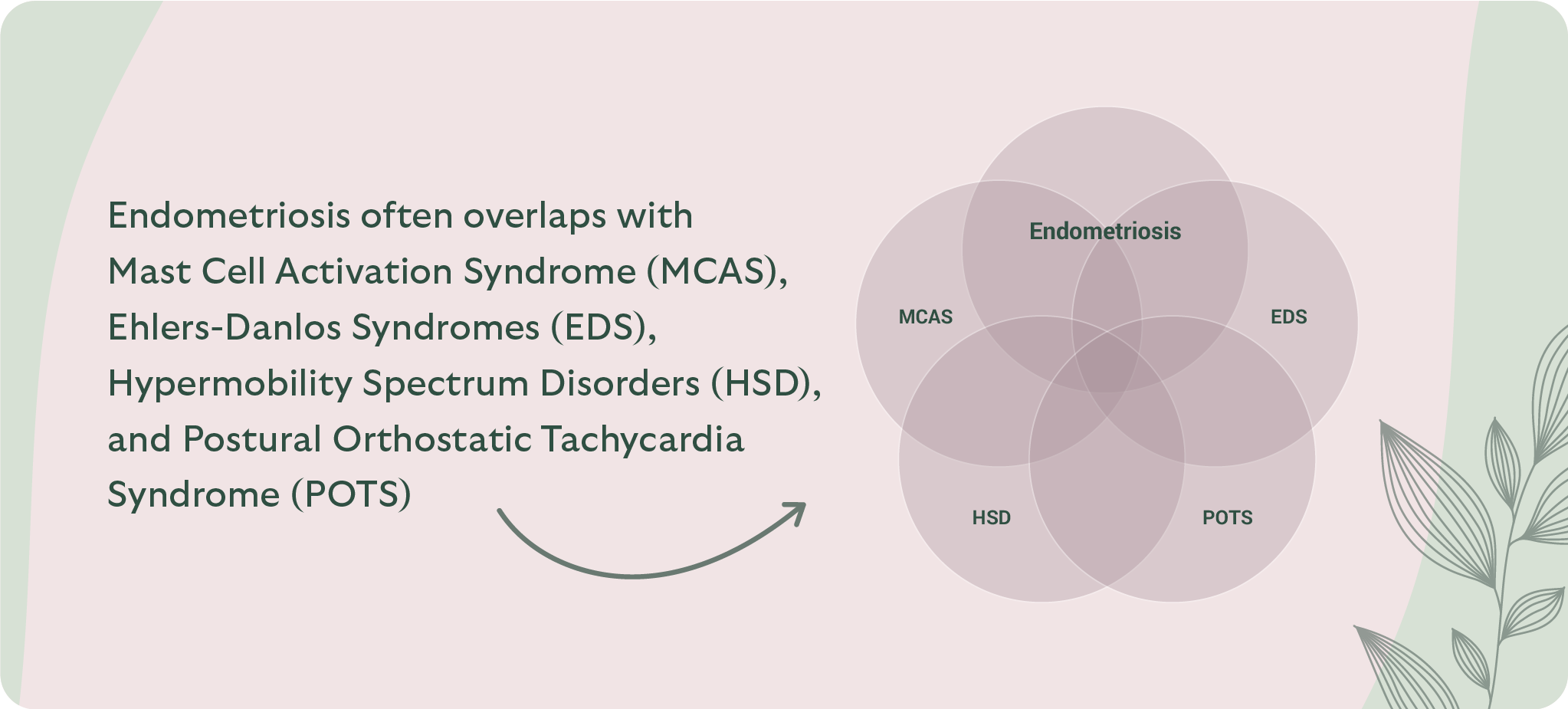
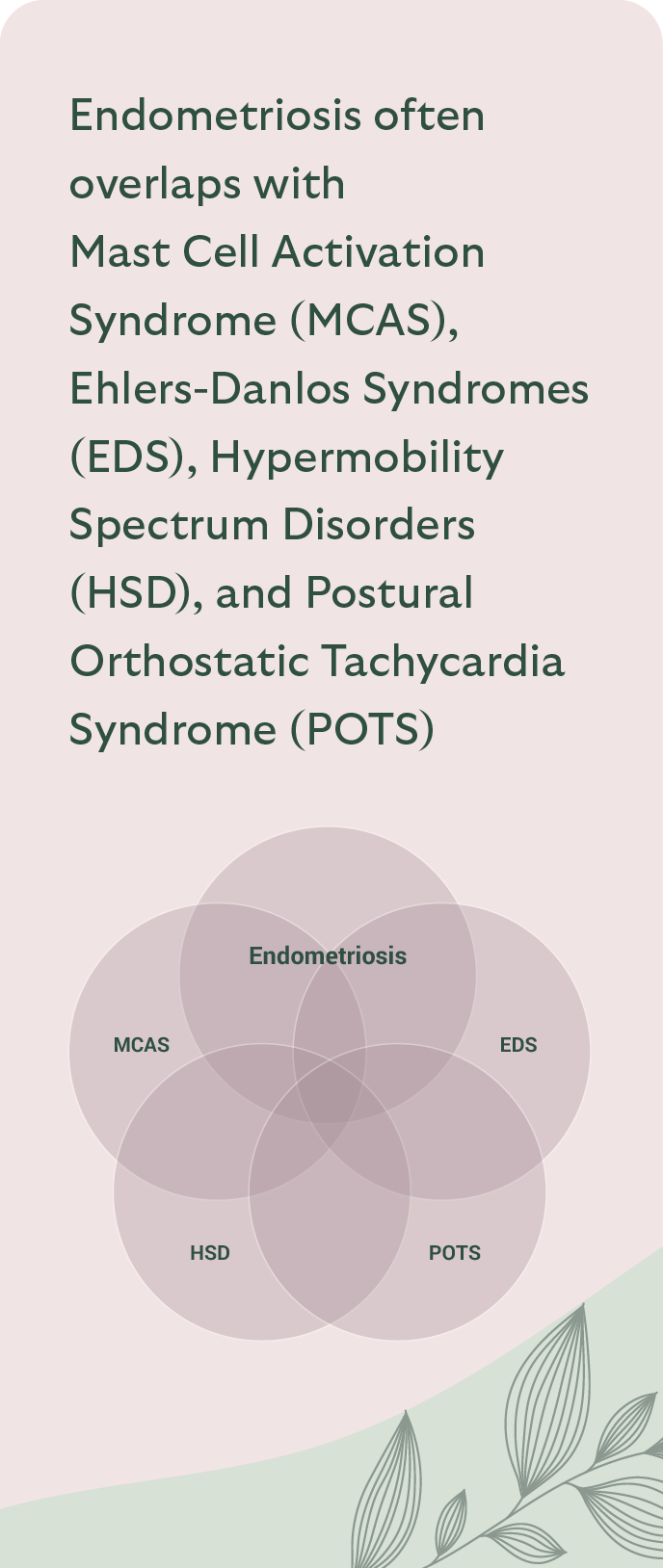
Dr. Gouge: It rarely travels alone. It is often part of what we call the trifecta, where we see hypermobility syndromes such as EDS, dysautonomia such as POTS, and MCAS, and they seem to connect to each other.
As more clinicians see these patients and talk to each other, we are realizing there is a whole web when someone is complex and chronically ill—Autoimmunity, slow digestion (gastroparesis or SIBO), endometriosis, chronic infections. So, someone may have been diagnosed with Lyme disease or long COVID, and Epstein-Barr certainly could be part of it.
People do not always have every one of these. But patients look at the list and say, I have six of those. That is when the pattern starts to matter more than any single diagnosis.
3. How are endometriosis and mast cells connected?
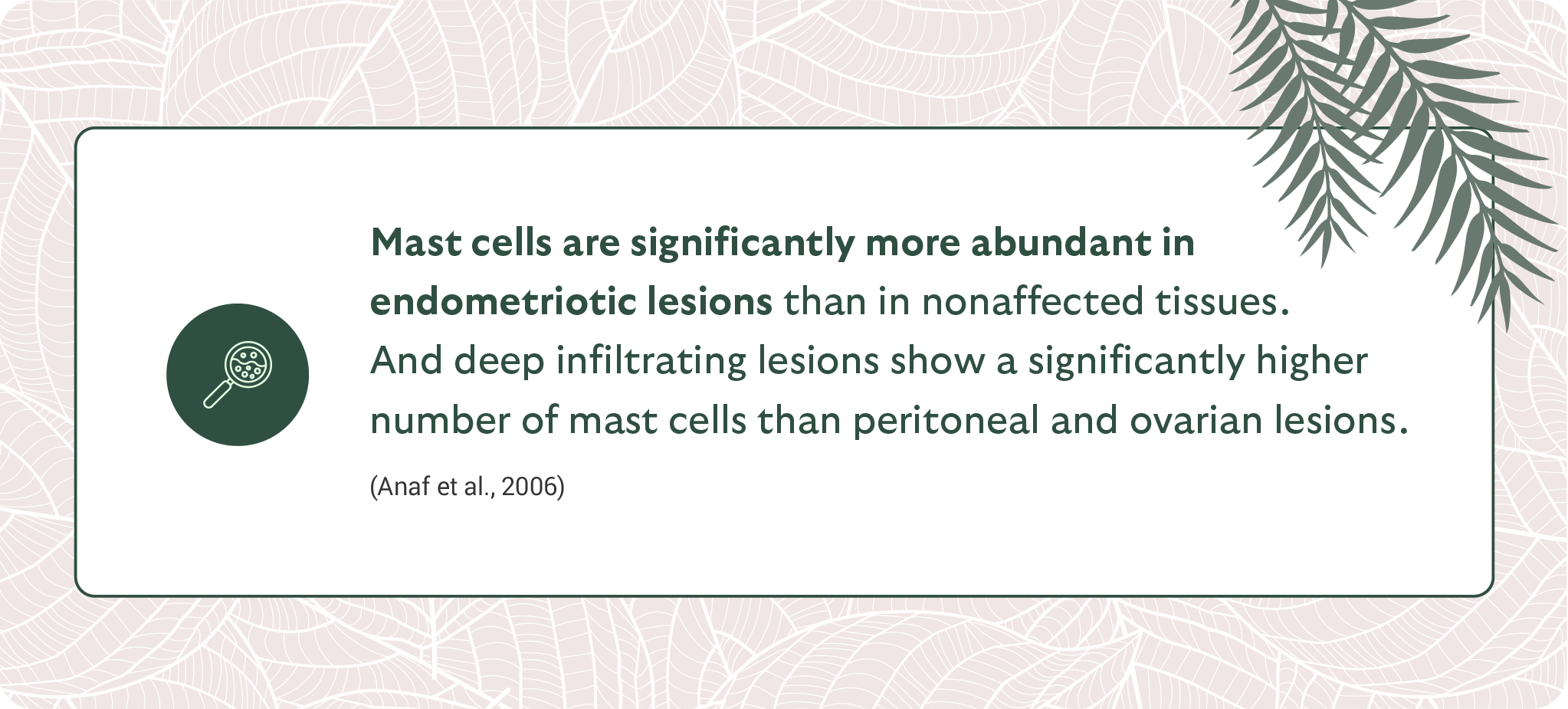
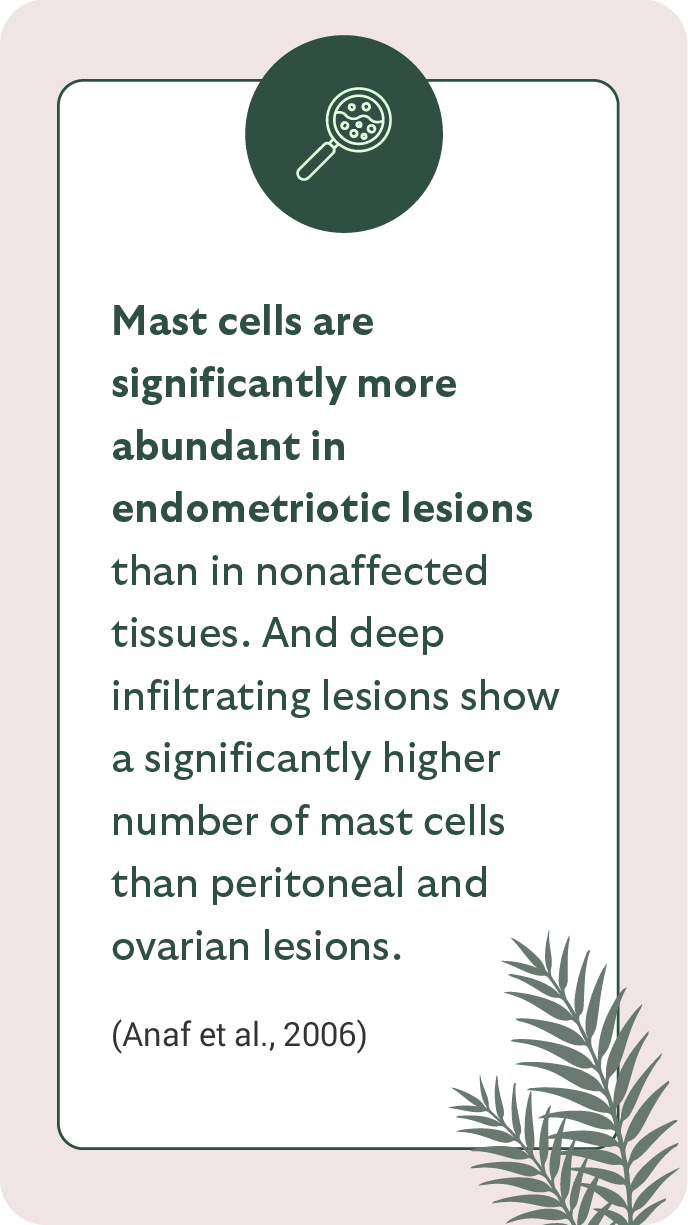
Dr. Gouge: What we know about the connection is still really emerging, but in the limited data we definitely see more mast cells in endometriosis lesions compared to healthy tissue in the same patient. We also see more mast cells in the fluid in the abdomen.
Then there is a bidirectional feedback loop. Mast cells release histamine and sensitize estrogen signaling, and estrogen activates the mast cells. For a lot of women in this cluster, that produces hormonal flares.
We also know that mast cells can promote fibrosis and angiogenesis, meaning the growth of new blood supply, and estrogen amplifies all of it. So, we can see the progression of endometriosis with mast cells themselves involved.
What is missing from the literature so far is the next step: whether targeting or treating mast cells actually reduces endometriosis. We do not know that yet.
4. How should a patient with MCAS prepare for excision surgery?
Dr. Gouge: If we have the opportunity to prep ahead of time, I bring in mast cell stabilizers and supports where the patient can tolerate them. Some cases are complex enough that the patient cannot take them right away.
I use compounding pharmacies a lot, because when someone reacts to an antihistamine, statistically it may be to the excipients, meaning the fillers, rather than the medication. So I will compound antihistamines and mast cell stabilizers, and we often start at microscopic doses.
Beyond that, the surgical plan matters more than any single medication:
- Reduce inflammation through lifestyle in the lead-up so the body goes in as strong as possible.
- Agree on an anesthesia protocol in advance, since some medications are more likely to trigger mast cells than others.
- Decide ahead of time what the options are for pain and for nausea.
- Have food in the freezer that you already know you tolerate.
- Find a surgeon you feel safe with who will advocate for you, and be prepared to advocate for yourself.
I have walked alongside dozens of patients through surgery, including people who could not take an ibuprofen or tolerate most foods, and it has gone far better than they expected. It is possible.
5. What does long-term management look like after surgery?
Dr. Gouge: Usually these patients have to do more to sustain a baseline than the average person, and part of the work is accepting that. This involves good sleep, staying well hydrated, a high-quality mostly whole-food diet that works for you, generally limiting sugar, processed food, and alcohol, and identifying your individual triggers.
On hormones, it is very individual. With mast cell patients, birth control either goes really well and downregulates symptoms, because some people react more to their own fluctuations than to steady hormone levels, or it does not suit them at all. I tend to favor progestin-only options where appropriate, since estrogen can amplify mast cell activity in some people, and I like bioidentical progesterone because it tends to help stabilize mast cells. Then I usually use a combination of mast cell stabilizers, antihistamines, and certain stabilizing supplements. There is definitely not a one-size-fits-all.
What I would add is that as we stabilize mast cells and lower overall histamine, the big hormonal swings often get better too. It can be approached from both directions.
Why We Value This Partnership
Dr. Gouge helps patients safely prepare for complex gynecologic surgery, particularly those with mast cell disorders, histamine intolerance, medication sensitivities, or reactions to anesthesia and bowel preparation.
As part of ESSE Care’s comprehensive partner support network, she provides specialized care for MCAS, histamine intolerance, and POTS—conditions we do not diagnose or treat but that can significantly impact surgical outcomes.
Together, we provide coordinated care: Dr. Gouge optimizes patients before surgery, ESSE Care addresses endometriosis through expert excision when appropriate, and we work together to support recovery. This partnership demonstrates what is possible when specialists work as one team to support the whole patient, not just individual symptoms.
If you have a mast cell disorder and are exploring endometriosis treatment, choosing a coordinated care team can make all the difference.