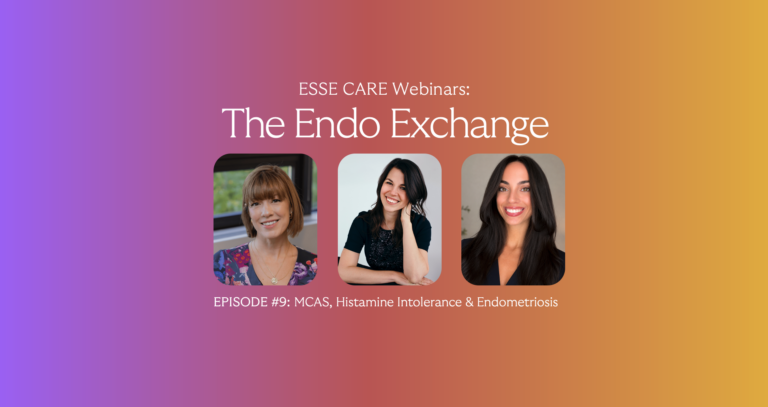
Haley Argiento started her period just before she turned 10. For a few years, her cycles were unremarkable. Then, at 15, something changed.
Every month in the days before her period, she developed severe ovarian pain. It wasn’t cramping or the general discomfort associated with PMS. Her blood pressure would drop. She would become nauseous, break into cold sweats, and black out. She saw a series of OB-GYNs who performed transvaginal ultrasounds looking for cysts or polyps. They found nothing obvious and told her what teenage girls with pain are so often told:
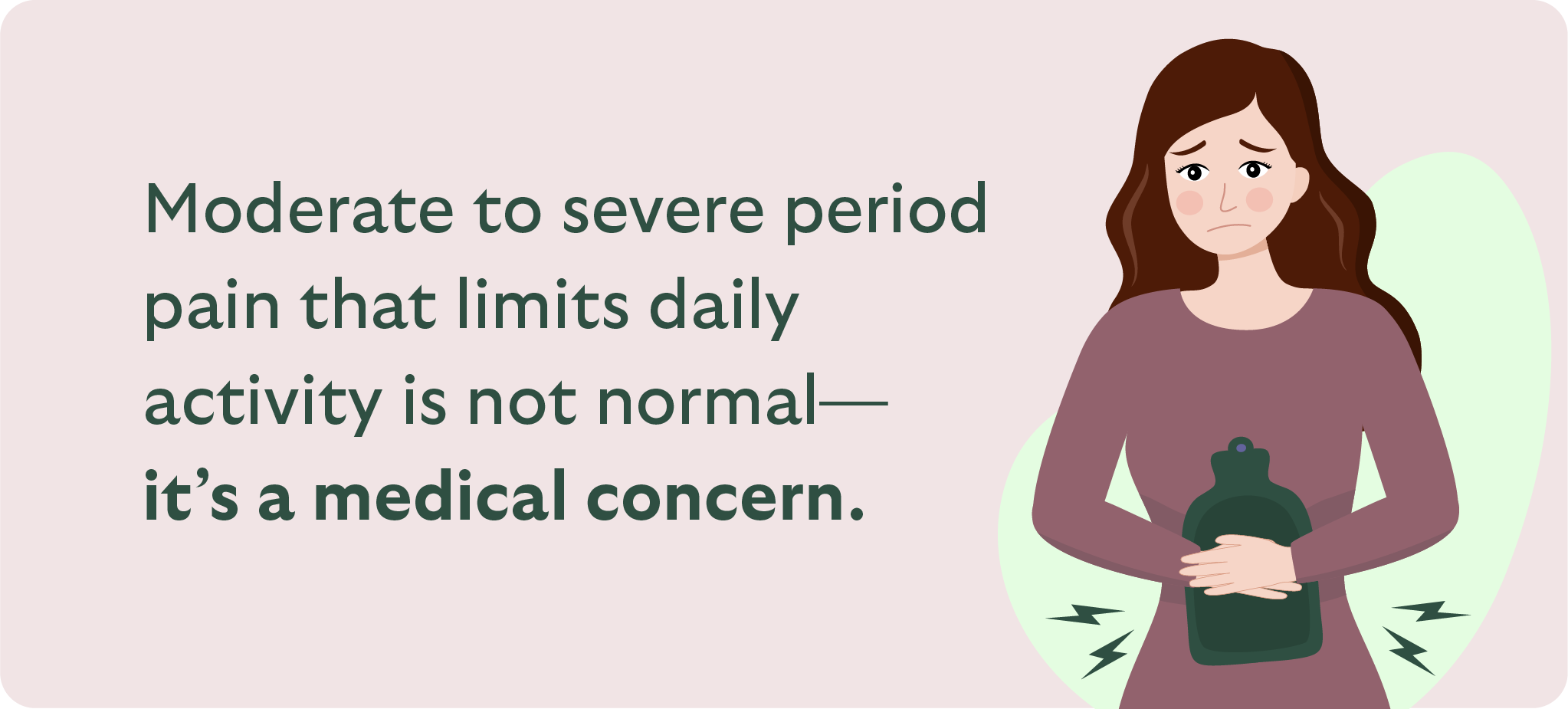
“Painful periods are normal.”
She spent the next 17 years believing them.
Years of Normalized Pain
Between age 18 and her early 30s, Haley’s doctors didn’t offer her a single ultrasound. She kept describing the same thing: pain severe enough to make her lose consciousness, repeated hospitalizations, and cycles that shut down her life. The answers didn’t change.
“I would tell them I’m blacking out from these cycles, and they would tell me, ‘This is normal. Do you want anxiety medication?’”
During one hospital visit, she was accused of seeking pain medication, which she hadn’t asked for and didn’t want.
“I don’t even want pain medication,” she recalls saying. “I want someone to figure out what is going on.”
This pattern is one of the most common experiences in endometriosis care. Severe period pain is not normal, and imaging that looks clear does not mean nothing is there.
When Her Body Went into Overdrive
One afternoon in 2019, Haley began struggling to breathe, with a racing heart and severe lightheadedness. She was admitted to the emergency room, where the team suspected a heart condition. A cardiology workup ultimately pointed toward asthma instead.
Later that year, an immunologist treated her for asthma with a series of three injections of Xolair, a medication used to treat asthma and allergic reactions. That’s when everything changed.
“My body kind of went into overdrive,” Haley says. “My immune system completely shut down.”
From that point forward, Haley lost the ability to tolerate nearly every food. She couldn’t drink water unless it was a precise temperature. She couldn’t shower, be out in the heat, or exercise. Any trace of artificial fragrance could send her into anaphylaxis. She was experiencing anaphylactic episodes daily.
She started researching these symptoms on her own and discovered mast cell activation syndrome (MCAS). At the time, it was considered extremely rare, and most physicians didn’t recognize it. When she brought it to her immunologist, he happened to have a family member with mastocytosis, a related condition.
Together, they worked through the diagnostic criteria, ruled out autoimmune and other conditions, and confirmed MCAS.
A Diagnosis, but Still Not a Solution
Unfortunately, the MCAS diagnosis didn’t bring Haley relief from her symptoms. For nearly five more years, Haley lived with daily anaphylaxis and a diet reduced to a handful of foods. Her body didn’t tolerate supplements or even the mast cell-stabilizing medications intended to help the condition.
The symptoms she endured were extensive and affected nearly every system in her body. They included hair loss, unexpected diarrhea, nausea, severe bloating and stomach pain, chest tightness and difficulty breathing, extremely low blood pressure, hives on her face and neck, pain and heaviness in her legs, extreme fatigue, memory loss, eye twitching associated with high cortisol and magnesium deficiencies, pressure in her ears and migraines, changes in skin texture and breakouts, tachycardia, slurred speech or stuttering while speaking, extreme mood swings and suicidal thoughts, early-onset osteoporosis, “trigger finger” in her hands, fissured tongue, bouts of severe anxiety associated with high histamine, frequent urination with bladder pain, lightheadedness, blurry vision, severe brain fog, kidney stones, vertigo and insomnia.
She saw pulmonologists, cardiologists, nephrologists, urologists, geneticists, primary care physicians, immunologists, and functional medicine doctors. Each examined the problem through the lens of their own specialty and came up short.
“Nobody could piece it together,” she says. “They were looking at their specialty and saying, ‘You know, I don’t quite know what to do.’”
The First Provider to Take a Closer Look
A naturopathic doctor was the first to treat the underlying picture rather than the reactions alone. Testing showed:
- Impaired detoxification pathways.
- High 16-hydroxy levels.
- Extremely low estrogen and progesterone levels despite very high free estrogen.
- Heavy metal toxicity.
- Positive ANA markers for systemic sclerosis.
- Dangerously high cortisol levels.
- Lactic acid buildup that led to body pain.
- Magnesium and vitamin D deficiencies.
- High oxalate levels leading to kidney stones.
- Low lactase levels alongside the presence of eight bacterial infections.
Years of slow, careful work followed, sometimes titrating an eighth of a supplement at a time and taking a year to reach a full capsule. It was the hormone testing that began to point somewhere new. The correlation between her hormone patterns and her mast cell activity was strong enough to make Haley suspect that the driver of her hormone dysregulation was also the instigator of her mast cell disease.
The Night Something Finally Showed Up
In the fall of 2025, Haley woke at the start of her cycle in pain unlike anything she had experienced before. She was used to bearing down and blacking out. This was different.
“I was wide awake. I was screaming. The pain was so severe.”
At the hospital, imaging showed an endometrioma. After 17 years, something was finally visible that pointed to a diagnosis for her pelvic pain—endometriosis.
That same night, home from the hospital, she searched for endometriosis specialists and found Dr. Karli Provost Goldstein at ESSE Care.
| When | What Was Happening | What She Was Told |
|---|---|---|
| Age 10 | First period; cycles initially unremarkable | Nothing of concern |
| Age 15 | Severe premenstrual ovarian pain, dropping blood pressure, cold sweats, and blacking out. Ultrasounds performed. | “Painful periods are normal at your age.” |
| Ages 18 to early 30s | Same monthly pain and repeated hospitalizations. No ultrasound offered for roughly 15 years. | “This is normal. Would you like anxiety medication?” |
| Age 25 | Sudden breathing difficulty, tachycardia, and lightheadedness. ER admission. | Possible heart condition, then asthma diagnosis |
| Age 26 | Three Xolair injections for presumed asthma, followed by systemic collapse of tolerance | No explanation offered |
| Ages 26–31 | Daily anaphylaxis, diet reduced to a few foods, reactions to heat, fragrance, exercise, stress, and water temperature | MCAS confirmed, but no underlying cause identified |
| Age 31 | Hospitalization for unprecedented pain. Imaging shows an endometrioma. | First objective finding in 17 years |
| Age 32 | Excision surgery. Stage IV deep infiltrating endometriosis, with close to 50 lesions. | Confirmed by pathology |
Planning Surgery for a Body That Reacts to Everything
Haley wanted endometriosis excision surgery. She was also terrified of it.
“I’m someone who can’t even tolerate taking a vitamin, let alone going under anesthesia. I couldn’t do the bowel prep. I couldn’t do anything, because my body doesn’t even tolerate MiraLAX,” she says.
The surgical planning was complex. ESSE Care’s standard surgical preparation involves materials that a highly reactive patient may not tolerate, including drapes, skin-cleansing agents, suture materials containing dye, and a postoperative kit of medications for gas, pain, and bowel motility.
What the Team Changed and Why
- No bowel preparation. Haley could not tolerate it, so antibiotics were adjusted upward instead.
- Change in suture materials. Dye-free sutures were primarily used to reduce the risk of postoperative anaphylactic reactions.
- A stripped-back postoperative kit. Of the usual medications, only pain management remained since Haley knew her body would reject the others.
“It may have been a little more of an uncomfortable recovery than perhaps the person who could take those medications, she says. “For me personally, it was worth it versus risking an anaphylactic reaction while I was trying to recover.”
What made it possible, in her account, was having a surgeon willing to research an unfamiliar condition and make the necessary adjustments.
“It’s so important to have a surgeon on your side who’s going to advocate for you and do their research, even if they’re not knowledgeable. And I was blessed enough to have that.”
What Excision Surgery Revealed


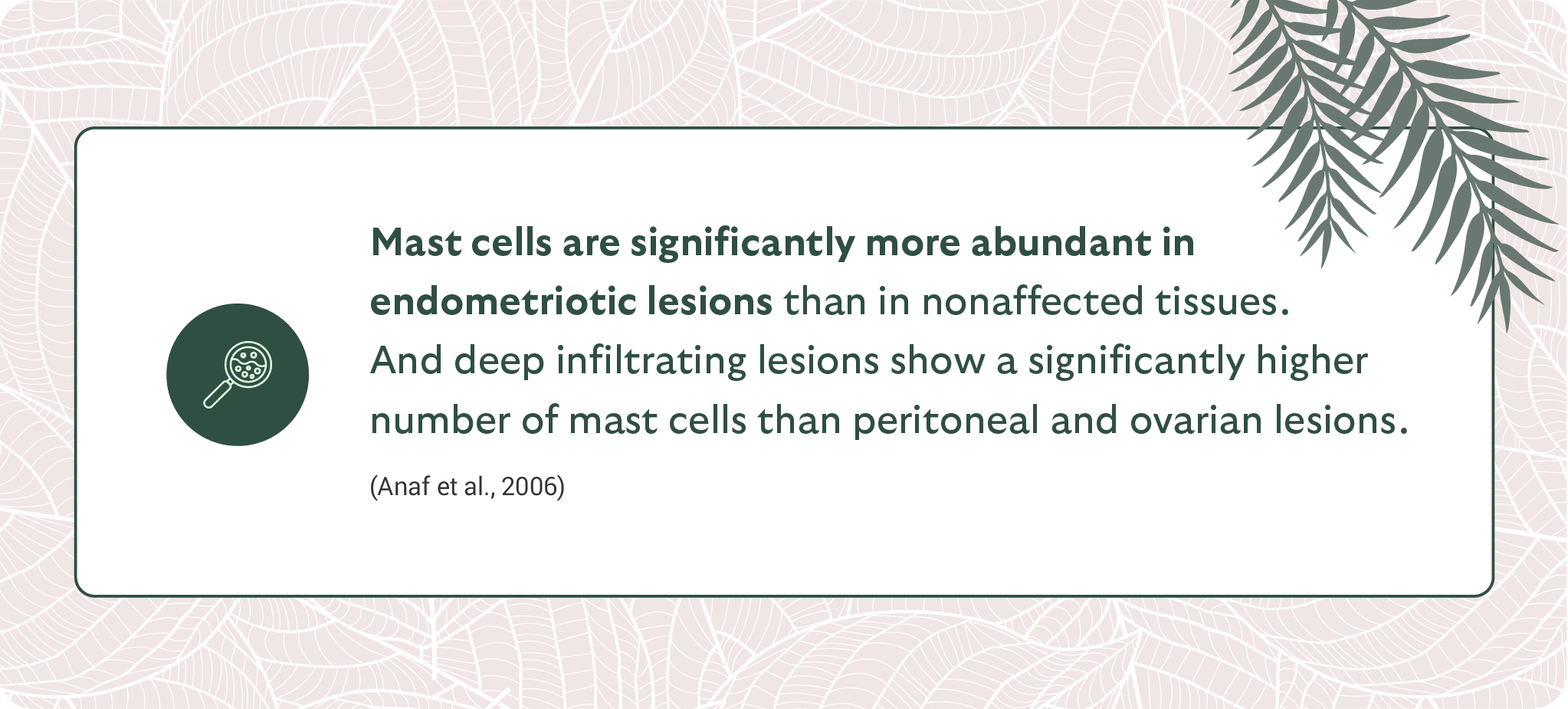
Haley had excision surgery in the spring of 2026. The team found Stage IV deep infiltrating endometriosis with close to fifty lesions. She also had three large fibroids, five endometriomas that were removed followed by repair of her ovaries, scar tissue in various areas including the ureters and bladder, and cyst splatter extending all the way to the diaphragm. The severity of Haley’s case also required a bowel surgeon to remove several nodules from the rectum, as well as her inflamed appendix.
Excision removes disease at the root, along with the surrounding fibrosis and inflammation, and sends tissue to pathology for confirmation. That matters in every case, and it may matter especially where inflammation is driving an immune response. Unlike ablation, which burns lesions in place and cannot safely address disease on the bowel, bladder, ureter, or diaphragm, excision aims to remove the tissue generating the problem.
For 17 years, imaging had shown nothing. Haley’s body had been telling the truth the entire time.
Life Three Months After Surgery
Recovery was not instant, and Haley is careful not to describe it as a cure. But within three months, changes appeared that had not occurred in seven years.
- She began tolerating foods she had not been able to eat, including three new foods in a single week.
- She started tolerating supplements and medications that had previously triggered reactions.
- Her hair loss stopped.
- Her brain fog and exhaustion improved.
- The severe nerve pain in her legs during mast cell flares—pain that had left her unable to stand or get out of the car—eased.
- The mood dysregulation and depression at the start of her cycle nearly disappeared.
- Her free estrogen levels, previously astronomically high, began coming down.
“I can function like a real human being.”
She continues to work with her naturopathic doctor, and her overall treatment is progressing more smoothly than it ever has. She also takes a form of hormonal management to reduce the chance of another endometrioma forming.
Haley is clear that surgery was a turning point rather than an ending. As she put it during the Endo Exchange webinar, there is a reason the endometriosis developed in the first place, and removing it does not eliminate the possibility of recurrence. Recovery after excision continues well past the operating room.
Haley’s Advice for Others Still Searching for Answers
- Advocate for the underlying cause, not just the symptoms. Her turning point came when she stopped asking what to take and started asking what triggered this.
- Do not accept normal imaging as a final answer. 17 years of clear scans did not mean 17 years without disease.
- Know what your body can and cannot handle, and say so. Going into surgery, she and her team decided together what to attempt and what to decline.
- Find a surgeon who will research what they do not know. Willingness to learn mattered more than prior expertise in MCAS.
- Look for the connections between your diagnoses. Treating hormones, gut health, and immune symptoms as separate problems is what kept her stuck for so long.
- Keep a symptom log. Patterns across systems are what finally made her case legible.
What to Do if You See Yourself in Haley’s Story
Haley’s is just one patient’s experience. Not everyone with endometriosis has MCAS, not everyone with MCAS has endometriosis, and the research connecting them is still early. What her case does show is what becomes possible when a surgeon, a naturopathic doctor, and a patient stop working in isolation and start treating the body as one system.
At ESSE Care, excision surgery is delivered within a collaborative, whole-person model, because the disease has never confined itself to the pelvis. If your symptoms have crossed too many specialties for anyone to hold the whole picture, schedule a consultation.
You are not alone. Your symptoms are real. And you deserve a team that looks at all of them.