There’s no one-size-fits-all reason for postmenstrual spotting, infertility, or pelvic discomfort, but for patients with a prior cesarean section, an often-overlooked cause is an isthmocele: a cesarean scar defect that can disrupt the uterine environment and affect fertility outcomes.
Symptoms may include periods that are normal, cease then bleeding restarts followed by a discharge. Dark mucous-like blood may occur, sometimes with an odor.
If you’ve been told “everything looks normal” yet continue to experience symptoms—or if your embryo transfers keep failing—isthmoplasty (surgical isthmocele repair) may offer both answers and relief.
What Is Isthmoplasty?
Isthmoplasty is a surgical procedure to repair a defect in the uterine wall, called an isthmocele, that may form after a C-section. This defect can appear on imaging scans as a pouch or indentation at the scar site on the uterus itself which may collect fluid or blood, disrupt uterine lining function, and interfere with embryo implantation. Leaving a small isthmocele in place can be ok but leaving a large defect in place can risk an ectopic pregnancy in the isthmocele site.
Depending on your anatomy and goals, isthmoplasty can be performed using hysteroscopic, laparoscopic, or robotic-assisted techniques. The approach is tailored to preserve fertility, relieve symptoms, and optimize the uterus for future pregnancy, if desired.
What Are Isthmoceles?


An isthmocele, sometimes called a uterine niche or cesarean scar defect, is a thinning in the uterine muscle where the incision was made during a C-section. Though true incidence is unknown, some studies estimate up to 70% of women with cesarean scars develop isthmoceles.
Some patients may not experience symptoms, while others report:
- Persistent brown discharge or spotting after their period ends
- Infertility or repeated IVF failure
- Pain or pressure at the scar site
- Fluid accumulation in the uterus seen on ultrasound
- Pain during intercourse
- Urinary pressure or difficulties
These signs often go undiagnosed or misattributed despite being surgically correctable. Talking to a surgeon with advanced training in minimally invasive gynecologic surgery and experience with complex pelvic conditions can make all the difference.
Who Is a Candidate for Isthmoplasty?
If you don’t plan to conceive again in the future and have no symptoms, an isthmocele may not need to be repaired. Cesarean scar defects can cause dangerous pregnancy complications, but they are generally not a risk outside of pregnancy.
Your provider may recommend isthmoplasty in these scenarios:
- If you experience postmenstrual spotting or brown discharge
- Before embryo transfer or IVF (to improve uterine receptivity)
- If you’ve had multiple failed transfers despite normal labs
- If fluid or a “niche” is seen on your ultrasound or other imaging
- If you’ve been told your uterine lining isn’t thickening properly
- If you have post-C-section symptoms but no clear diagnosis
- If you plan to conceive again and want to optimize uterine structure and safety
Revision isthmoplasty is also available for patients who’ve had incomplete or unsuccessful prior scar repair.
How Is Isthmoplasty Performed?
The specific surgical plan depends on the size and depth of the isthmocele, the condition of the uterine wall, and your fertility or symptom goals. At ESSE Care, we tailor each isthmoplasty procedure using a fertility-preserving and symptom-relieving lens.
Common Surgical Variants and Scope of Repair
Depending on your anatomy, goals, and intraoperative findings, isthmocele repair may include one or more of the following techniques:
- Hysteroscopy: A thin camera is inserted through the vagina and cervix to confirm the size, shape, and depth of the defect from inside the uterine cavity. In some cases, small niches can be treated hysteroscopically alone, meaning no abdominal incisions are required. This is rare and may create a deeper defect. At Esse Care we prefer dual approach with laparoscopic and hysteroscopic view.
- Laparoscopic or Robotic-Assisted Resection and Layered Closure: For larger or deeper defects, we use laparoscopy or robotic assistance to excise the niche and perform a full-thickness, multi-layered uterine wall repair, restoring muscular integrity and support.
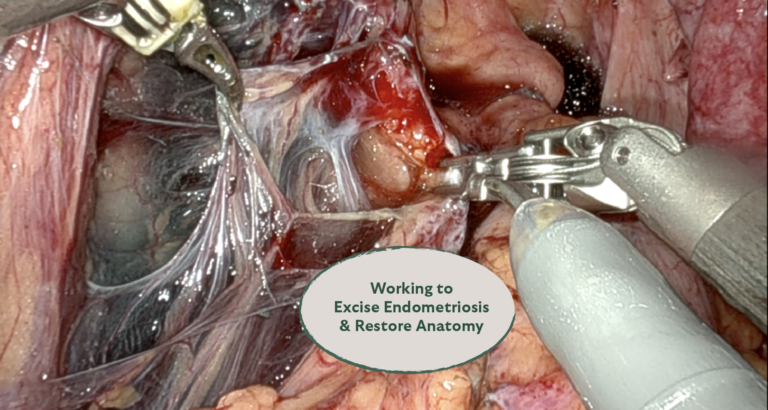
- Adhesiolysis (Scar Tissue Removal): Scar tissue and the entire isthmocele site is first removed to ensure normal healthy uterine tissue is left behind. In order to perform a strong repair with healthy tissue all the scarring is removed first. Any adhesions involving the uterus, bladder, or surrounding structures may be gently removed to improve pelvic anatomy and reduce pain or distortion from prior surgeries or endometriosis.
- Chromopertubation (Dye Test): When fertility is desired, a special dye is flushed through the fallopian tubes to confirm tubal patency (openness), helping identify any blockages or functional issues in real time.
- Endometriosis Excision or Polyp Removal: If endometriosis, uterine polyps, or other abnormalities are found during surgery, they can often be addressed in the same procedure, streamlining your care and improving outcomes.
- Cystoscopy (Bladder Inspection): To ensure safety during repair—especially when the isthmocele is located near the bladder—a cystoscopy may be performed to directly visualize and protect the urinary system.
This comprehensive approach allows us to not only repair the defect, but also optimize the entire pelvic environment, whether you’re preparing for embryo transfer, hoping to conceive naturally, or simply seeking relief from symptoms.
Is Isthmoplasty a Major Surgery?
Isthmoplasty is a minimally invasive procedure, usually performed under general anesthesia. Most patients return home the same day. The recovery timeline is similar to other minimally invasive procedures, typically involving:
- 3–4 small abdominal incisions (each ~5–8 mm)
- Outpatient or overnight hospital stay
- Return to desk work in ~1 week
- Ability to conceive in 3-6 months
If performed via hysteroscopy alone (no abdominal incisions), recovery may be even faster.
What Are the Risks of Isthmocele Repair?
Isthmoplasty is generally safe but, like any surgery, carries potential risks:
- Infection or bleeding
- Scar tissue formation
- Future C-section deliveries
- Rarely, repair may be incomplete or require revision
When performed by experienced surgeons using a fertility-aligned approach, risks are minimized and outcomes optimized. Isthmoceles themselves can cause secondary infertility and pregnancy complications, including miscarriage, placental abnormalities, and cesarian scar pregnancy, so it’s important to weigh the risk of doing nothing against the risk of surgery. Your provider can help you decide what’s best depending on your goals.
How Long Do the Results of Isthmoplasty Last?


The results of isthmoplasty are typically long-lasting, with significant improvement in uterine wall thickness following the procedure. Many patients experience immediate or rapid relief from spotting and pain, often within just a few weeks.
Fertility outcomes are also promising, with studies showing that approximately 73% of patients conceive after surgery.
Is Isthmoplasty Right for You?


In summary, isthmocele repair is a proven procedure that helps patients achieve their goals, from symptom relief to fertility, with a minimally invasive surgery. Though isthmoplasty is not necessary in all cases, clinical outcomes are promising—and often dramatic:
- Abnormal bleeding and spotting resolved in over 90% of patients
- Up to 79% pregnancy rate post-repair, with a live birth rate over 60%
- Pelvic pain relief in nearly all patients
- Restoration of the uterine wall from 1 mm to 5 mm thickness post-op
ESSE Care: Improving Patient Outcomes with Minimally Invasive Isthmocele Repair
At ESSE Care, isthmoplasty is not a one-size-fits-all surgery. We tailor each procedure based on:
- Your fertility goals
- Your symptoms and imaging findings
- Whether you’ve had prior surgeries
- Whether you need additional procedures (like endometriosis excision)
Our minimally invasive approach focuses on preserving the uterine muscle (myometrium), reducing scar tissue, and ensuring precise anatomical repair using real-time laparoscopic and hysteroscopic guidance. As with all of our care, we look at your health holistically, focusing on delivering the biggest impact with as few procedures as possible
If you’ve been struggling with unexplained infertility, persistent spotting, or IVF failure, and have a history of C-section, isthmoplasty could be the key to restoring your uterine health and future fertility. Reach out to the ESSE Care team today to schedule your consultation.