Intrauterine devices (IUDs) are small but powerful tools. For some, they provide years of reliable contraception. For others, they offer critical hormonal relief from symptoms of endometriosis, heavy bleeding, or painful periods. But while the device itself may be small, the process of placing or removing it isn’t always simple, especially if you’ve had a difficult experience in the past.
If you’ve been told it will be “quick and easy” but found the experience traumatic, painful, or unsuccessful, you’re not alone. And more importantly: you’re not out of options.
At ESSE Care, we do not offer IUD placement or removal in the office setting. All procedures are performed in a surgical or hospital setting under light anesthesia, ensuring both safety and comfort. This approach is especially designed for those who need or prefer a fully controlled, pain-free experience and for whom office attempts are simply not appropriate.
Why Would Someone Need IUD Placement or Removal Under Anesthesia?


While many patients tolerate IUD procedures in the office, some find them too painful or stressful—or simply prefer not to be awake. Others have experienced complications in the past or have anatomical factors that make the process more complex.
This option is especially helpful if:
- You’ve had a traumatic or failed IUD experience in the past.
- You have a tight cervix or cervical stenosis (narrowing of the cervical canal).
- You’ve been told your IUD is embedded, malpositioned, or difficult to locate.
- You experience vaginismus, pelvic floor spasm, or chronic pelvic pain.
- You’re undergoing another procedure and want the IUD placed or removed at the same time.
- You simply prefer not to feel the process, and that’s reason enough.
For patients with endometriosis, an IUD may also be placed not just for contraception, but to help suppress periods, reduce inflammation, and provide longer-term hormonal relief.
What Conditions Can IUDs Help With?
Video: Managing Primary Dysmenorrhea and Identifying Underlying Conditions
While most people think of IUDs for pregnancy prevention, they’re also an important part of the toolkit for managing:
- Endometriosis
- Heavy menstrual bleeding
- Chronic pelvic pain
- Hormone-sensitive symptoms
- Adenomyosis
- Endometrial hyperplasia (precancer)
- Heavy/irregular bleeding in perimenopause
- Irregular bleeding
At ESSE Care, we tailor IUD management based on your needs, not just your reproductive goals. Whether you’re trying to control symptoms without systemic (whole-body) hormones or you’re exploring non-pill contraceptive options, this is one of the most effective and reversible choices available.
What Happens During the Procedure?


This is a completely transvaginal, no-incision procedure performed under light sedation in a surgical center or hospital operating room. It is not done in the office.
Here’s how it works:
Before Your Surgery
- You may receive (depending on surgeon) a prescription for misoprostol, a tablet inserted into the vagina the night before surgery to soften the cervix and reduce trauma during placement or removal.
- You’ll be asked to fast after midnight the night before.
- All herbal supplements should be stopped a week in advance to reduce bleeding risk.
- We’ll advise you to avoid NSAIDs leading up to the procedure.
Day of Surgery
- You’ll check in and meet with your anesthesiologist, nurse, and surgeon.
- An IV line will be started.
- IV sedation will be administered, and you’ll be fully monitored throughout the short procedure.
- A speculum is used (just like in a Pap smear), and the IUD is placed or removed using gentle instruments. No abdominal incisions are made.
- Concurrent hysteroscopy (camera in uterus) can be done.
- Concurrent ultrasound can be performed.
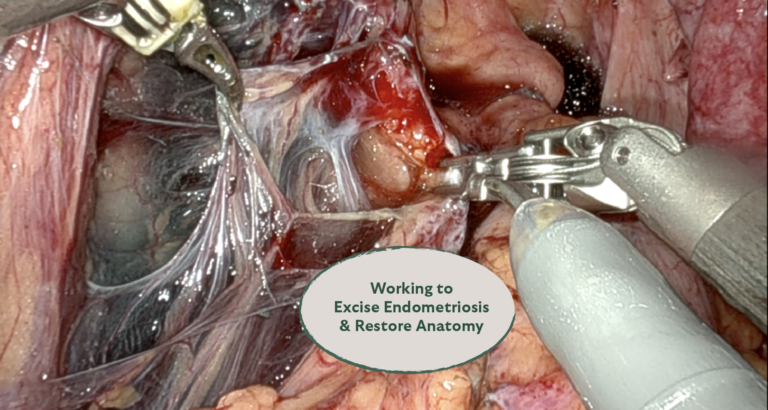
- Concurrent surgery can be done for endometriosis or abdominal surgery.
- The entire process usually takes 15 to 30 minutes, including preparation and recovery. The overall surgery duration may be longer if you’re having other procedures done at the same time.
For many patients, it feels like they simply fell asleep and woke up, with the entire procedure already done.
What’s Recovery Like?
The recovery process is fast and straightforward:
- You’ll go home the same day.
- Most patients can return to light activity or desk work within 24 hours.
- There are no lifting or exercise restrictions, unless otherwise advised.
- You can shower the same day, especially helpful if you experience any vaginal burning from the surgical prep solution (common and temporary).
- Pain management typically includes alternating Tylenol and ibuprofen as needed.
Some mild cramping, spotting, or fatigue is normal. If you’re having a hormonal IUD placed, your body may take up to three months to adjust, just like it would when starting or stopping the pill.
What Are the Risks of IUD Placement or Removal?


As with any surgical procedure, there are a few risks to be aware of—though they are rare and typically mild:
- Light bleeding or cramping
- Infection (prevented with antiseptic preparation)
- Drug reaction to anesthesia
- Vaginal discomfort or burning (usually from the antiseptic, not the IUD itself)
Serious symptoms are uncommon, but call your care team immediately if you experience:
- Fever over 101°F
- Severe pelvic pain
- Nausea or vomiting that doesn’t improve
- Foul-smelling discharge
Our team is here to guide you through every step of the healing process.
What About Long-Term Results?
If you’re having an IUD placed, it begins working either immediately or within seven days, depending on the type and timing. Your provider will give you personalized guidance.
It’s normal for periods to become lighter, irregular, or even stop altogether, especially with hormonal IUDs like Mirena or Liletta. This can be a major benefit for patients with endometriosis or heavy bleeding.
If you’re having an IUD removed, fertility can return as early as your next cycle. For some patients, this brings relief; for others, it marks a time to transition to another contraceptive method. Either way, we’ll help you navigate what comes next.
When Office Procedures Aren’t Enough, We’re Here
We understand that pelvic procedures, even “simple” ones, can feel anything but simple—especially if you’ve had pain, trauma, or been dismissed before. That’s why we created a gentle, specialized approach to IUD placement and removal under anesthesia.
To be clear: we do not perform IUD procedures in the office. At ESSE Care, all IUD insertions and removals are done with sedation in a clinical or surgical environment, because that’s what many of our patients truly need—and deserve.
You don’t have to “tough it out.” Listen to your body and choose what’s right for you.
Let’s Make This Easy on You
At ESSE Care, your comfort, dignity, and long-term health matter to us. If you’re ready to remove or place an IUD—or even just talk about your options—we’re here to help you feel confident and heard. Reach out today to schedule a consultation.