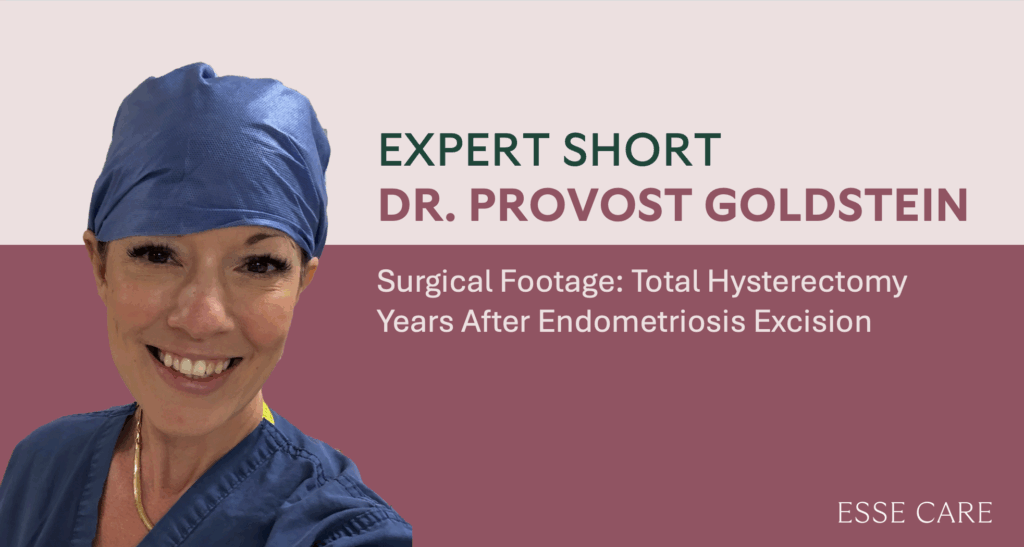
In this expert short, Dr. Karli Provost Goldstein walks through surgical footage from a patient who presented nearly a decade after endometriosis excision with new symptoms and imaging suggestive of adenomyosis. The patient elected to undergo a total hysterectomy—removal of the uterus and cervix—for menstrual suppression and symptom relief.
Intraoperatively, the pelvis appeared relatively clean. There were no adhesions and only mild inflammation, suggesting no clear evidence of endometriosis recurrence. Still, any tissue that appeared inflammatory or potentially microscopic endometriosis was excised as a precaution. The uterus also contained small fibroid tissue.
A total hysterectomy was performed, with removal of the uterus, cervix, and fallopian tubes, while preserving the ovaries to avoid premature menopause. The patient no longer needs hormonal birth control, which had been used to suppress painful periods. Without a uterus, there will be no more menstrual bleeding, although ovulation may still occur, which can cause occasional pain or cysts.
The specimen was removed vaginally, and the minimally invasive approach used small abdominal incisions. The vaginal cuff was closed in multiple dissolvable suture layers. Bleeding was carefully controlled, and any bowel adhesions were taken down to reduce long-term complications. The patient was able to go home the same day with minimal discomfort and an excellent recovery trajectory.
At ESSE Care, we support patients navigating chronic pelvic pain, adenomyosis, and decisions around total hysterectomy with or without ovarian preservation.
Whether you’re exploring your next step after excision or seeking relief from hormone-dependent conditions, our team brings minimally invasive expertise and thoughtful, patient-centered care. If you’re facing complex symptoms and looking for answers, we welcome you to schedule a consultation with our surgical specialists.