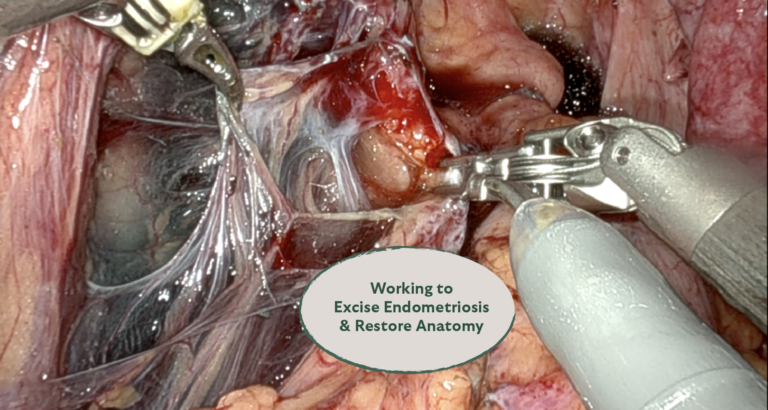
Thoracic endometriosis is one of the most under recognized yet life-altering forms of endometriosis, and too often, patients are told their symptoms are just anxiety, asthma, or unrelated.
This Endo Exchange webinar, hosted by Dr. Karli Provost Goldstein of ESSE Care, featured thoracic surgeon Dr. Christos Stavropoulos and patient advocate Anne Party, who shared her powerful story of diagnosis and recovery. Here are the five most important takeaways.
1. Thoracic endometriosis is more common than most doctors think, especially in patients with pelvic endo.
Dr. Stavropoulos emphasized that thoracic endometriosis is not as rare as once believed. In fact, he now considers it a top differential in any reproductive-aged woman presenting with right-sided pneumothorax (lung collapse). Diaphragm lesions and small openings in the tissue known as fenestrations often go undetected in scans but are common findings in surgery—especially in advanced pelvic endo cases.
“Once I started looking at the diaphragm, I realized how often this disease was hiding in plain sight.”
Dr. Stavropoulos
2. Your chest symptoms may be hormonal, and they’re not in your head.


Anne shared how she dismissed her own symptoms—breathlessness, fatigue, and pressure in the chest—thinking they were caused by stress or post-IVF fatigue. It wasn’t until her lung collapsed that a deeper evaluation began. Symptoms like cyclical chest pain, shoulder pain, coughing up blood, or shortness of breath are hallmark signs of thoracic endometriosis—especially if they occur around menstruation.
Researchers believe that up to 70% of patients with thoracic endometriosis syndrome are asymptomatic. But for those who do experience symptoms, these are the most common ones:
- Sharp chest pain or crackling/bubbling sensation, often worse with breathing
- Shoulder pain
- Upper abdominal pain
- Lung collapse (pneumothorax)
- Coughing up blood (hemoptysis)
- Blood collecting around lungs (hemothorax)
- Infertility
Because approximately 90% of diaphragmatic and thoracic lesions are located on the right side, pain felt in the chest, shoulder, and upper abdomen is often experienced on the right side of the body. And like other types of endometriosis, these symptoms typically follow a pattern that coincides with the menstrual cycle.
If you’ve been told it’s just anxiety or asthma, it’s time to ask more questions.
3. Imaging often misses thoracic endo, but surgery reveals the truth.

CT scans, X-rays, and even MRIs frequently miss the signs of thoracic endo. As Dr. Goldstein explained, endo lesions smaller than 5 mm don’t typically show up on standard imaging. Diagnosis often requires a thoracoscopy or laparoscopy, where surgeons can visualize and biopsy lesions directly.
That’s why collaborative care between gynecologists and thoracic surgeons is so critical. Anne’s diagnosis came only after both specialists worked together to uncover the full scope of her disease. She had endometriosis lesions on her diaphragm and pleura that were undetectable on imaging.
Bottom line: A normal scan doesn’t mean nothing’s wrong. It may just mean the right person hasn’t looked in the right place—yet.
4. A multidisciplinary surgical approach can be life changing.
Anne’s excision surgery involved a full team: a thoracic surgeon, an endometriosis excision specialist, and a urologist. They discovered a liver herniation into the chest cavity, extensive diaphragmatic disease, and adhesions affecting multiple organs. Without collaborative surgery, she may have endured repeated lung collapses and organ dysfunction.
For patients with both pelvic and thoracic endo, coordinated care is essential to remove all disease and prevent recurrence.
“This wasn’t a band-aid fix. It was the first time my symptoms were understood in the full context of my body.”
Anne
5. Hope and healing are possible.
Since surgery, Anne has seen meaningful improvement in her breathing, energy, and overall health. She uses an incentive spirometer to monitor her lung capacity, continues physical therapy, and now works closely with her fertility team to plan her next steps.
Her message is simple: You’re not crazy. You’re not alone. And you deserve to be taken seriously.
Many patients with thoracic endometriosis suffer for years without a diagnosis. Trust your body. If you feel like something is wrong—even when tests say otherwise—keep pushing.
Feeling Misunderstood? You’re Not Alone.
At ESSE Care, we specialize in diagnosing and treating the most complex forms of endometriosis, including thoracic and diaphragmatic disease. We support patients who:
- Experience unexplained respiratory symptoms around their cycle
- Have a history of pelvic endo but still feel “off”
- Have been told their lung issues are unrelated to endo, despite timing and patterns
- Need expert surgical care from a full-body perspective
You deserve answers and more than that, you deserve a care team that truly listens.
If you’re navigating chest symptoms, lung issues, or unexplained pain around your cycle, schedule a consultation to get the evaluation and support you need. We’ll help you breathe easier—literally and figuratively.