Dr. Christos Stavropoulos, Chief of Thoracic Surgery at Englewood Health, joined our Endo Exchange webinar “Breathless & Misunderstood — Thoracic Endometriosis, Chest Pain & Collapsed Lungs” alongside Dr. Karli Provost Goldstein and patient advocate Anne Party. Together, they unpacked one of the most overlooked manifestations of endometriosis: its impact on the diaphragm and lungs.
From surgical insight to patient advocacy, this conversation brought clarity to a topic too often dismissed. Read on for highlights, common patient questions, and actionable answers from one of the leading voices in thoracic surgery.
About Dr. Christos Stavropoulos
Dr. Christos Stavropoulos is a double board-certified thoracic surgeon with over 25 years of experience in complex chest surgery—including 15+ years specializing in advanced thoracic endometriosis cases.
As Chief of Thoracic Surgery at Englewood Health and Director of Thoracic Oncology at the Lefcourt Family Cancer Treatment and Wellness Center, Dr. Stavropoulos leads a nationally recognized 3-STAR STS Lobectomy Program and is a Castle Connolly Top Doctor. He is a Diplomat of the American Board of Thoracic Surgery and the American Board of Surgery and a Fellow of the American College of Surgeons.
But what truly sets him apart is his collaborative approach to patient care. Working side by side with gynecologic surgeons, Dr. Stavropoulos brings surgical precision and deep compassion to some of the most misunderstood endometriosis cases.
Why His Voice Matters in Thoracic Endometriosis
Too often, patients with chest pain, shortness of breath, or even lung collapse are misdiagnosed—or dismissed entirely. Thoracic endometriosis is still underrecognized, even by experienced providers.
At ESSE Care, we value Dr. Stavropoulos because he:
- Recognizes cyclical pneumothorax (lung collapse) as a red flag for endometriosis
- Champions interdisciplinary care that spans thoracic, pelvic, and urologic surgery
- Brings empathy and experience to every diagnostic conversation
- Validates patients’ experiences when others have missed the signs
Top Questions from the Endo Exchange Webinar
Our community came with real questions. Dr. Stavropoulos and Dr. Goldstein offered answers that matter. Here are some of the most important takeaways from the webinar.
1. Can endometriosis really cause lung collapse or chest pain?
Dr. Stavropoulos: Yes. Thoracic endometriosis can lead to catamenial pneumothorax (lung collapse during or around your period), hemothorax (blood in the lungs), and sharp right-sided chest or shoulder pain. This is not a rare coincidence, these symptoms may be linked to deep disease that has migrated through the diaphragm into the chest cavity.


2. What symptoms should make me suspicious of thoracic endometriosis?
Dr. Stavropoulos: Watch for these signs:
- Chest or shoulder pain that worsens during your period
- Trouble breathing, especially around menstruation
- A bubbling or crackling feeling in the chest
- Coughing up blood
- Sudden fatigue when climbing stairs or walking
- History of lung collapse
These symptoms are often dismissed or misdiagnosed as asthma or anxiety.
If you are experiencing right-sided pain and are of childbearing age, you may be at greater risk. This should be top of mind when discussing your symptoms with a physician.
3. What if my chest X-ray or CT scan looks normal?
Dr. Stavropoulos: This is extremely common. Imaging like X-rays and CT scans may not detect small lesions or fenestrations (holes) in the diaphragm. MRI may be more useful, but even that can miss endometriosis under 5 mm. Only direct surgical visualization through thoracoscopy or laparoscopy can confirm diagnosis in many cases.


4. I’ve been told my symptoms are anxiety, asthma, or stress—what should I do?
Dr. Stavropoulos: Advocate for yourself. Ask your provider:
- Could this be endometriosis?
- Can I be referred to a thoracic surgeon or excision specialist?
- Should we consider cyclical triggers tied to my period?
Many patients are dismissed until a major event (like a collapsed lung) forces further investigation. Don’t wait for it to get worse.
5. How is thoracic endometriosis treated?
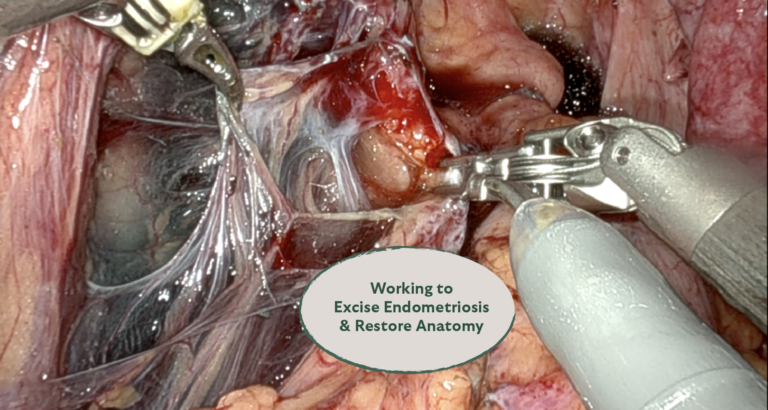
Dr. Stavropoulos: Surgery is the gold standard. In partnership with ESSE Care, we take a collaborative surgical approach: a gynecologic excision specialist and a thoracic surgeon operate together to remove disease from the pelvic, abdominal, and chest cavities. Hormonal suppression may be offered to manage symptoms short term, but it does not remove lesions and may allow disease to progress.
6. What’s the connection between endometriosis and diaphragm or lung issues?
Dr. Stavropoulos: Endometriosis can erode the diaphragm and create fenestrations (holes) that allow blood, fluid, or tissue to pass into the chest. These openings—sometimes visible during surgery—can lead to recurrent lung collapses or even diaphragmatic hernias if left untreated.
7. Can thoracic endo exist without pelvic endo?
Dr. Stavropoulos: Almost never. Studies and surgeon experience suggest nearly 100% of patients with thoracic endometriosis also have pelvic or abdominal endo—even if it hasn’t been previously diagnosed. If thoracic endo is found, the pelvis should always be evaluated thoroughly.
8. What should I ask my doctor if I suspect thoracic endometriosis?
Dr. Stavropoulos:
- Could my symptoms be linked to endo?
- Do I need a referral to a thoracic surgeon?
- Should I get an MRI or consider surgical evaluation?
- Are there signs of fenestrations or diaphragm lesions?
- Can you help me track symptoms during my cycle?


Why We Value This Partnership
Dr. Stavropoulos embodies ESSE Care’s philosophy of interdisciplinary, integrative, and patient-centered endometriosis care.
His surgical expertise, genuine compassion, and willingness to explore what others miss makes him a critical partner for patients who have felt ignored or misdiagnosed for too long.
Whether you’re navigating recurrent lung issues, diaphragmatic pain, or just have a hunch that something’s been overlooked, his insight could be the turning point in your care.
If you’re navigating chest symptoms, lung issues, or unexplained pain around your cycle, schedule a consultation to get the evaluation and support you need. We’ll help you breathe easier—literally and figuratively.