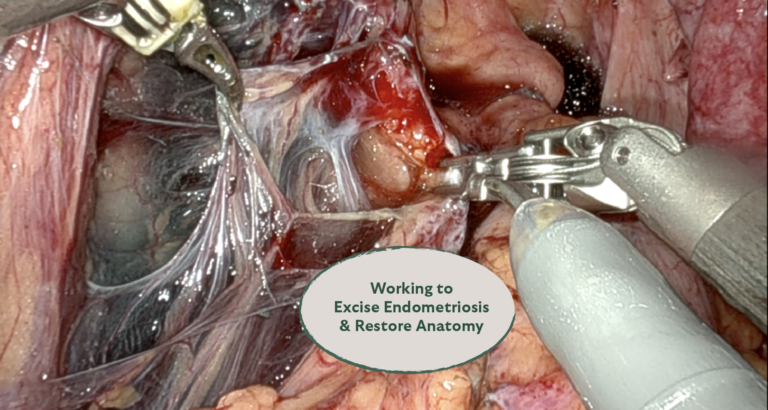
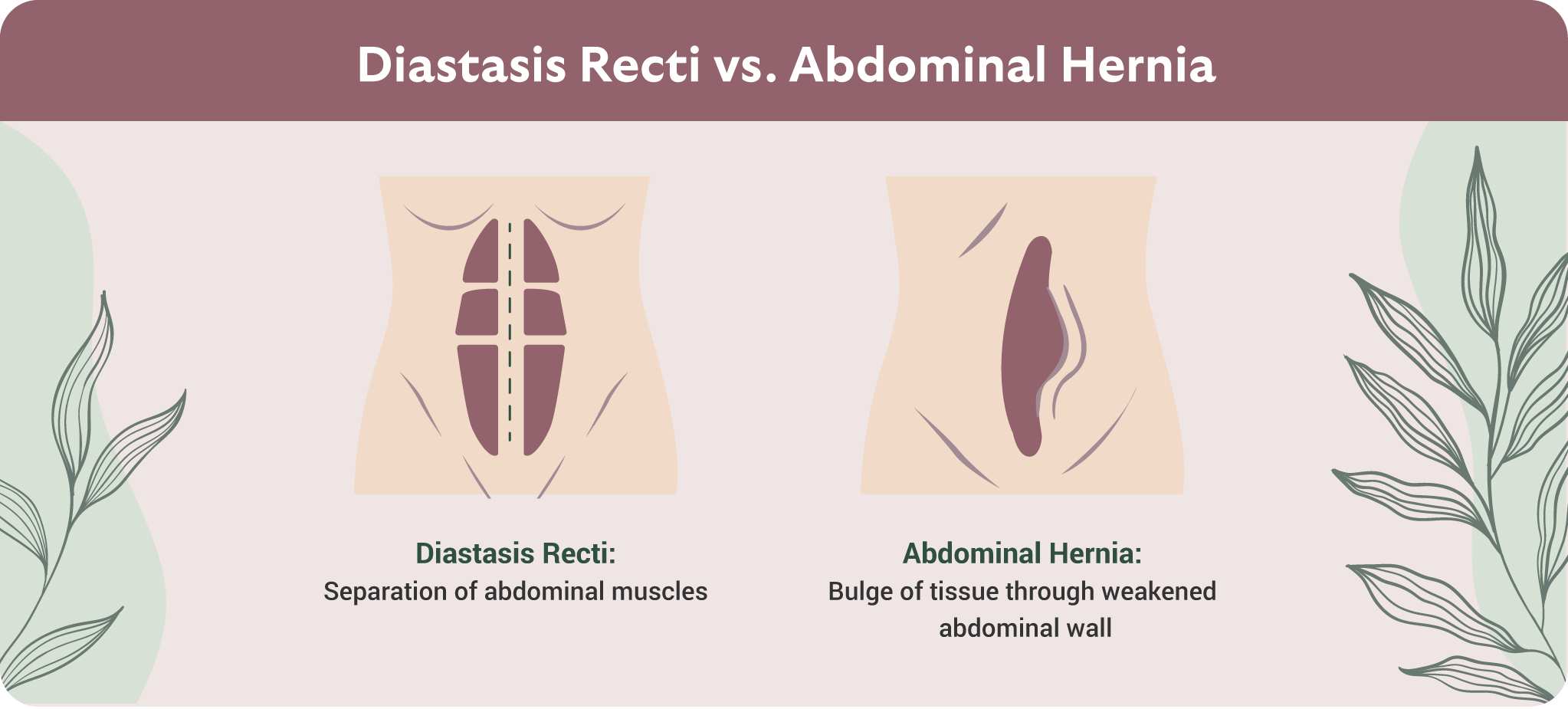
At ESSE Care, we often see patients who are preparing for gynecologic surgery—such as excision of endometriosis, fibroid removal, or hysterectomy—who also have abdominal wall issues, like a hernia or diastasis recti (abdominal muscle separation). These issues are common after pregnancy and can cause symptoms like bulging, weakness, or a feeling that your core has lost stability.
While we don’t offer hernia repair as a standalone procedure, we can repair the hernia at the same time as your planned gynecologic surgery when it’s medically appropriate. This combined approach allows you to avoid having two separate operations, two anesthesia events, and two recoveries. Instead, you can often address both your pelvic and abdominal health in one coordinated, minimally invasive procedure.
What Is Combined Hernia Repair and How Is It Performed?
If you’re already scheduled for laparoscopic or robotic gynecologic surgery, and you’ve been diagnosed with a hernia or muscle separation, we may coordinate with a general surgeon to perform the hernia repair during the same surgery. Here’s what to expect:
- The gynecologic portion of the procedure is completed first, followed by the hernia repair.
- Depending on your anatomy, the repair may involve stitching the abdominal wall back together or reinforcing the area.
- In some cases, we make small adjustments to the location of your incisions to allow for optimal visualization and access.
- In most cases, the entire procedure remains minimally invasive, and most patients go home the same day or after one overnight stay.
Who Might Need This Surgery?
You might be a candidate for combined hernia repair if you:
- Have a visible or symptomatic abdominal hernia.
- Experience a pouching sensation or core weakness.
- Have been told you have diastasis recti.
If you’re already planning gynecologic surgery, and your abdominal symptoms are impacting your quality of life or function, this combined approach may make sense.
Hernia or diastasis recti repair is typically best for patients who are:
- Done with childbearing, since pregnancy can stretch the abdominal wall again and lead to recurrence or discomfort.
- Have no planned future surgeries, because incisions create the risk for hernia.
Some patients with mild abdominal wall concerns can try core rehabilitation or physical therapy first.
Recovery and Aftercare


Most patients recover well from this minimally invasive combined surgery. You’ll typically start light activity within a few days, but we recommend avoiding heavy lifting, abdominal workouts, or straining for 6 to 10 weeks to allow for proper healing. Your surgical team will give you detailed guidance, and you’ll follow up with our team to check your progress.
Pain after surgery is often mild to moderate and can usually be managed with Tylenol or Advil. It’s important to keep your bowels moving after surgery, since constipation or straining can increase pressure on your abdominal wall. Hydration, fiber, and gentle walking can help support your recovery.
Risks and Considerations
As with any surgery, risks include bleeding and infection Hernias can recur if the area is strained too early in healing, or if pregnancy occurs after the repair.
If a hernia is left untreated, symptoms may worsen over time. There’s also a small risk that bowel tissue can become trapped in the hernia (called incarceration), which can require emergency surgery.
Results and Long-Term Outlook
Most patients notice that their core feels stronger and more stable after surgery. If the hernia or muscle separation was causing a bulge, the area may look flatter. While this isn’t a cosmetic procedure like a tummy tuck, many people are pleased with the change in function and contour. When healing is supported and no future pregnancies occur, the repair is usually long-lasting.
We’ll often recommend pelvic floor or core-focused physical therapy after healing to help restore abdominal strength and prevent recurrence.
Frequently Asked Questions About Hernia Repair
Can I have hernia repair at ESSE if I’m not having gynecologic surgery?
No. We only offer hernia repair as part of a combined procedure during planned gynecologic surgery, in partnership with general surgery and plastic surgery teams. We do not offer it as a standalone service.
Will this help flatten my stomach or improve abdominal bulging?
If the bulge is caused by a hernia or muscle separation, yes—repairing it can improve both strength and appearance. This isn’t a cosmetic surgery, but many patients feel their core looks and functions better afterward.
Do I need mesh?
Not always. Small hernias may be repaired with sutures alone. If mesh is recommended, we place it carefully and use techniques to reduce the risk of irritation or adhesions.
Can I get pregnant after this surgery?
We recommend waiting to have this type of repair until you’re done with childbearing. Pregnancy after hernia repair can stretch or separate the abdominal wall again, which may undo the results and require an additional operation.
What if I don’t fix the hernia?
You may continue to experience pain, weakness, or visible bulging. In some cases, hernias can worsen or trap bowel tissue, which can become a surgical emergency.
When can I work out again?
We recommend avoiding abdominal workouts and lifting for 6 to 10 weeks. Gentle walking and movement are encouraged early on. We’ll give you specific guidelines based on your healing.
Do I need physical therapy after surgery?
In many cases, yes, especially if there was significant abdominal weakness before surgery. Physical therapy can help restore core function and prevent recurrence.
Your Surgical Journey at ESSE Care
If you’re preparing for gynecologic surgery and also dealing with core weakness or a diagnosed hernia, this combined approach may be right for you. We’ll help coordinate your care with general surgery so that both conditions are addressed in one safe, minimally invasive procedure. You’ll recover more efficiently and move forward with restored strength and function.
You don’t have to navigate this alone—we’re here to help you feel informed, supported, and confident in your next step. If you think you might be a candidate for a combined hernia repair surgery, schedule a consultation to talk about it with our team.