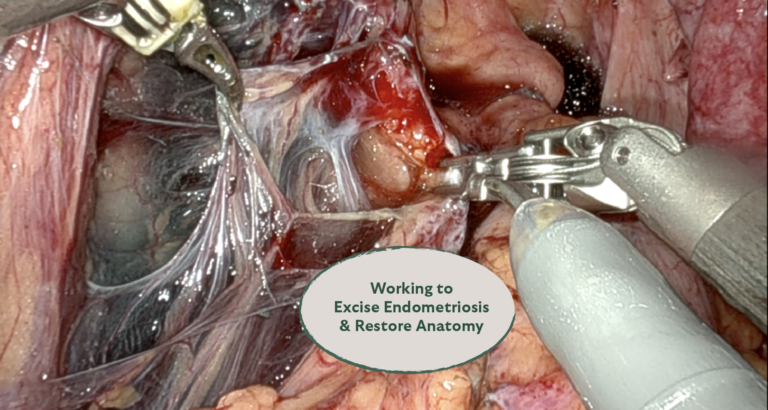
Many people with endometriosis describe symptoms that pelvic pain alone don’t explain. Foods that used to be fine stop being fine. Fragrance triggers a reaction. A hot shower brings on symptoms. The week before a period feels less like cramps and more like the flu. For years, the standard response has been that these things are either unrelated or attributable to stress or anxiety.
In Episode 9 of The Endo Exchange, Dr. Karli Provost Goldstein of ESSE Care was joined by Dr. Laura Gouge, a naturopathic doctor who treats mast cell activation syndrome (MCAS), endometriosis, and postural orthostatic tachycardia syndrome (POTS), and by patient advocate Haley Argiento, who lived with severe mast cell activation for seven years before a Stage 4 endometriosis excision surgery changed her trajectory.
Here are five key insights for anyone whose symptoms have never fit neatly into one diagnosis.
1. MCAS is not an allergy, and a normal allergy workup does not rule it out.
Mast cells are immune cells that sit everywhere the body meets the outside world: skin, gut, airway, sinuses, bladder, and pelvis. Dr. Gouge describes them as smoke detectors. When triggered, they release a large cascade of mediators, most famously histamine, but also prostaglandins and leukotrienes.
In mast cell activation syndrome, the number of mast cells is normal but their threshold is not. They fire in response to things that are not genuine threats.
Triggers Patients Commonly Report
- Heat, hot showers, exercise, and temperature swings
- Alcohol, stress, and infections
- Pressure or friction on the skin
- Fragrance and other environmental exposures
- Foods a person is not actually allergic to
- The natural fluctuation of their own hormones
What Clinicians Actually Look At
Dr. Gouge works from criteria developed by Dr. Lawrence Afrin, who coined the term “mast cell activation syndrom.” The criteria examine three things: mast cell activity affecting multiple body systems at once, laboratory markers such as elevated histamine or prostaglandins, and meaningful improvement when mast cell treatment is introduced. Two of the three, with other causes excluded, points toward MCAS.
Myth: If Allergy Testing Is Normal, It Cannot Be MCAS
Dr. Gouge notes the opposite is often the tell. A patient having anaphylactic-spectrum reactions whose allergy workup comes back entirely clean is exactly the patient who deserves a closer look. People with MCAS can also have conventional allergies. The two are not mutually exclusive.
2. MCAS rarely exists alone, and endometriosis belongs on the list.
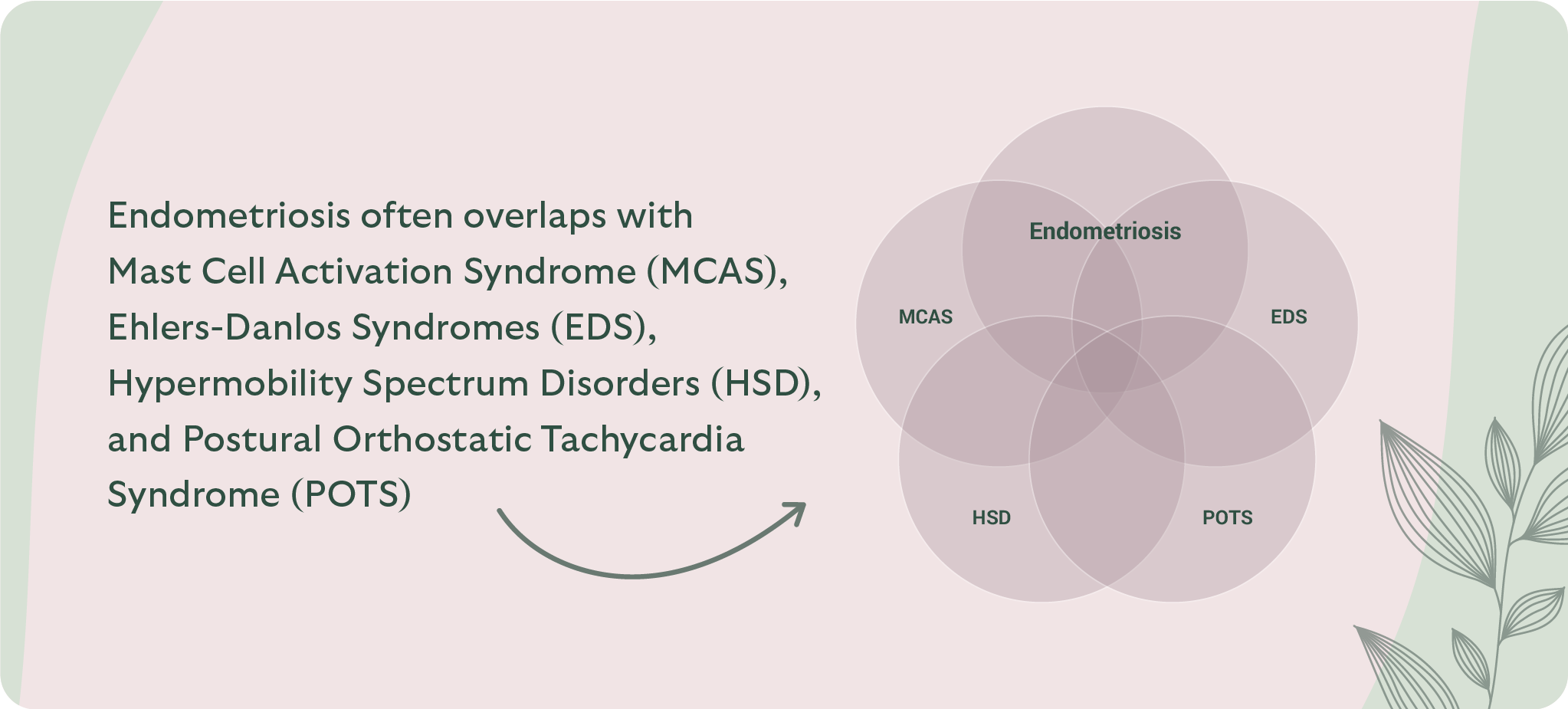
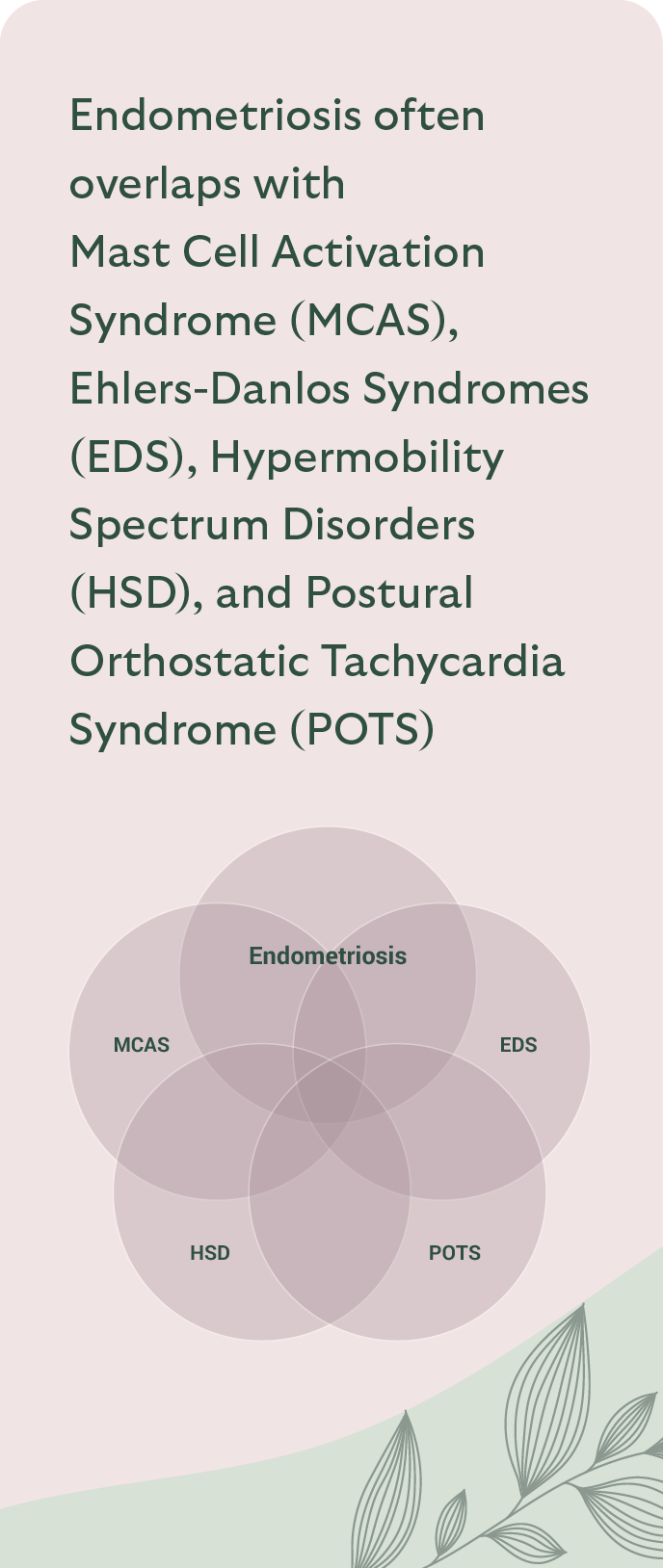
Clinicians who see these patients describe a cluster rather than a single diagnosis. The most recognized grouping is sometimes called the trifecta: hypermobility conditions such as Ehlers-Danlos syndrome, a form of dysautonomia such as POTS, and MCAS.
The wider web:
- Autoimmune conditions
- Slowed digestion, including small intestinal bacterial overgrowth (SIBO) and gastroparesis
- Chronic infections such as Lyme disease, long COVID, or Epstein-Barr reactivation
- Endometriosis
Most patients do not have every condition on the list. The pattern is recognizing four or five at once and realizing they have never been considered together. Dr. Gouge cited emerging research suggesting a higher prevalence of histamine-related conditions—ranging from mild allergies, asthma, or eczema through to significant mast cell activation—in endometriosis patients (Matalliotakis et al., 2012, Zelovich et al., 2025, Petraglia et al., 2026).
If you have collected diagnoses across multiple specialties, the pattern may be the diagnosis.
3. Estrogen and mast cells amplify each other, which is why symptoms follow a cycle.
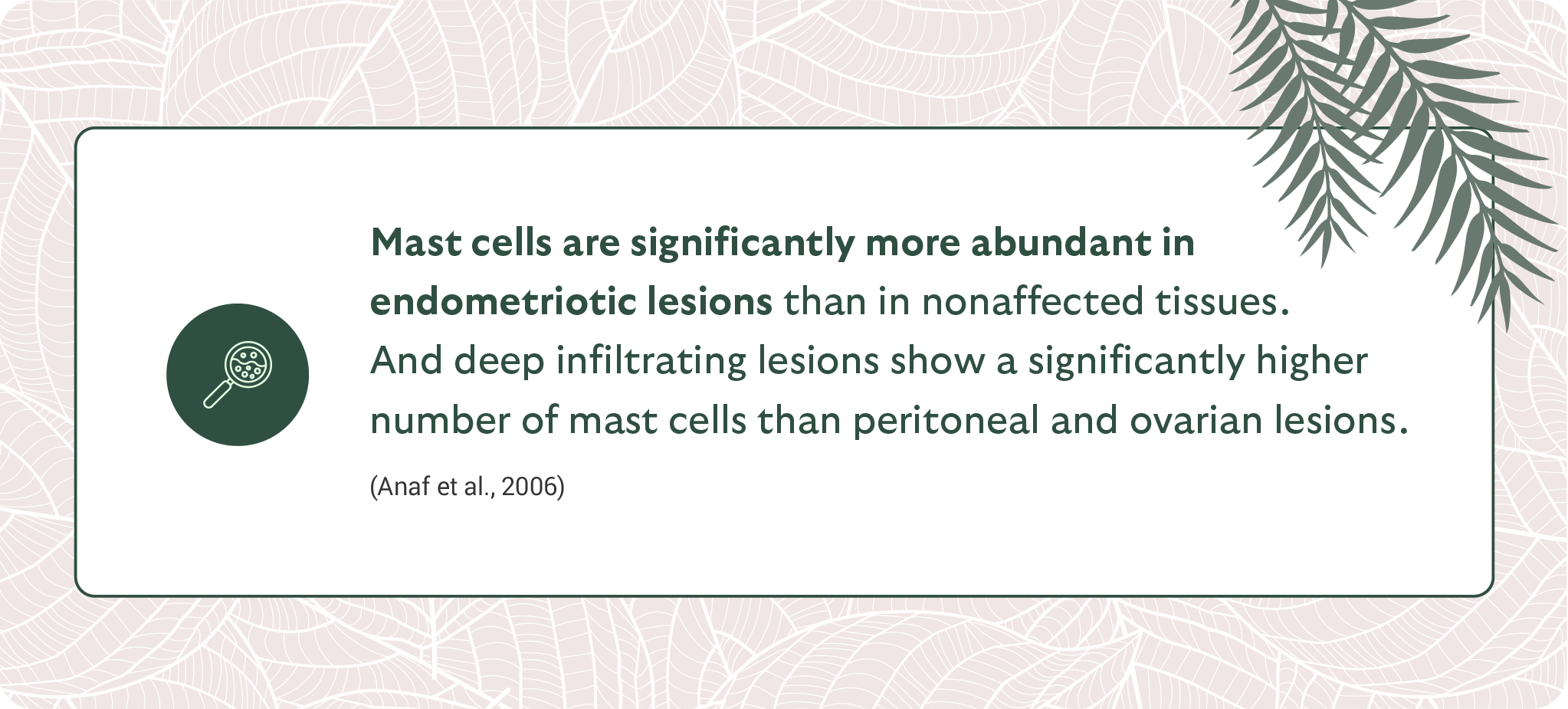
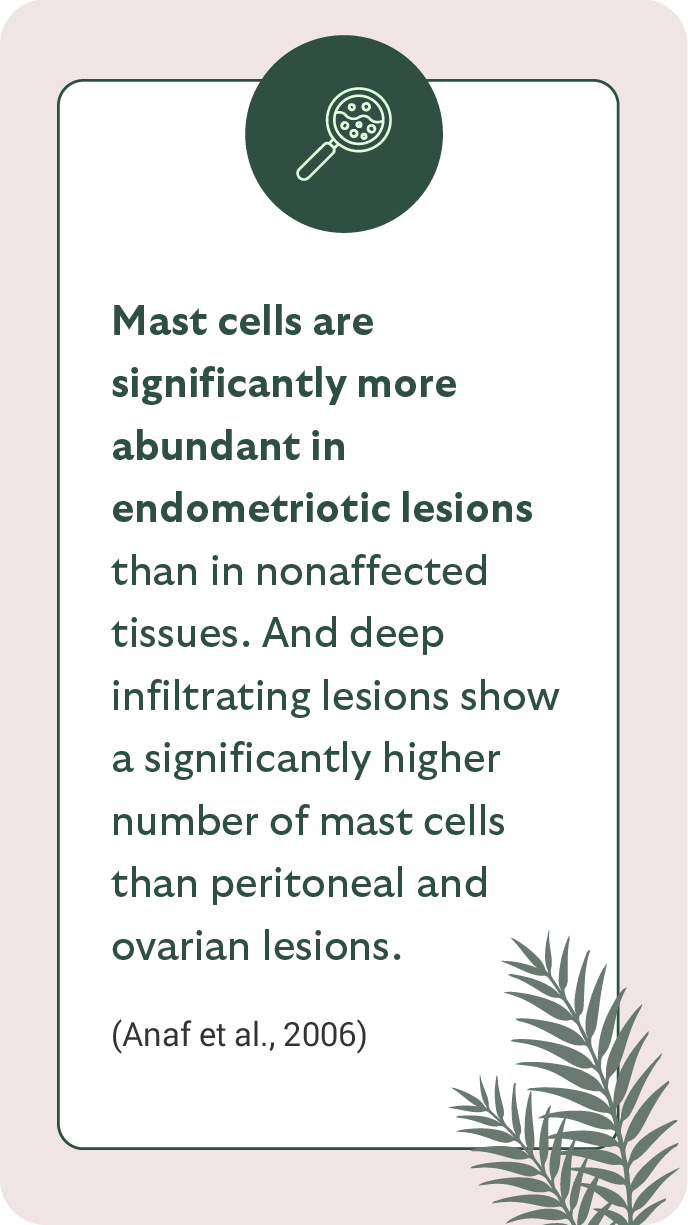
Mast cells release histamine and other mediators that support estrogen signaling, and estrogen in turn activates mast cells. Inflamed tissue recruits more mast cells, which sustain more inflammation, which helps lesions persist.
Mast cells also appear to drive two processes that make endometriosis harder to treat: angiogenesis, meaning the development of an accessory blood supply, and the sensitization of nerve fibers that produce pain. Dr. Goldstein noted that the most aggressive lesions she sees can develop their own blood and nerve supply and thrive despite other therapies.
What This Cycle Looks Like in Real Life
- An ovulation flu or period flu, with body aches, malaise, nausea, and a sense of running a fever
- Temperature dysregulation and fainting around menstruation
- Mood dysregulation, depression, or PMDD-like symptoms at the start of a cycle
- Reactions that worsen predictably at the same two points every month
Why Your Hormone Panel May Look Normal
Dr. Gouge warns patients before she orders testing that the results might not show a smoking gun. Some people react to the fluctuation of their own hormones despite any obvious abnormalities, so a completely “normal” panel does not mean the cycle is not driving symptoms. Dr. Goldstein sometimes draws labs on a patient’s worst day and again on a good day, specifically to look for the swing rather than an isolated number.
Dr. Gouge, who is open about her own history, spent years being told her mid-cycle “flu” was normal, had never been heard of, or was probably IBS. Looking back, she believes her mast cells were highly active at that point in her cycle.
4. Symptom severity does not indicate disease stage, and imaging often misses disease.
Haley Argiento became symptomatic at 15 with severe ovarian pain that dropped her blood pressure and caused her to black out every month. She was told painful periods were normal, offered anxiety medication, and on one hospital visit accused of seeking pain medication she had not asked for.
It was not until the fall of 2025, during a hospitalization for pain unlike anything she had experienced, that imaging finally showed an endometrioma. Surgery later revealed stage 4 disease with close to 50 lesions.
Dr. Goldstein pointed out that most patients do not have their ovaries imaged as part of a routine gynecologic exam, and that even patients reporting pain often meet resistance when they ask.
Myth: Stage 1 Endometriosis Cannot Cause Severe Symptoms
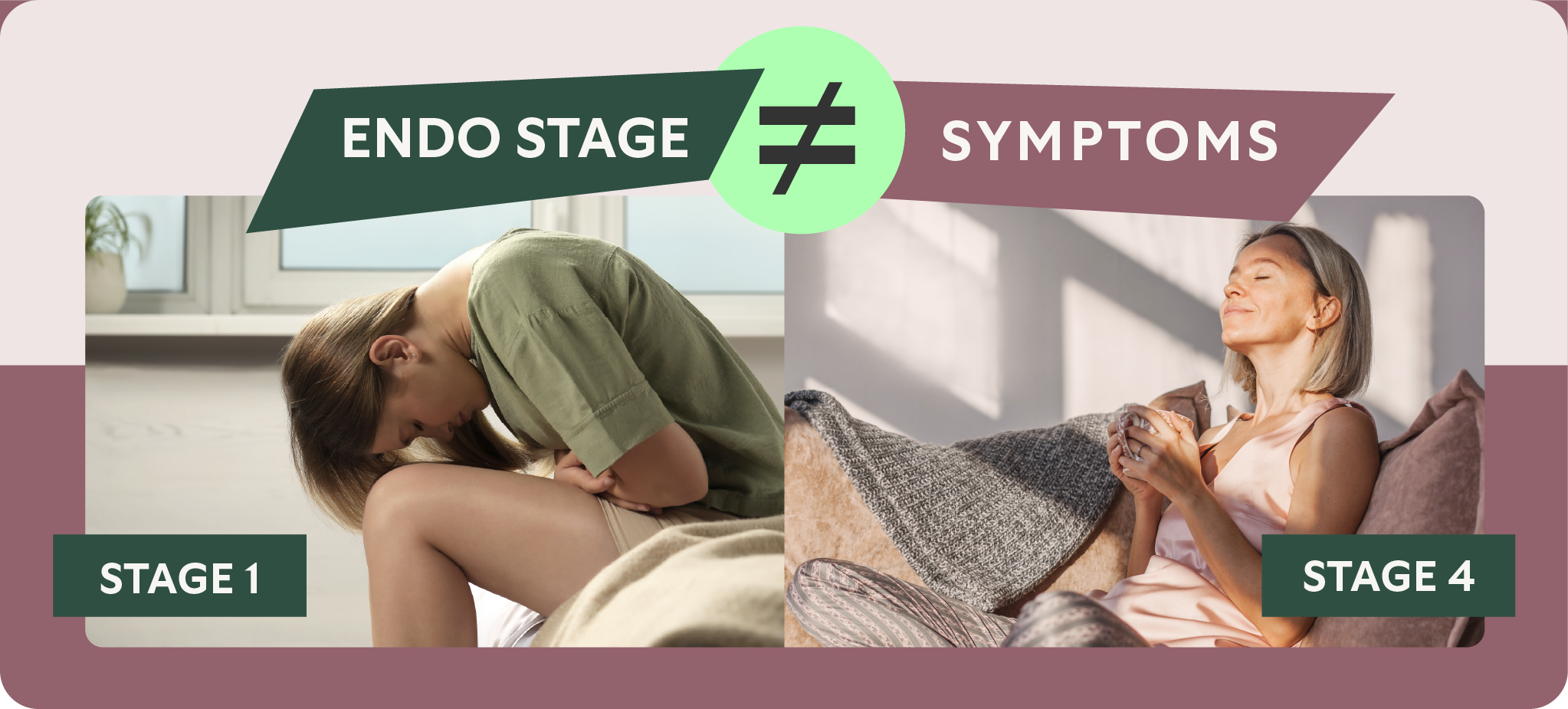

There is no reliable correlation between stage and pain. A one-millimeter lesion can produce severe pain and severe mast cell activation. As Dr. Goldstein put it, the body cannot always sense whether something is one millimeter or five centimeters, and it does not calibrate its response to the size of the disease.
5. Excision can be a turning point, and it is still only part of the plan.
For Haley, removing the diseased tissue coincided with changes she had not seen in seven years. Within three months of excision surgery, she was tolerating foods, medications, and supplements that had previously triggered reactions. Her hair loss stopped. The brain fog and exhaustion lifted. The severe mood dysregulation at the start of her cycle nearly disappeared. Her free estrogen levels, which had been extremely high, began coming down.
Why Surgical Technique Matters
Excision surgery is the gold standard for endometriosis diagnosis and treatment, but many providers still offer ablation, a procedure where endo lesions are burned rather than surgically excised. Both physicians were direct about the difference between the procedures patients are offered.
| Compared on | Ablation | Excision |
|---|---|---|
| What happens to the lesion | Burned in place at the surface | Removed at the root, along with surrounding fibrosis |
| Tissue sent to pathology | Usually no, so a diagnosis may not be confirmed | Yes, confirming diagnosis and extent |
| Disease on bowel, bladder, ureter, or diaphragm | Cannot be safely treated this way | Can be addressed, often with a multidisciplinary team |
| Effect on inflammation | Leaves deeper disease and its inflammatory drivers behind | Aims to remove the tissue generating the inflammation |
| Common pain outcome | Cyclical pain may become constant scar tissue pain | Cyclical pain is addressed at its source |
Dr. Gouge described her own experience as a cautionary tale. An ablation procedure years ago left her with daily excruciating pain and scarring over deep lesions that had been missed entirely. A later excision found stage III 3 disease. She has since achieved pain-free cycles, and does not believe that would have been possible without the excision first.
Planning Surgery for a Highly Reactive Patient
Haley could not tolerate a standard bowel preparation or most of the medications in ESSE Care’s usual post-operative kit. The team built an individualized plan around what her body could handle.
- Mast cell stabilizers and antihistamines beforehand where tolerated, sometimes compounded to remove reactive fillers
- An anesthesia plan agreed in advance, since some agents are more likely to trigger mast cells than others
- A plan for every scenario, including pain, nausea, and tolerated food ready at home
- A surgeon willing to adapt the standard protocol and advocate on her behalf
Myth: Once Surgery Is Over, Healing Is Complete
Haley was clear that surgery was a turning point in her care, not a final destination. There is a reason the endometriosis developed in the first place, and removing it does not eliminate the possibility of recurrence. She continues hormone management to reduce her risk of another endometrioma, alongside ongoing naturopathic care, gut work, and hormone support. Recovery after excision continues well past the operating room.
What This Means for Your Care
All three speakers returned to the same caution: There is no one-size-fits-all protocol here. What Haley tolerated is not what another patient will tolerate, and the speakers deliberately declined to publish a checklist of medications to try. The research is genuinely early, much of it mechanistic or conducted in animal models, and it remains unclear whether mast cells drive endometriosis lesions or respond to inflammation already present.
What is clear is that these systems talk to each other, and that care organized around a single specialty tends to miss it. Here’s what to keep in mind:
- Systemic symptoms alongside endo are worth investigating. Food intolerances, anaphylaxis, brain fog, tachycardia, and GI dysfunction are not automatically separate problems.
- A normal scan is not a final answer. Deep disease is frequently invisible on imaging.
- Stage does not predict severity. Do not let a “low” disease stage close the conversation.
- Build a team, not a collection of specialists. A surgeon, a naturopathic or functional provider, and an allergist or GI specialist (if relevant) who actually communicate with each other are vital to receiving comprehensive care.
- Be cautious with protocols found online. Applying a single intervention broadly, without understanding the individual picture, is where harm can happen.
At ESSE Care, excision surgery sits inside a collaborative, whole-person model rather than standing alone. If your symptoms span more systems than any one provider has been willing to look at, schedule a consultation.
Healing doesn’t always happen all at once. Sometimes it begins with finally finding a team that asks different questions. At ESSE Care, excision surgery sits inside a collaborative, whole-person model rather than standing alone.
If your symptoms span more systems than any one provider has been willing to look at, schedule a consultation.