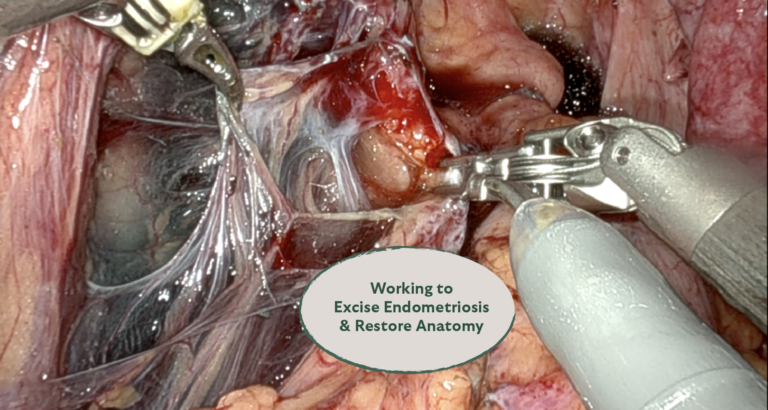
When you’re experiencing unexplained bleeding, recurrent implantation failure, or a difficult embryo transfer, a hysteroscopy offers what no scan or blood test can: a direct, real-time view inside the uterus. Exploratory hysteroscopy can help give patients a path forward when other diagnostics have failed.
At ESSE Care, we use advanced hysteroscopic techniques to diagnose and, often, treat uterine abnormalities in a single procedure, helping reduce the need for multiple surgeries, repeated anesthesia, or long waits between answers and solutions.


Hysteroscopy involves placing a small camera through the vagina, into the cervix, and up into the uterine cavity. The doctors at ESSE Care often use a touchless technique called vaginoscopy, where we skip the speculum and insert the hysteroscope directly through the pre-dilated cervix. This allows us to view:
- The angle between cervix and uterine cavity (important for embryo transfer)
- The internal shape of the uterus
- The ostia – where the fallopian tubes meet the uterus
- Any scar tissue, septum, or hidden anatomic concerns
This direct visualization lets us treat problems like fibrous septa, fluid collections, or scarring immediately, without guessing or relying solely on imaging.
Why Might I Need an Exploratory Hysteroscopy?


Exploratory hysteroscopy is typically recommended for patients with symptoms that cannot be diagnosed or confirmed through imaging alone, such as:
- Difficult embryo transfers (fluid buildup, etc.) or failed IVF cycles
- Thin endometrial lining
- Abnormal uterine bleeding
- Recurrent miscarriage
- Suspected scarring (mild) not visible on imaging
- Unexplained fertility concerns
The table below shows how a hysteroscopy can help diagnose or treat these conditions.
| Finding | How Hysteroscopy Helps |
|---|---|
| Adhesions or scarring | Visualized and potentially treated |
| Polyps | Diagnosed and potentially removed |
| Poor endometrial lining | Endometrial scratch can stimulate growth |
| Septate (split) uterine polyps | Can be visualized and treated in the same session |
What Happens Before the Procedure?
Prior to your hysteroscopy, your provider will:
- Review your medical history and medications
- Advise stopping blood thinners (if necessary)
- Perform a physical and pelvic exam
- Provide clear instructions on eating, drinking, and post-op care
- Confirm you have someone to drive you home
How Is Hysteroscopy Performed?
On the day of your procedure:
- You’ll empty your bladder and change into a gown.
- Sedation will be administered.
- You’ll be positioned comfortably with your legs supported.
- The surgeon may gently dilate your cervix if needed.
- The hysteroscope is inserted through the cervix and into the uterus.
- Sterile fluid fills and expands the uterus, clearing mucus or blood.
- The uterus is examined, photographed, and treated if necessary.
The entire procedure may take five minutes to an hour, depending on whether it’s diagnostic or includes treatment.
Recovery and Aftercare
You’ll likely go home the same day. Cramping and spotting are common and usually mild. You may feel tired or dizzy for a few hours after anesthesia.
We typically advise:
- Avoiding swimming, baths, sex, tampons (or menstrual cups/discs), and anything else vaginal for at least two weeks
- Light activity is fine, and many return to work the next day if feeling well.
A follow-up visit is usually scheduled 1–2 weeks later, especially if a biopsy was taken or a procedure was performed.
Are There Risks with Hysteroscopy?
Hysteroscopy is safe, with complications occurring in just 0.13% of cases for diagnostic hysteroscopy. Rare risks include but are not limited to:
- Infection
- Uterine or cervical injury
- Intrauterine scarring
- Reaction to anesthesia or distention fluid
- Heavy bleeding
We’ll review all risks with you in detail ahead of time to ensure you feel informed and prepared.
Frequently Asked Questions About Hysteroscopy
When Should Hysteroscopy Be Scheduled?
If your periods are regular, hysteroscopy is best scheduled during the first week after your period ends, when the uterine lining is thin and visibility is best.
If you have irregular cycles, we’ll plan together based on your history and hormonal pattern. For postmenopausal patients, timing is flexible.
What If I Get My Period Before My Scheduled Hysteroscopy?
If your period starts before your scheduled hysteroscopy, don’t worry, this happens often. Bleeding can make it harder to see inside the uterus clearly, so it’s important to let our office know as soon as your period begins.
We’ll review your timing and, if needed, reschedule your procedure for the following week when visibility is best. If your cycle is unpredictable or changes frequently, we’ll help you adjust the plan so you don’t have to wait long.
Our goal is to make sure the timing supports both your comfort and the best possible view during the procedure.
Is Hysteroscopy Painful?
Discomfort varies. Prior vaginal births and anxiety levels can influence pain. Your provider will offer pain control tailored to your needs.
Can Hysteroscopy Improve My Embryo Transfer Success?
Yes. If transfers have been painful or unsuccessful, this procedure lets us:
- Evaluate your cervical angle
- Treat subtle pathology not visible on imaging
- Identify and treat inflammation
- Share findings with your fertility team
Photos or video can be sent to your reproductive endocrinologist to guide the next steps of your fertility treatment.
Is This the Same as a D&C?
No. Dilation and curettage (D&C) involves scraping the uterine lining without visual guidance. Hysteroscopy allows us to see and treat specific issues without damaging surrounding tissue.
Hysteroscopy and Beyond: Your Experience at ESSE Care
We perform advanced hysteroscopy not just for diagnosis but as a way to correct, prepare, and protect your reproductive health.
For the best patient outcomes, we use:
- Minimally invasive techniques to reduce discomfort and recovery time
- Real-time imaging for accuracy and collaboration
- Integrative care that keeps your fertility and wellness goals in mind
If you’re struggling with unexplained symptoms, painful embryo transfers, or concerns about your uterine anatomy, hysteroscopy may help uncover the missing link in your care plan.
Schedule a consultation with ESSE Care today to discuss whether hysteroscopy should be your next step.