
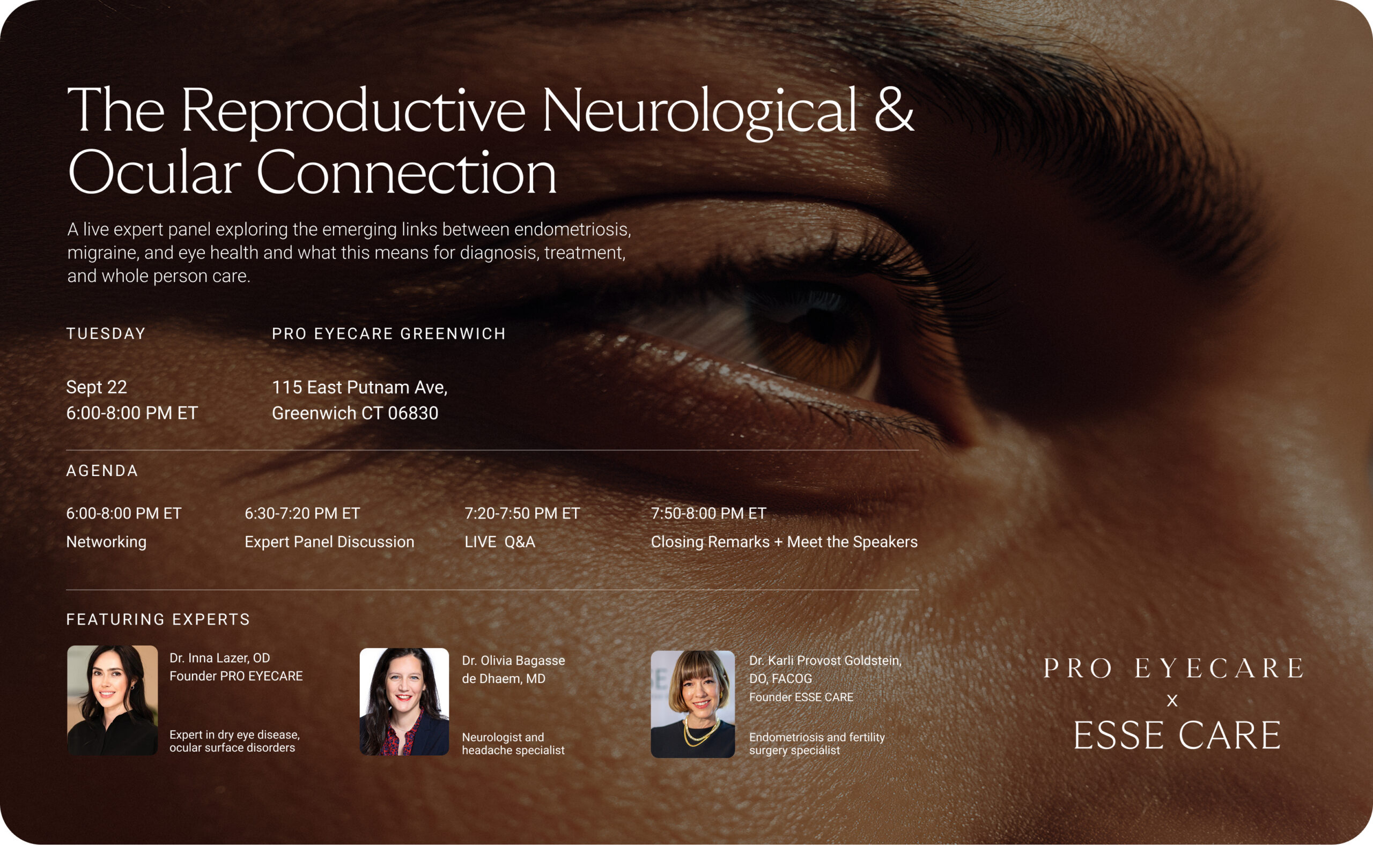
- Tuesday, September 22, 2026
- 6:00 PM - 8:00 PM ET
- 115 East Putnam Avenue, Greenwich, CT 06830
- Get Tickets
How Reproductive, Neurological & Ocular Health Connect
Endometriosis is diagnosed by a gynecologist. Migraine is managed by a neurologist. Dry eye is treated by an eye doctor. For most of the last century that division made sense, because the three conditions appeared to have very little to do with one another.
That assumption is now being reconsidered. Endometriosis is increasingly described as a systemic disease rather than a purely pelvic one, with inflammatory activity and altered immune signaling documented well outside the reproductive tract. Studies have linked it to migraine, to autoimmune conditions including Sjögren’s syndrome, and to disease of the ocular surface. Neurology research continues to clarify how estrogen fluctuation and inflammatory mediators act on pain pathways that also carry sensation from the eye.
None of this is settled. Much of the work is observational, the sample sizes are often small, and association is not causation. But the pattern has become consistent enough that treating these conditions in three separate rooms is starting to look like a limitation rather than a standard.
Dr. Karli Provost Goldstein, Dr. Inna Lazar, and Dr. Olivia Begasse de Dhaem will walk through what the evidence currently supports, where it does not yet reach, and which symptoms should prompt a conversation between specialties.
Our multidisciplinary panel will discuss:
- The case for treating endometriosis as a whole-body disease
- Why the tear film responds to hormones at all
- Central sensitization, and why years of pain lower the threshold for pain elsewhere
- Migraine with visual aura versus retinal migraine, and why the distinction changes the workup
- The referral triggers each specialty wishes the others knew
- What patients can reasonably ask of a care team today
Featured Speakers
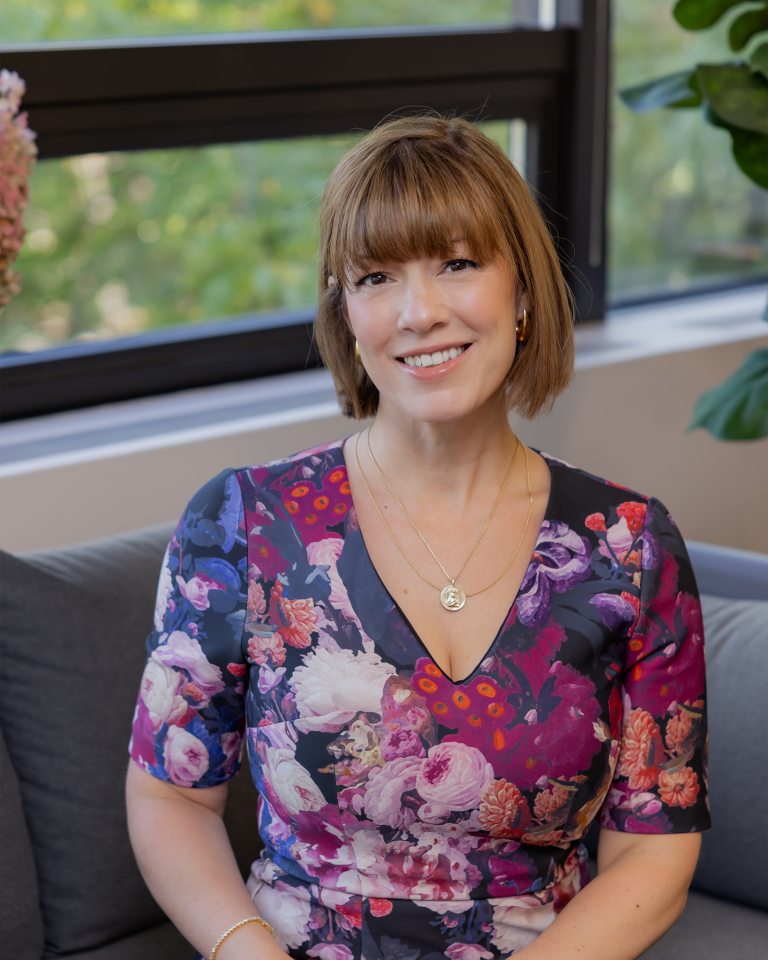
Dr. Goldstein
Founder, ESSE Care. Board-Certified Minimally Invasive Gynecologic Surgeon specializing in advanced endometriosis excision, pelvic pain, infertility, and reproductive surgery.

Dr. Lazar
Founder, PRO EYECARE. Optometrist specializing in dry eye disease, ocular surface disorders, and women’s eye health.
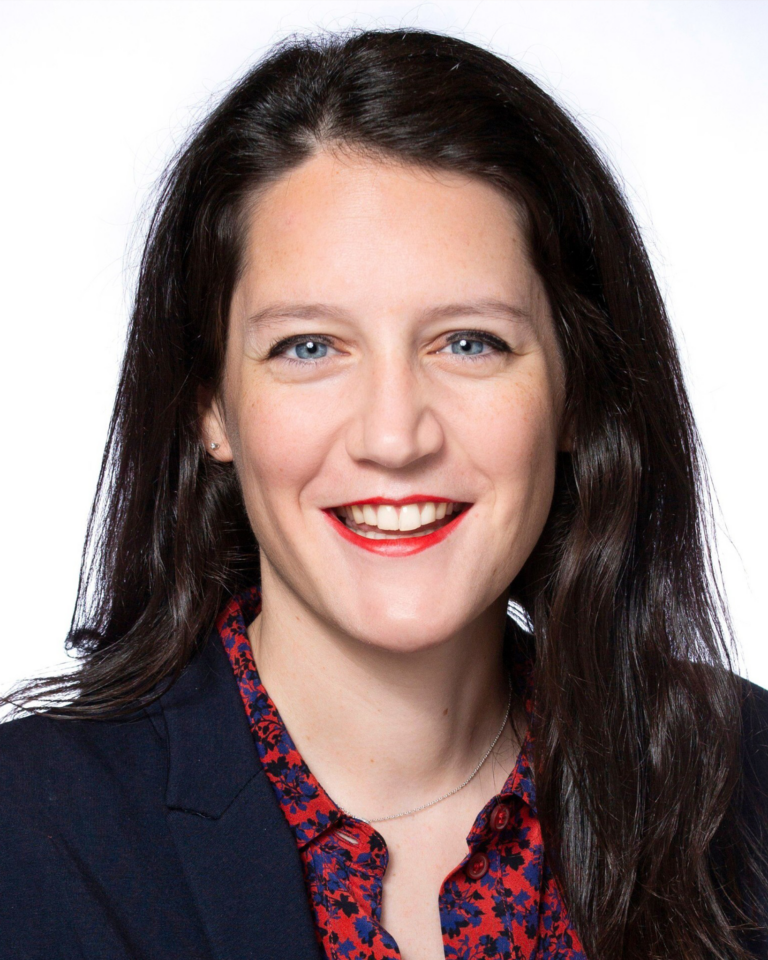
Dr. Begasse de Dhaem
Neurologist and Headache Specialist. Expert in migraine medicine with a focus on hormonal influences, visual symptoms, and women’s neurological health.
What This Discussion Will Explore
Migraine &
Hormones
Migraine is substantially more common in people with endometriosis than in those without it. Estrogen withdrawal, inflammatory mediators, and a sensitized trigeminal system are among the mechanisms under investigation.
Symptoms Beyond
the Pelvis
Symptoms show up well beyond the pelvis, in the chest, the bowel, the bladder, the diaphragm and the lining of the lungs. Hormone-responsive tissue is not confined to the reproductive tract either, which is why the head and the eyes belong in this conversation.
Eye Health &
Dry Eye
The ocular surface is hormone-responsive tissue. Researchers are examining how estrogen and androgen signaling, autoimmune activity, and circulating inflammation may affect tear film stability and surface disease.
Collaborative
Care
Diagnostic delay in endometriosis is measured in years, not months. When three specialists compare notes on the same patient, patterns tend to surface faster than they do across three separate charts.