• Let's Chat
  • Contact Form
× Send

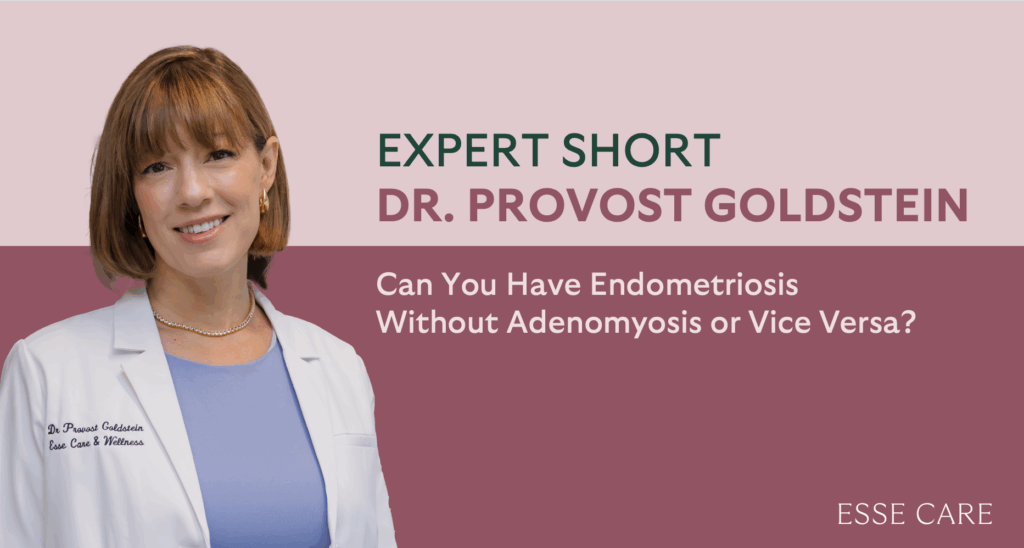
Can You Have Endometriosis Without Adenomyosis or Vice Versa?

Understanding the difference between adenomyosis and endometriosis—and determining whether you have one or both conditions—can be confusing. Both involve endometrial-like tissue growing in places it shouldn’t. In adenomyosis, the tissue grows into the muscular walls of the uterus.

Can You Have Endometriosis Without Adenomyosis or Vice Versa?

Endometriosis and adenomyosis are related but separate conditions. It is possible to have one without the other.

Adenomyosis happens when endometrial-like tissue grows into the muscular walls of the uterus. Endometriosis happens when that tissue grows outside the uterus, such as on the ovaries, bladder, or bowel.

We often see them together, but not always. Some patients have adenomyosis without pelvic endometriosis. Others have endometriosis without any sign of adenomyosis. In fact, some younger patients are diagnosed with isolated adenomyosis early on, even if imaging is not definitive.

Advanced adenomyosis can still be a sign that something more is happening in the pelvis. Even when imaging does not show endometriosis clearly, a uterus that appears abnormal can be a clue.

Understand the Difference

Learn more about how adenomyosis and endometriosis differ and what it means for diagnosis and treatment planning.

Learn More

Content Page Subscribe Widget
Share this post:

Explore more:

What Is a Salpingectomy and What Should You Know Before Having One
Dr. Leigh Rosen explains what a salpingectomy is, why it may be recommended, and why removing your fallopian tubes does not affect your hormones or put you into menopause.
Read More
What Is Chronic Pelvic Pain and Why Early Treatment Matters
Dr. Amanda Chu explains chronic pelvic pain, its most common causes including endometriosis, fibroids, and adenomyosis, and why early treatment is key to preventing lasting neurologic changes.
Read More
Retained Pregnancy Tissue Is More Common Than Many People Realize
How Does Hysteroscopy Help Treat Retained Pregnancy Tissue?
Retained pregnancy tissue is more common than many people realize. It happens when pregnancy tissue does not fully pass after a miscarriage, pregnancy loss, or delivery.
Read More
What Is a Salpingectomy and What Should You Know Before Having One
Dr. Leigh Rosen explains what a salpingectomy is, why it may be recommended, and why removing your fallopian tubes does not affect your hormones or put you into menopause.
Read More
What Is Chronic Pelvic Pain and Why Early Treatment Matters
Dr. Amanda Chu explains chronic pelvic pain, its most common causes including endometriosis, fibroids, and adenomyosis, and why early treatment is key to preventing lasting neurologic changes.
Read More
What Is a Salpingectomy and What Should You Know Before Having One
Dr. Leigh Rosen explains what a salpingectomy is, why it may be recommended, and why removing your fallopian tubes does not affect your hormones or put you into menopause.
Read More
What Is Chronic Pelvic Pain and Why Early Treatment Matters
Dr. Amanda Chu explains chronic pelvic pain, its most common causes including endometriosis, fibroids, and adenomyosis, and why early treatment is key to preventing lasting neurologic changes.
Read More
Retained Pregnancy Tissue Is More Common Than Many People Realize
How Does Hysteroscopy Help Treat Retained Pregnancy Tissue?
Retained pregnancy tissue is more common than many people realize. It happens when pregnancy tissue does not fully pass after a miscarriage, pregnancy loss, or delivery.
Read More