• Let's Chat
  • Contact Form
× Send

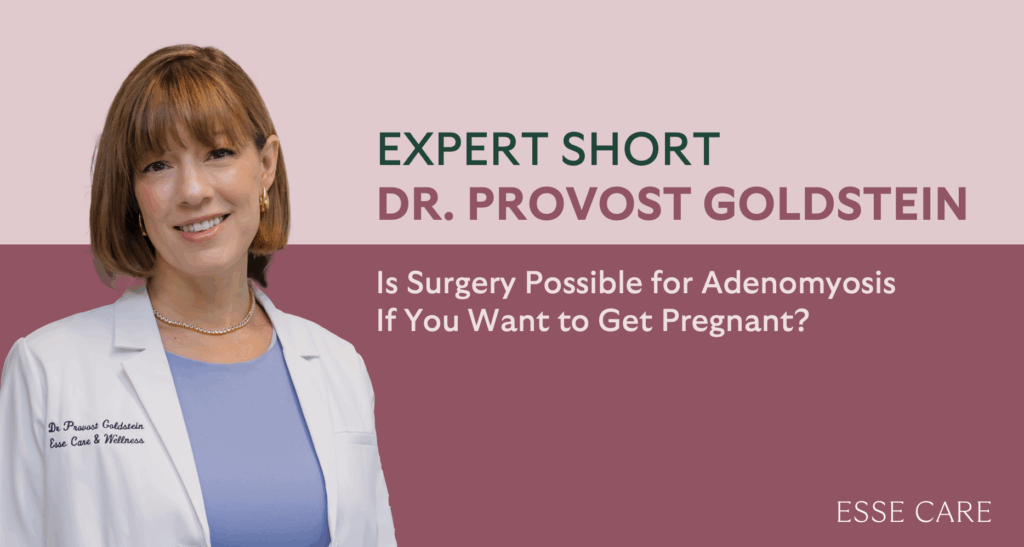
Is Surgery Possible for Adenomyosis If You Want to Get Pregnant?

Dealing with adenomyosis can feel overwhelming, but you’re not alone. The best treatment plan is one that fits your lifestyle, your goals, and your body. A healthcare provider who understands adenomyosis can help you weigh the pros and cons of each option and find what works best for you—both now and in the future.

Is Surgery Possible for Adenomyosis If You Want to Get Pregnant?

For many people with adenomyosis, especially those trying to conceive, understanding surgical options is crucial. The answer depends on the type and extent of disease.

Focal adenomyosis — particularly a well-defined adenomyoma — can sometimes be removed through a procedure called adenomyomectomy. This surgery preserves the uterus and may allow for future pregnancy, although it must be performed with great care by an experienced surgeon.

In contrast, diffuse adenomyosis spreads throughout the uterine muscle and is much harder to remove. In these cases, surgery to preserve fertility may not be advisable due to the risk to uterine integrity.

Even if surgery is not an option, there are still effective fertility strategies. We often excise endometriosis if present and use hormonal suppression therapy before embryo transfer to improve implantation chances. Many patients with adenomyosis have gone on to have healthy pregnancies with this approach.

Learn More About Adenomyosis

Explore how adenomyosis affects fertility, how it’s different from endometriosis, and which treatments might support your goals.

Learn More

Content Page Subscribe Widget
Share this post:

Explore more:

Inflammation and Implantation_Clinical Round Table
Clinical Round Table Ep. 1 On-Demand: Inflammation and Implantation
What happens when everything looks “normal,” but implantation still does not occur? We explore one of the most common and frustrating experiences in fertility care: failed implantation despite strong embryos...
Read More
What Is a Salpingectomy and What Should You Know Before Having One
Dr. Leigh Rosen explains what a salpingectomy is, why it may be recommended, and why removing your fallopian tubes does not affect your hormones or put you into menopause.
Read More
What Is Chronic Pelvic Pain and Why Early Treatment Matters
Dr. Amanda Chu explains chronic pelvic pain, its most common causes including endometriosis, fibroids, and adenomyosis, and why early treatment is key to preventing lasting neurologic changes.
Read More
Inflammation and Implantation_Clinical Round Table
Clinical Round Table Ep. 1 On-Demand: Inflammation and Implantation
What happens when everything looks “normal,” but implantation still does not occur? We explore one of the most common and frustrating experiences in fertility care: failed implantation despite strong embryos...
Read More
What Is a Salpingectomy and What Should You Know Before Having One
Dr. Leigh Rosen explains what a salpingectomy is, why it may be recommended, and why removing your fallopian tubes does not affect your hormones or put you into menopause.
Read More
Inflammation and Implantation_Clinical Round Table
Clinical Round Table Ep. 1 On-Demand: Inflammation and Implantation
What happens when everything looks “normal,” but implantation still does not occur? We explore one of the most common and frustrating experiences in fertility care: failed implantation despite strong embryos...
Read More
What Is a Salpingectomy and What Should You Know Before Having One
Dr. Leigh Rosen explains what a salpingectomy is, why it may be recommended, and why removing your fallopian tubes does not affect your hormones or put you into menopause.
Read More
What Is Chronic Pelvic Pain and Why Early Treatment Matters
Dr. Amanda Chu explains chronic pelvic pain, its most common causes including endometriosis, fibroids, and adenomyosis, and why early treatment is key to preventing lasting neurologic changes.
Read More