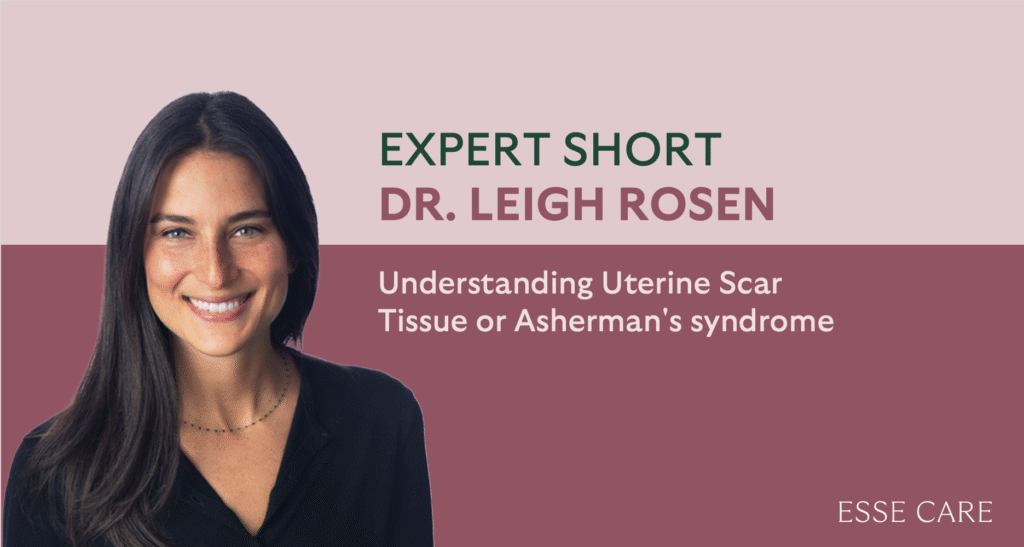
Understanding Uterine Scar Tissue or Asherman’s Syndrome
If you’ve been told you have uterine scar tissue, often referred to as Asherman’s syndrome, you may be feeling uncertain or overwhelmed. You are not alone. Many of the patients we care for come to us with this diagnosis, especially when they are navigating fertility concerns and looking for answers.
At ESSE Care, healing begins with understanding. Here’s what we want you to know.
Every Uterus Tells a Different Story
As Dr. Leigh Rosen often shares, no two cases of uterine scar tissue are the same. While imaging can suggest the presence of adhesions, we really have to wait and see what it actually looks like inside your uterus before we can determine how significant the scar tissue is. The most accurate way to understand what’s really happening is through a hysteroscopy—a gentle camera-based procedure that allows us to see inside the uterus directly.
Some patients have mild scar tissue that doesn’t interfere with fertility and may not return after treatment. Others may have more significant adhesions that require a more detailed plan. At ESSE, we approach each case thoughtfully, giving you the individualized care and clarity you deserve through our advanced hysteroscopic techniques.
A Gentle and Thoughtful Approach to Treatment
Hysteroscopic surgery allows us to both diagnose and treat uterine scar tissue, often in a single procedure. This minimally invasive method helps us remove adhesions with precision and care, preserving as much healthy tissue as possible.
Treatment may include:
- Hysteroscopic lysis of adhesions to remove scar tissue
- Medications to reduce inflammation and support healing
- A follow-up hysteroscopy, if needed, to ensure the uterus remains clear
- Guidance and care planning that supports your fertility goals
Emotional Healing Is Part of the Process
Hearing you may have Asherman’s syndrome can bring up strong emotions. Many patients come to Dr. Rosen carrying fear, confusion, or frustration. That’s why we take the time to explain everything clearly, hold space for your concerns, and provide reassurance rooted in both compassion and expertise.
The truth is, most cases are treatable. While complex cases do exist, severe and untreatable adhesions are rare. You don’t need to navigate this alone.
What to expect during your personalized consultation and how we ensure you feel informed and supported throughout your journey.
Learn MoreIf you’ve recently received this diagnosis or suspect you may have uterine scar tissue, we’re here to support you. At ESSE, we combine advanced surgical care with holistic, integrative support to care for the whole person—not just the diagnosis. Learn more about our approach during your first office visit.
Comprehensive fertility support and surgical exploration to help you understand your options and optimize your reproductive health.
Explore ServicesPersonalized hormone balancing and wellness approaches to support your overall health during treatment and recovery.
Learn MoreWe invite you to schedule a consultation when you feel ready. Your healing journey is deeply personal, and we’re honored to walk alongside you. Meet our clinical team and learn about our integrated approach to whole-body healing.