• Let's Chat
  • Contact Form
× Send

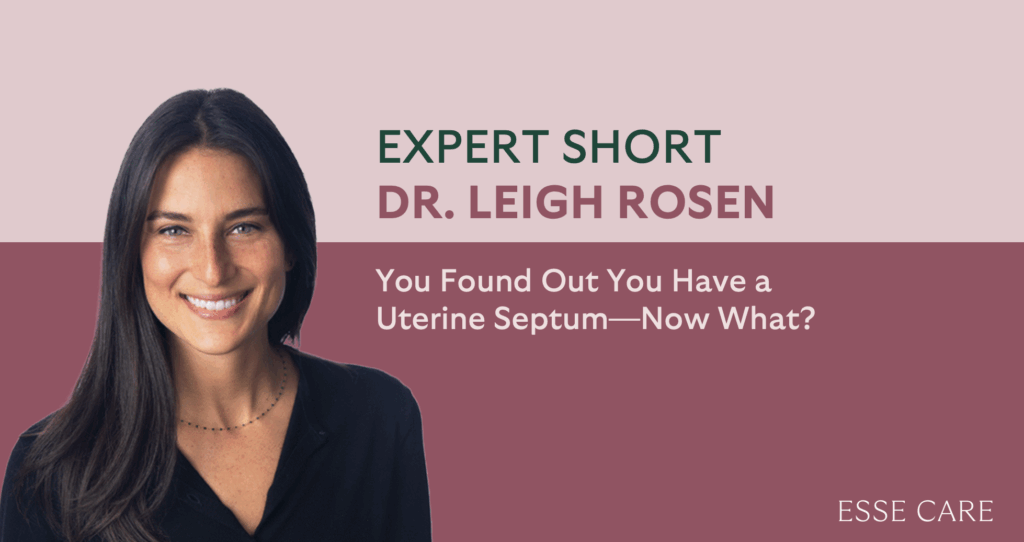
You Found Out You Have a Uterine Septum—Now What?

A uterine septum can affect pregnancy and fertility. Here's what to know about how it's diagnosed, when surgery makes sense, and what recovery looks like.

Understanding the Diagnosis and Treatment Path

You found out you have a uterine septum—a band of tissue that divides the uterus—and you’re wondering what this means for your fertility or pregnancy plans. Septums can interfere with embryo implantation or increase the risk of early miscarriage, especially if undiagnosed.

Often, this condition is first suspected during fertility workups or after pregnancy loss. If your OB-GYN or fertility doctor sees signs of a septum on imaging, the next step is usually a pelvic exam and MRI to confirm the structure and plan for surgery.

Restoring Uterine Shape and Moving Forward

If a septum is contributing to infertility or loss, removing it can make a real difference. Most patients go home the same day, and recovery is quick. You’ll be supported with follow-up care and fertility guidance to ensure optimal healing.

Whether your septum was found during fertility testing or as part of broader gynecologic care, addressing it with minimally invasive hysteroscopy can help clear the path toward a healthy pregnancy. At ESSE Care, we partner closely with referring doctors and fertility specialists to ensure each step is thoughtful, individualized, and aligned with your goals.
Content Page Subscribe Widget
Share this post:

Explore more:

Inflammation and Implantation_Clinical Round Table
Clinical Round Table Ep. 1 On-Demand: Inflammation and Implantation
What happens when everything looks “normal,” but implantation still does not occur? We explore one of the most common and frustrating experiences in fertility care: failed implantation despite strong embryos...
Read More
What Is a Salpingectomy and What Should You Know Before Having One
Dr. Leigh Rosen explains what a salpingectomy is, why it may be recommended, and why removing your fallopian tubes does not affect your hormones or put you into menopause.
Read More
What Is Chronic Pelvic Pain and Why Early Treatment Matters
Dr. Amanda Chu explains chronic pelvic pain, its most common causes including endometriosis, fibroids, and adenomyosis, and why early treatment is key to preventing lasting neurologic changes.
Read More
Inflammation and Implantation_Clinical Round Table
Clinical Round Table Ep. 1 On-Demand: Inflammation and Implantation
What happens when everything looks “normal,” but implantation still does not occur? We explore one of the most common and frustrating experiences in fertility care: failed implantation despite strong embryos...
Read More
What Is a Salpingectomy and What Should You Know Before Having One
Dr. Leigh Rosen explains what a salpingectomy is, why it may be recommended, and why removing your fallopian tubes does not affect your hormones or put you into menopause.
Read More
Inflammation and Implantation_Clinical Round Table
Clinical Round Table Ep. 1 On-Demand: Inflammation and Implantation
What happens when everything looks “normal,” but implantation still does not occur? We explore one of the most common and frustrating experiences in fertility care: failed implantation despite strong embryos...
Read More
What Is a Salpingectomy and What Should You Know Before Having One
Dr. Leigh Rosen explains what a salpingectomy is, why it may be recommended, and why removing your fallopian tubes does not affect your hormones or put you into menopause.
Read More
What Is Chronic Pelvic Pain and Why Early Treatment Matters
Dr. Amanda Chu explains chronic pelvic pain, its most common causes including endometriosis, fibroids, and adenomyosis, and why early treatment is key to preventing lasting neurologic changes.
Read More