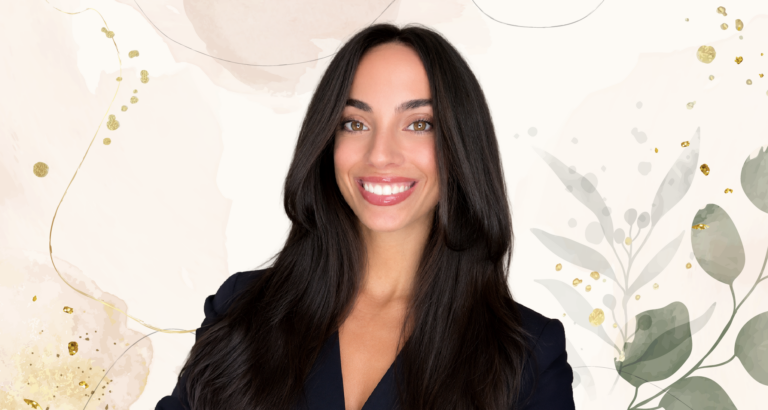
Nabila always thought she was just unlucky. From her very first period, pain was a constant companion—pain her sisters didn’t share, pain that no one told her wasn’t normal. As she grew older, the discomfort escalated into something more severe. By her twenties, she was losing a week each month to debilitating cramps, emotional turmoil, and fatigue. But she kept pushing through—through grad school, work, workouts, and relationships—ignoring the signals her body was desperately sending.
“I had, you know, a consistent messaging of telling me that either this was my fault somehow or that this was all in my head. And it’s hard for me to talk about without getting very emotional because in order to survive it, I had to really ignore myself and ignore my needs.”
The Breaking Point


While at the beach with a friend in 2022, a sharp, lightning-like pain struck Nabila’s side. It was the beginning of a cascade of symptoms that would unravel her life. Nabila found herself in and out of emergency rooms, undergoing MRIs, biopsies, and even a bilateral lumpectomy for benign breast lumps. Despite her persistence, she was met with constant skepticism and dismissal—from doctors and even people close to her. Her pain was minimized, misdiagnosed, and often attributed to anxiety or imagined causes, a common experience among endometriosis sufferers.
“I had doctors say, ‘You seem really nervous. I’ll get a woman to examine you,’ even though I told them that wasn’t an issue. I had a doctor say, ‘If you use intravenous drugs that can cause chronic pain,’ even though I have never done anything like that.”
A Crisis and a Revelation


By late 2024, Nabila’s health had deteriorated dramatically. A terrifying episode left her collapsed on the floor of her apartment, drenched in sweat and gasping for air for hours. “I felt this awful pain in my belly that was kind of similar to a period cramp, but so much worse,” she recalls. Without health insurance at the time, she hesitated to seek help, but eventually made it to the ER, where she was told she likely had a ruptured ovarian cyst and to treat it with Tylenol until it felt better. But the pain didn’t subside, and her condition worsened.
While visiting family in Indonesia, she saw a gynecologist who finally gave her a name for her suffering: endometriosis. A surgery was scheduled to remove the cyst, but what was expected to be a simple 45-minute procedure turned into a three-hour operation.
“When I woke up in a daze, they were like, ‘Your insides were all glued together. Your endometriosis is very severe.’”
Searching for Real Answers


Though grateful for the diagnosis, Nabila knew she needed specialized care. The gynecologist in Indonesia, who was not an endometriosis specialist, told Nabila that one of the only ways to heal the disease is to have children—an all-too-common misconception.
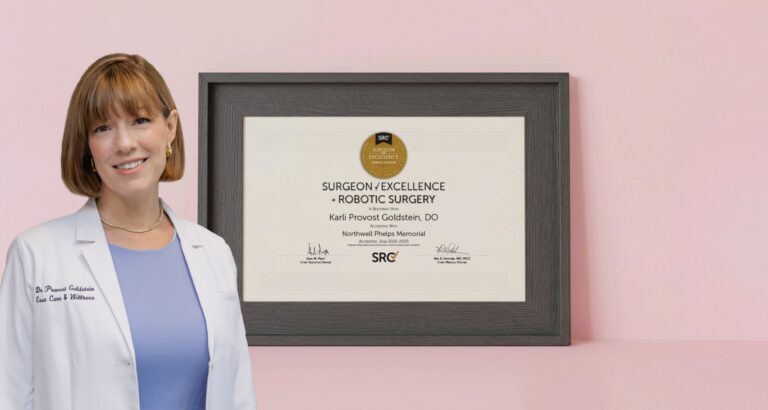
Back home in New York, she began researching and found ESSE Care. What stood out was not just the expertise, but the empathy—Dr. Karli Provost Goldstein, herself an endometriosis patient, and Winnie, an acupuncturist, both understood the disease intimately.
“It just felt very warm and comforting to have a team of women who are not only experts in their field but also understood the disease I had and had been through it.”
A Team That Listens
After establishing a relationship with Dr. Goldstein early in 2025, Nabila planned a follow-up appointment for six months later. But by summertime, Nabila’s symptoms had returned. She reached out to ESSE Care and, unlike her previous healthcare experiences, was immediately taken seriously. Dr. Goldstein didn’t hesitate—a second surgery was scheduled for September.
This time, the procedure was thorough. The ESSE Care team, including specialists from multiple surgical disciplines, worked meticulously to excise deep infiltrating lesions, release adhesions, and restore Nabila’s pelvic anatomy. The surgery confirmed the severity of her condition—but also marked a turning point.
“I felt like an emotional lightness… I woke up from that second surgery, and hearing that it was very severe in there… It just all was incredibly validating.”
Healing and Hope


Recovery wasn’t instant, but it was different. Nabila felt less inflamed, less bloated, and more like herself. She could walk without fear, make plans without canceling, and trust her body again. Most importantly, she had a team she could rely on—a community that validated her pain and supported her healing.
“I know now that if I have concerns, there’s a team I can reach out to of women who will take me seriously. And I don’t have to worry about being dramatic or bothering anyone. They’ve given me a community and a safe place to navigate this illness and this journey to wellness, and I’m really, really thankful for that.”
A Message to Others
Nabila’s story is one of resilience, but also of awakening. She speaks candidly about the anger she feels—at the years lost, the gaslighting, and the systemic neglect of women’s health in the medical community. But she’s channeling that anger into advocacy.
“I want to channel this anger and these revelations into hopefully… making a difference in someone else’s journey, hoping that it doesn’t take someone years of being gaslit to finally stumble upon the right resources and the right team.”
Her journey with ESSE Care has not only given her relief—it’s given her a voice. And she’s using it to tell others: You are not alone, and you deserve care.