• Let's Chat
  • Contact Form
× Send

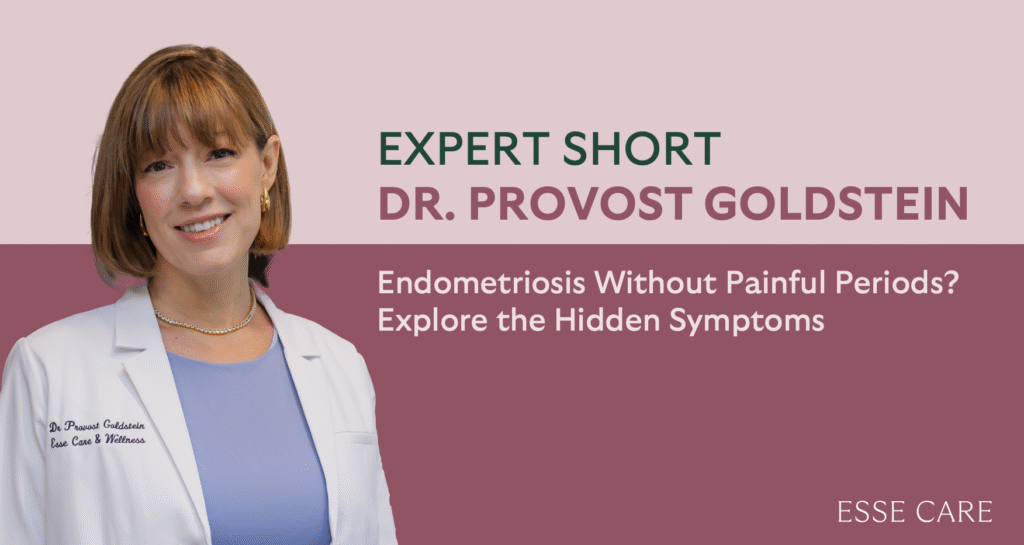
Endometriosis Without Painful Periods? Dr. Goldstein Explains the Hidden Symptoms

Can you have endometriosis without painful periods? Our medical expert explains the varied symptoms of endo and why pain isn't always the main indicator.

Endometriosis: Beyond Painful Periods

In this informative video, we tackle a common misconception about endometriosis: that it always causes painful periods. Our medical expert explains that this is false – many patients with endometriosis don’t experience painful menstruation.

Key Points Covered:

  • Endometriosis symptoms depend largely on where the lesions are located in the body
  • Lesions on the bowels, ovaries, or bladder can cause different symptoms than what’s typically expected
  • Some patients may have endometriosis with minimal or no obvious symptoms
  • “Hidden symptoms” like painful intercourse might be overlooked
  • Infertility or pregnancy complications can be signs of endometriosis
  • Family history can be an important indicator of endometriosis risk

At ESSE Care, we believe your pain is real, and your concerns matter. If you’ve been told your symptoms are all in your head or that your pain can’t be treated, know that you deserve better care. We’re here to help you get the answers and relief you need. 

Book a case review today and let our endometriosis experts answer all your questions. 
Content Page Subscribe Widget
Share this post:

Explore more:

What Is a Salpingectomy and What Should You Know Before Having One
Dr. Leigh Rosen explains what a salpingectomy is, why it may be recommended, and why removing your fallopian tubes does not affect your hormones or put you into menopause.
Read More
What Is Chronic Pelvic Pain and Why Early Treatment Matters
Dr. Amanda Chu explains chronic pelvic pain, its most common causes including endometriosis, fibroids, and adenomyosis, and why early treatment is key to preventing lasting neurologic changes.
Read More
Retained Pregnancy Tissue Is More Common Than Many People Realize
How Does Hysteroscopy Help Treat Retained Pregnancy Tissue?
Retained pregnancy tissue is more common than many people realize. It happens when pregnancy tissue does not fully pass after a miscarriage, pregnancy loss, or delivery.
Read More
What Is a Salpingectomy and What Should You Know Before Having One
Dr. Leigh Rosen explains what a salpingectomy is, why it may be recommended, and why removing your fallopian tubes does not affect your hormones or put you into menopause.
Read More
What Is Chronic Pelvic Pain and Why Early Treatment Matters
Dr. Amanda Chu explains chronic pelvic pain, its most common causes including endometriosis, fibroids, and adenomyosis, and why early treatment is key to preventing lasting neurologic changes.
Read More
What Is a Salpingectomy and What Should You Know Before Having One
Dr. Leigh Rosen explains what a salpingectomy is, why it may be recommended, and why removing your fallopian tubes does not affect your hormones or put you into menopause.
Read More
What Is Chronic Pelvic Pain and Why Early Treatment Matters
Dr. Amanda Chu explains chronic pelvic pain, its most common causes including endometriosis, fibroids, and adenomyosis, and why early treatment is key to preventing lasting neurologic changes.
Read More
Retained Pregnancy Tissue Is More Common Than Many People Realize
How Does Hysteroscopy Help Treat Retained Pregnancy Tissue?
Retained pregnancy tissue is more common than many people realize. It happens when pregnancy tissue does not fully pass after a miscarriage, pregnancy loss, or delivery.
Read More