• Let's Chat
  • Contact Form
× Send

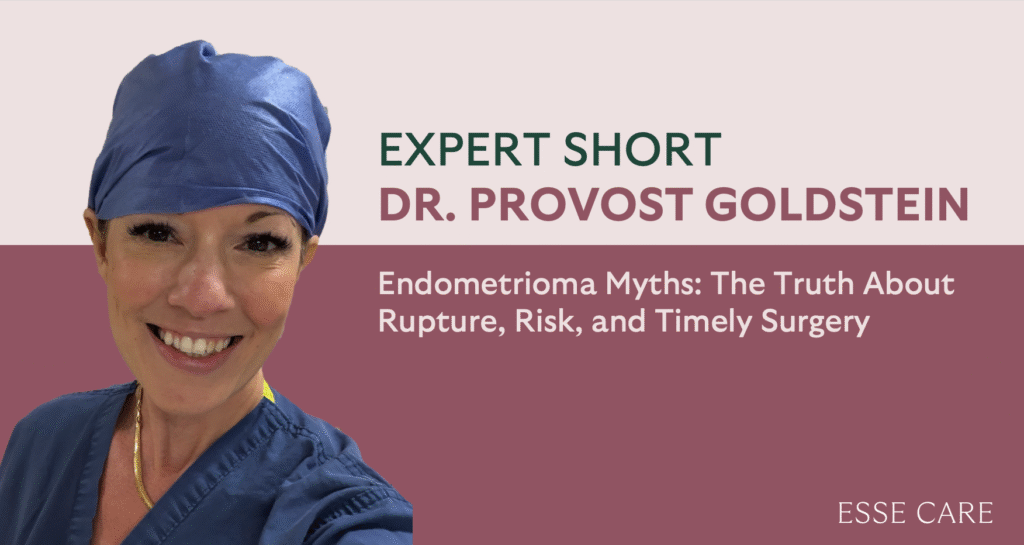
Endometrioma Myths: The Truth About Rupture, Risk, and Timely Surgery

Dr. Karli Goldstein addresses a dangerous myth: that endometriomas don't rupture. Learn how a seemingly small cyst caused major complications after rupture—and why expert evaluation and timely surgery matter.

Endometrioma Myths: Yes, They Can Rupture

One of the most common misconceptions surrounding endometriomas is the belief that they don’t rupture. This myth can mislead patients into delaying care, potentially allowing their condition to worsen. In a recent surgery, Dr. Goldstein treated a patient who had been incorrectly informed that her endometrioma was only 3–4 cm. However, by the time she came to surgery, the cyst had grown to 6.5 cm and had already ruptured, leaking its contents into surrounding tissues.

In the video, Dr. Goldstein explains the significant surgical challenges posed by the ruptured cyst. The leaked contents had adhered to crucial pelvic structures like the bowel, ureter, and uterosacral ligament, making the dissection delicate and complex. What was once thought to be a small cyst had become a major issue, requiring expert surgical intervention to safely remove the endometrioma and free the adhered organs.

Key Takeaway: Endometriomas can rupture, and when they do, the leaked fluid can cause serious complications by adhering to nearby organs. It’s essential to have accurate diagnoses and timely surgical intervention to avoid worsening the situation.

Content Page Subscribe Widget
Share this post:

Explore more:

What Is a Salpingectomy and What Should You Know Before Having One
Dr. Leigh Rosen explains what a salpingectomy is, why it may be recommended, and why removing your fallopian tubes does not affect your hormones or put you into menopause.
Read More
What Is Chronic Pelvic Pain and Why Early Treatment Matters
Dr. Amanda Chu explains chronic pelvic pain, its most common causes including endometriosis, fibroids, and adenomyosis, and why early treatment is key to preventing lasting neurologic changes.
Read More
Retained Pregnancy Tissue Is More Common Than Many People Realize
How Does Hysteroscopy Help Treat Retained Pregnancy Tissue?
Retained pregnancy tissue is more common than many people realize. It happens when pregnancy tissue does not fully pass after a miscarriage, pregnancy loss, or delivery.
Read More
What Is a Salpingectomy and What Should You Know Before Having One
Dr. Leigh Rosen explains what a salpingectomy is, why it may be recommended, and why removing your fallopian tubes does not affect your hormones or put you into menopause.
Read More
What Is Chronic Pelvic Pain and Why Early Treatment Matters
Dr. Amanda Chu explains chronic pelvic pain, its most common causes including endometriosis, fibroids, and adenomyosis, and why early treatment is key to preventing lasting neurologic changes.
Read More
What Is a Salpingectomy and What Should You Know Before Having One
Dr. Leigh Rosen explains what a salpingectomy is, why it may be recommended, and why removing your fallopian tubes does not affect your hormones or put you into menopause.
Read More
What Is Chronic Pelvic Pain and Why Early Treatment Matters
Dr. Amanda Chu explains chronic pelvic pain, its most common causes including endometriosis, fibroids, and adenomyosis, and why early treatment is key to preventing lasting neurologic changes.
Read More
Retained Pregnancy Tissue Is More Common Than Many People Realize
How Does Hysteroscopy Help Treat Retained Pregnancy Tissue?
Retained pregnancy tissue is more common than many people realize. It happens when pregnancy tissue does not fully pass after a miscarriage, pregnancy loss, or delivery.
Read More