• Let's Chat
  • Contact Form
× Send

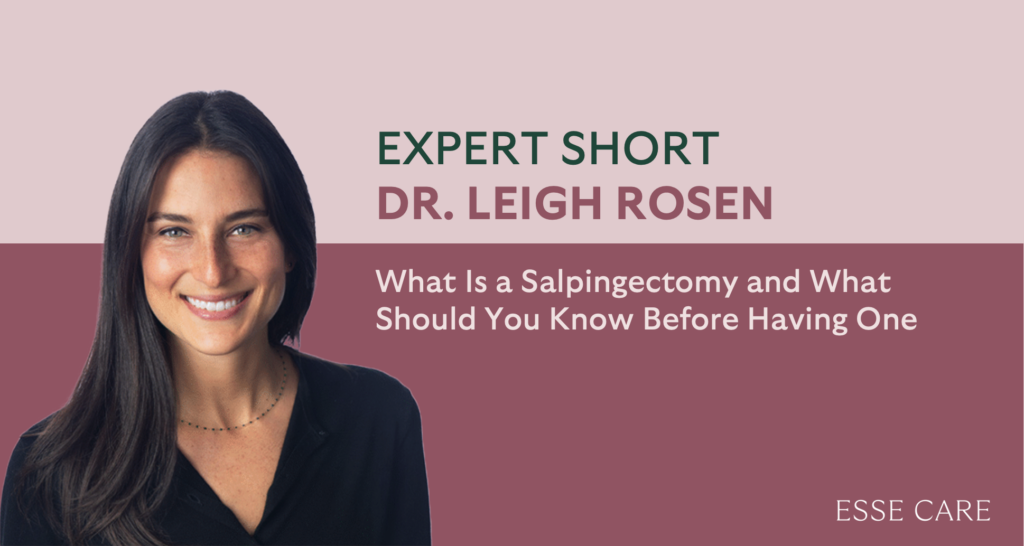
What Is a Salpingectomy and What Should You Know Before Having One

Dr. Leigh Rosen explains what a salpingectomy is, why it may be recommended, and why removing your fallopian tubes does not affect your hormones or put you into menopause.

A salpingectomy is one of the most common surgeries performed at ESSE Care. It means the removal of one or both fallopian tubes, and there are different reasons why someone might need it.

Why Someone Might Have This Surgery

In some cases, a fallopian tube needs to be removed because it is abnormal and causing pain, or it has become swollen with fluid, a condition often referred to as a hydrosalpinx, which can also get in the way of getting pregnant. In other cases, salpingectomy is performed as a means of birth control. Sometimes the fallopian tubes are removed during another procedure, such as a hysterectomy.

What to Expect From the Procedure

The surgery is generally performed using a minimally invasive approach, meaning it is done in the hospital and most of the time you go home the same day.

Will It Affect My Hormones or Cause Menopause?

This is one of the most common questions patients ask. The answer is no. Your fallopian tubes are different from your ovaries. Your ovaries live nearby, but it is the ovaries that produce your hormones. If one or both fallopian tubes are removed, your hormones should not change, you will not go into menopause, and it should not alter your cycle.

An Additional Benefit Many Patients Are Not Aware Of

There is data indicating that removal of the fallopian tubes may decrease the risk of ovarian cancer. This is an important point that often goes unmentioned, and it is worth discussing with your care team when considering your options.

What You Will Learn

  • What a salpingectomy is and why it may be recommended
  • The difference between your fallopian tubes and your ovaries
  • Why salpingectomy does not cause menopause or hormonal changes
  • The potential ovarian cancer risk reduction benefit

The Takeaway

If you have questions about whether a salpingectomy is right for you, the team at ESSE Care is here to help you understand your options and make an informed decision.

Content Page Subscribe Widget
Share this post:

Explore more:

What Is Chronic Pelvic Pain and Why Early Treatment Matters
Dr. Amanda Chu explains chronic pelvic pain, its most common causes including endometriosis, fibroids, and adenomyosis, and why early treatment is key to preventing lasting neurologic changes.
Read More
Retained Pregnancy Tissue Is More Common Than Many People Realize
How Does Hysteroscopy Help Treat Retained Pregnancy Tissue?
Retained pregnancy tissue is more common than many people realize. It happens when pregnancy tissue does not fully pass after a miscarriage, pregnancy loss, or delivery.
Read More
Super Doctors_2026_Hero
All ESSE Care Physicians Earn Continued Recognition on Prestigious 2026 New York Rising Stars List
Dr. Karli Provost Goldstein, Dr. Leigh Rosen, and Dr. Amanda Chu honored for excellence in patient‑centered gynecologic care.
Read More
What Is Chronic Pelvic Pain and Why Early Treatment Matters
Dr. Amanda Chu explains chronic pelvic pain, its most common causes including endometriosis, fibroids, and adenomyosis, and why early treatment is key to preventing lasting neurologic changes.
Read More
Retained Pregnancy Tissue Is More Common Than Many People Realize
How Does Hysteroscopy Help Treat Retained Pregnancy Tissue?
Retained pregnancy tissue is more common than many people realize. It happens when pregnancy tissue does not fully pass after a miscarriage, pregnancy loss, or delivery.
Read More
What Is Chronic Pelvic Pain and Why Early Treatment Matters
Dr. Amanda Chu explains chronic pelvic pain, its most common causes including endometriosis, fibroids, and adenomyosis, and why early treatment is key to preventing lasting neurologic changes.
Read More
Retained Pregnancy Tissue Is More Common Than Many People Realize
How Does Hysteroscopy Help Treat Retained Pregnancy Tissue?
Retained pregnancy tissue is more common than many people realize. It happens when pregnancy tissue does not fully pass after a miscarriage, pregnancy loss, or delivery.
Read More
Super Doctors_2026_Hero
All ESSE Care Physicians Earn Continued Recognition on Prestigious 2026 New York Rising Stars List
Dr. Karli Provost Goldstein, Dr. Leigh Rosen, and Dr. Amanda Chu honored for excellence in patient‑centered gynecologic care.
Read More