• Let's Chat
  • Contact Form
× Send

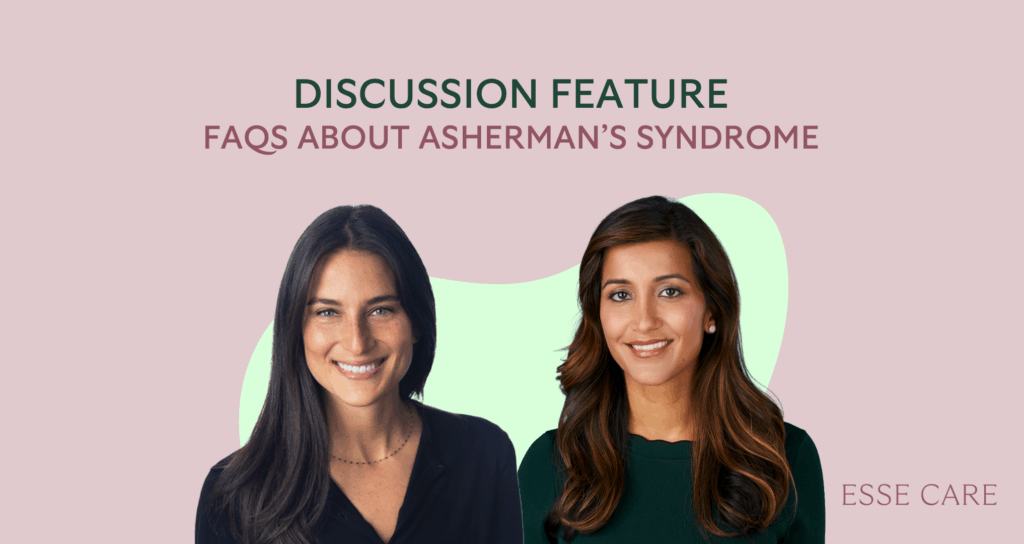
Watch Dr. Leigh Rosen and Dr. Lucky Sekhon Answer FAQs About Asherman’s Syndrome 

In this video, fertility specialist Dr. Lucky Sekhon asks ESSE Care’s Dr. Leigh Rosen the most common questions about Asherman’s syndrome.

In this video, fertility specialist Dr. Lucky Sekhon and ESSE Care’s Dr. Leigh Rosen answer the most common questions about Asherman’s syndrome, a condition where scar tissue forms inside the uterine cavity.   

This Q&A style conversation will help you understand what causes Asherman’s syndrome, how it can affect fertility, and how it can be treated. 

What You’ll Learn: 

  • When should patients worry about lighter or absent periods? 
  • What are the major risk factors for Asherman’s syndrome? 
  • How can patients empower themselves to ask for the care they want? 
  • What is the spectrum of severity of Asherman’s syndrome? 
  • Is fertility possible in severe cases? 
  • What does Asherman’s surgery look like? 
  • How long after surgery should patients wait to resume fertility treatment? 

This Discussion Is for Patients Who Are: 

  • Worried their lighter/absent periods, infertility, or recurrent miscarriages could be explained by Asherman’s syndrome 
  • Feeling unsure about the timing of their fertility care and Asherman’s treatment 
  • Looking for expert guidance and a hopeful, fertility-focused outlook 

Watch the video to learn more, and contact ESSE Care for an individualized consultation about your reproductive health and wellness. 
Content Page Subscribe Widget
Share this post:

Explore more:

Inflammation and Implantation_Clinical Round Table
Clinical Round Table Ep. 1 On-Demand: Inflammation and Implantation
What happens when everything looks “normal,” but implantation still does not occur? We explore one of the most common and frustrating experiences in fertility care: failed implantation despite strong embryos...
Read More
What Is a Salpingectomy and What Should You Know Before Having One
Dr. Leigh Rosen explains what a salpingectomy is, why it may be recommended, and why removing your fallopian tubes does not affect your hormones or put you into menopause.
Read More
What Is Chronic Pelvic Pain and Why Early Treatment Matters
Dr. Amanda Chu explains chronic pelvic pain, its most common causes including endometriosis, fibroids, and adenomyosis, and why early treatment is key to preventing lasting neurologic changes.
Read More
Inflammation and Implantation_Clinical Round Table
Clinical Round Table Ep. 1 On-Demand: Inflammation and Implantation
What happens when everything looks “normal,” but implantation still does not occur? We explore one of the most common and frustrating experiences in fertility care: failed implantation despite strong embryos...
Read More
What Is a Salpingectomy and What Should You Know Before Having One
Dr. Leigh Rosen explains what a salpingectomy is, why it may be recommended, and why removing your fallopian tubes does not affect your hormones or put you into menopause.
Read More
Inflammation and Implantation_Clinical Round Table
Clinical Round Table Ep. 1 On-Demand: Inflammation and Implantation
What happens when everything looks “normal,” but implantation still does not occur? We explore one of the most common and frustrating experiences in fertility care: failed implantation despite strong embryos...
Read More
What Is a Salpingectomy and What Should You Know Before Having One
Dr. Leigh Rosen explains what a salpingectomy is, why it may be recommended, and why removing your fallopian tubes does not affect your hormones or put you into menopause.
Read More
What Is Chronic Pelvic Pain and Why Early Treatment Matters
Dr. Amanda Chu explains chronic pelvic pain, its most common causes including endometriosis, fibroids, and adenomyosis, and why early treatment is key to preventing lasting neurologic changes.
Read More