• Let's Chat
  • Contact Form
× Send

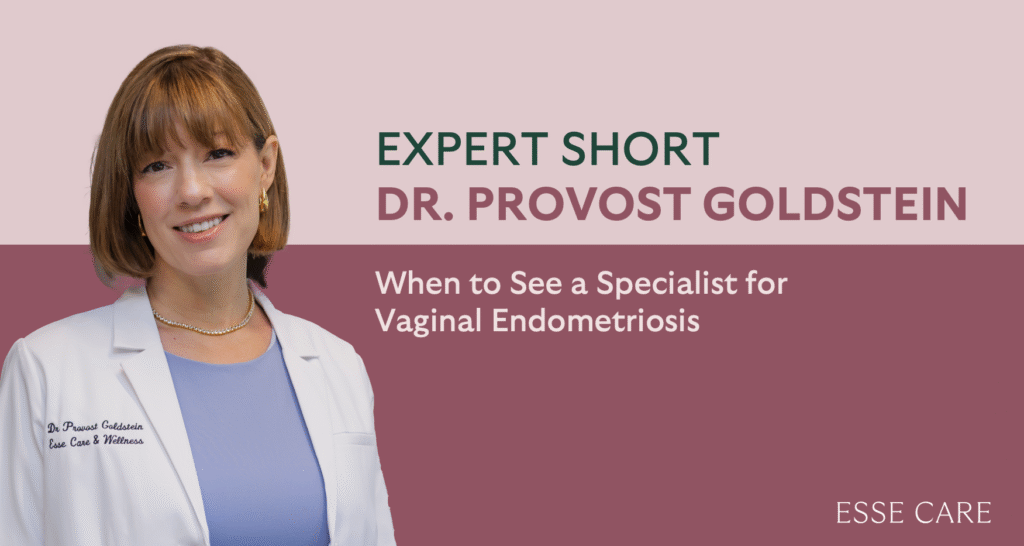
When to See a Specialist for Vaginal Endometriosis

Vaginally palpable endometriosis is a red flag for deeply infiltrating disease. Learn why this serious finding requires specialist care — and what symptoms mean you shouldn’t wait.

Vaginal Endometriosis: A Sign You Shouldn’t Ignore

In this urgent expert short, Dr. Karli Goldstein shares a critical PSA on vaginal infiltration of endometriosis — a serious sign of deep, stage 4 disease. If you’ve been told endometriosis is palpable in the vaginal wall or rectovaginal septum, it’s time to seek care from a specialist.

Key Points Covered:

  • Vaginally palpable endometriosis may indicate rectovaginal or bowel involvement
  • Deep infiltrating disease requires close monitoring, even if you’re already on treatment
  • Symptoms like rectal bleeding, stabbing pain, or difficulty with bowel movements are red flags
  • Imaging like MRI and possible colonoscopy may be necessary for proper evaluation
  • The lower and deeper this disease infiltrates, the more complex the surgical removal

ESSE Care Is Here to Help 

Finding the right specialist can be overwhelming, but you don’t have to navigate this alone. At ESSE Care, our experienced team of endometriosis specialists can review your case, provide second (or third or fourth) opinions, and help you take the next step toward relief. 

If you’re tired of being dismissed or misdiagnosed, it’s time to take control of your health. Schedule a consultation with ESSE Care today and get the answers you deserve

Content Page Subscribe Widget
Share this post:

Explore more:

What Is a Salpingectomy and What Should You Know Before Having One
Dr. Leigh Rosen explains what a salpingectomy is, why it may be recommended, and why removing your fallopian tubes does not affect your hormones or put you into menopause.
Read More
What Is Chronic Pelvic Pain and Why Early Treatment Matters
Dr. Amanda Chu explains chronic pelvic pain, its most common causes including endometriosis, fibroids, and adenomyosis, and why early treatment is key to preventing lasting neurologic changes.
Read More
Retained Pregnancy Tissue Is More Common Than Many People Realize
How Does Hysteroscopy Help Treat Retained Pregnancy Tissue?
Retained pregnancy tissue is more common than many people realize. It happens when pregnancy tissue does not fully pass after a miscarriage, pregnancy loss, or delivery.
Read More
What Is a Salpingectomy and What Should You Know Before Having One
Dr. Leigh Rosen explains what a salpingectomy is, why it may be recommended, and why removing your fallopian tubes does not affect your hormones or put you into menopause.
Read More
What Is Chronic Pelvic Pain and Why Early Treatment Matters
Dr. Amanda Chu explains chronic pelvic pain, its most common causes including endometriosis, fibroids, and adenomyosis, and why early treatment is key to preventing lasting neurologic changes.
Read More
What Is a Salpingectomy and What Should You Know Before Having One
Dr. Leigh Rosen explains what a salpingectomy is, why it may be recommended, and why removing your fallopian tubes does not affect your hormones or put you into menopause.
Read More
What Is Chronic Pelvic Pain and Why Early Treatment Matters
Dr. Amanda Chu explains chronic pelvic pain, its most common causes including endometriosis, fibroids, and adenomyosis, and why early treatment is key to preventing lasting neurologic changes.
Read More
Retained Pregnancy Tissue Is More Common Than Many People Realize
How Does Hysteroscopy Help Treat Retained Pregnancy Tissue?
Retained pregnancy tissue is more common than many people realize. It happens when pregnancy tissue does not fully pass after a miscarriage, pregnancy loss, or delivery.
Read More