• Let's Chat
  • Contact Form
× Send

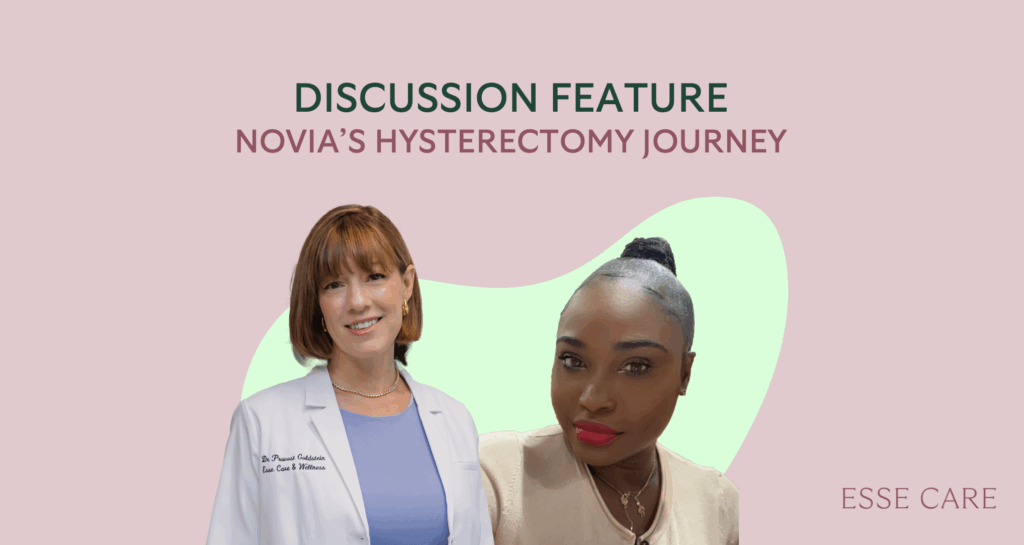
“I Feel Amazing”: One Week After Major Hysterectomy

8 days after her hysterectomy for adenomyosis and precancerous changes, Novia shares her recovery experience—from minimal pain to starting hormone therapy. “I feel amazing,” she says. “New woman, new me.”

Novia shares her recovery just eight days after undergoing a major hysterectomy for adenomyosis and a precancerous finding. Despite the complexity of her case—including an enlarged uterus, atypical hyperplasia, and removal of the appendix and a rectal nodule—she describes minimal pain, unused prescription medications, and a smooth healing process.

She reflects on her comfort with the surgical plan and her care team, especially with clear communication and confidence in hormone preparation. One week post-op, she begins hormone therapy with a clear plan in place, saying, “I feel amazing. New woman, new me.”

This kind of early recovery experience is possible with expert minimally invasive surgery, individualized hormone planning, and patient-centered care.

At ESSE Care, we support people facing complex gynecologic diagnoses—from adenomyosis to hysterectomy decisions and hormone transitions. If you’re navigating surgery or recovery, we welcome you to schedule a consultation with our experienced, multidisciplinary team.
Content Page Subscribe Widget
Share this post:

Explore more:

Inflammation and Implantation_Clinical Round Table
Clinical Round Table Ep. 1 On-Demand: Inflammation and Implantation
What happens when everything looks “normal,” but implantation still does not occur? We explore one of the most common and frustrating experiences in fertility care: failed implantation despite strong embryos...
Read More
What Is a Salpingectomy and What Should You Know Before Having One
Dr. Leigh Rosen explains what a salpingectomy is, why it may be recommended, and why removing your fallopian tubes does not affect your hormones or put you into menopause.
Read More
What Is Chronic Pelvic Pain and Why Early Treatment Matters
Dr. Amanda Chu explains chronic pelvic pain, its most common causes including endometriosis, fibroids, and adenomyosis, and why early treatment is key to preventing lasting neurologic changes.
Read More
Inflammation and Implantation_Clinical Round Table
Clinical Round Table Ep. 1 On-Demand: Inflammation and Implantation
What happens when everything looks “normal,” but implantation still does not occur? We explore one of the most common and frustrating experiences in fertility care: failed implantation despite strong embryos...
Read More
What Is a Salpingectomy and What Should You Know Before Having One
Dr. Leigh Rosen explains what a salpingectomy is, why it may be recommended, and why removing your fallopian tubes does not affect your hormones or put you into menopause.
Read More
Inflammation and Implantation_Clinical Round Table
Clinical Round Table Ep. 1 On-Demand: Inflammation and Implantation
What happens when everything looks “normal,” but implantation still does not occur? We explore one of the most common and frustrating experiences in fertility care: failed implantation despite strong embryos...
Read More
What Is a Salpingectomy and What Should You Know Before Having One
Dr. Leigh Rosen explains what a salpingectomy is, why it may be recommended, and why removing your fallopian tubes does not affect your hormones or put you into menopause.
Read More
What Is Chronic Pelvic Pain and Why Early Treatment Matters
Dr. Amanda Chu explains chronic pelvic pain, its most common causes including endometriosis, fibroids, and adenomyosis, and why early treatment is key to preventing lasting neurologic changes.
Read More