• Let's Chat
  • Contact Form
× Send

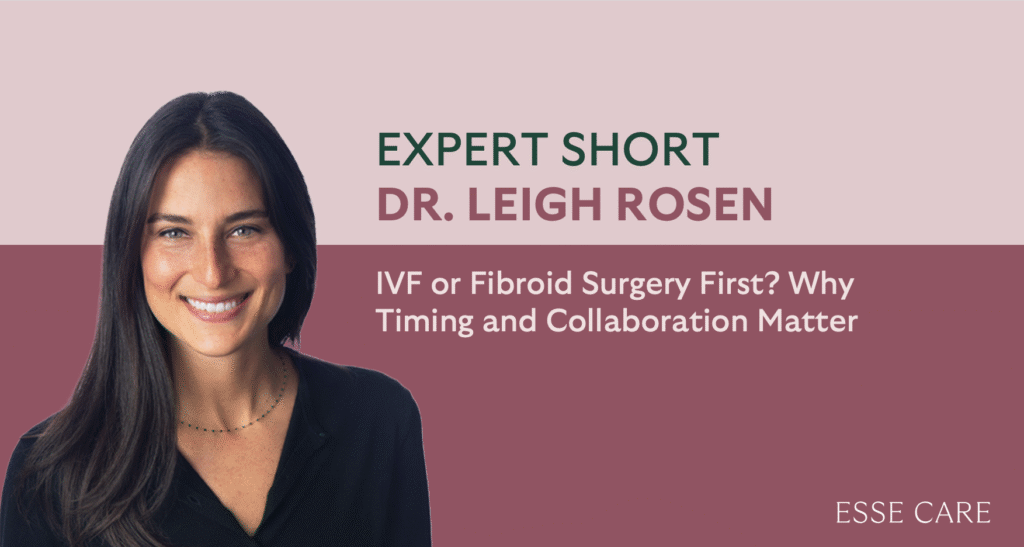
IVF or Fibroid Surgery First? Why Timing and Collaboration Matter

Dr. Leigh Rosen and Dr. Lucky Sekhon explain how they decide whether to prioritize IVF or fibroid surgery—based on anatomy, access, and your fertility goals. Learn why timing and collaboration matter.

IVF or Fibroid Surgery First? It’s a dance! 💃

When fertility and fibroids intersect, coordination is key. In this video, reproductive endocrinologist Dr. Lucky Sekhon and minimally invasive gynecologic surgeon Dr. Leigh Rosen walk through the careful decision-making process of when to prioritize egg retrieval versus fibroid removal.

Sometimes fibroids make it difficult to monitor the ovaries or perform a safe egg retrieval—especially when they sit low in the pelvis. Other times, IVF may need to come first to preserve eggs or embryos before surgery. The choice depends on anatomy, access, and personal goals.

By working together, we ensure your plan is not only medically sound, but also aligned with your timeline, fertility hopes, and surgical recovery.

Key points:

  • Fibroids that interfere with egg retrieval may need to be removed first
  • Egg freezing or IVF may be prioritized if ovaries are accessible
  • Post-surgery timing varies:
    • ~1 month after hysteroscopic fibroid removal
    • 3–6 months after laparoscopic or open myomectomy
  • The uterus must fully heal to minimize pregnancy complications

Your care should never feel like a guessing game. With coordinated expertise, we help guide your next step with confidence.

Related Article: Inside the OR: Open Hysterectomy for Uterine Fibroids and Stage 4 Endometriosis
Content Page Subscribe Widget
Share this post:

Explore more:

What Is a Salpingectomy and What Should You Know Before Having One
Dr. Leigh Rosen explains what a salpingectomy is, why it may be recommended, and why removing your fallopian tubes does not affect your hormones or put you into menopause.
Read More
What Is Chronic Pelvic Pain and Why Early Treatment Matters
Dr. Amanda Chu explains chronic pelvic pain, its most common causes including endometriosis, fibroids, and adenomyosis, and why early treatment is key to preventing lasting neurologic changes.
Read More
Retained Pregnancy Tissue Is More Common Than Many People Realize
How Does Hysteroscopy Help Treat Retained Pregnancy Tissue?
Retained pregnancy tissue is more common than many people realize. It happens when pregnancy tissue does not fully pass after a miscarriage, pregnancy loss, or delivery.
Read More
What Is a Salpingectomy and What Should You Know Before Having One
Dr. Leigh Rosen explains what a salpingectomy is, why it may be recommended, and why removing your fallopian tubes does not affect your hormones or put you into menopause.
Read More
What Is Chronic Pelvic Pain and Why Early Treatment Matters
Dr. Amanda Chu explains chronic pelvic pain, its most common causes including endometriosis, fibroids, and adenomyosis, and why early treatment is key to preventing lasting neurologic changes.
Read More
What Is a Salpingectomy and What Should You Know Before Having One
Dr. Leigh Rosen explains what a salpingectomy is, why it may be recommended, and why removing your fallopian tubes does not affect your hormones or put you into menopause.
Read More
What Is Chronic Pelvic Pain and Why Early Treatment Matters
Dr. Amanda Chu explains chronic pelvic pain, its most common causes including endometriosis, fibroids, and adenomyosis, and why early treatment is key to preventing lasting neurologic changes.
Read More
Retained Pregnancy Tissue Is More Common Than Many People Realize
How Does Hysteroscopy Help Treat Retained Pregnancy Tissue?
Retained pregnancy tissue is more common than many people realize. It happens when pregnancy tissue does not fully pass after a miscarriage, pregnancy loss, or delivery.
Read More